Middle East crisis live: Netanyahu rejects US’s Gaza plan and vows no withdrawal until Hamas disarms
Israeli Prime Minister Benjamin Netanyahu has rejected a US-backed 15-point Gaza plan, vowing no military withdrawal until Hamas is "genuinely" disarmed, a condition he says the current proposal does not meet.
Intelligence analysis by Gemini 2.5 Flash
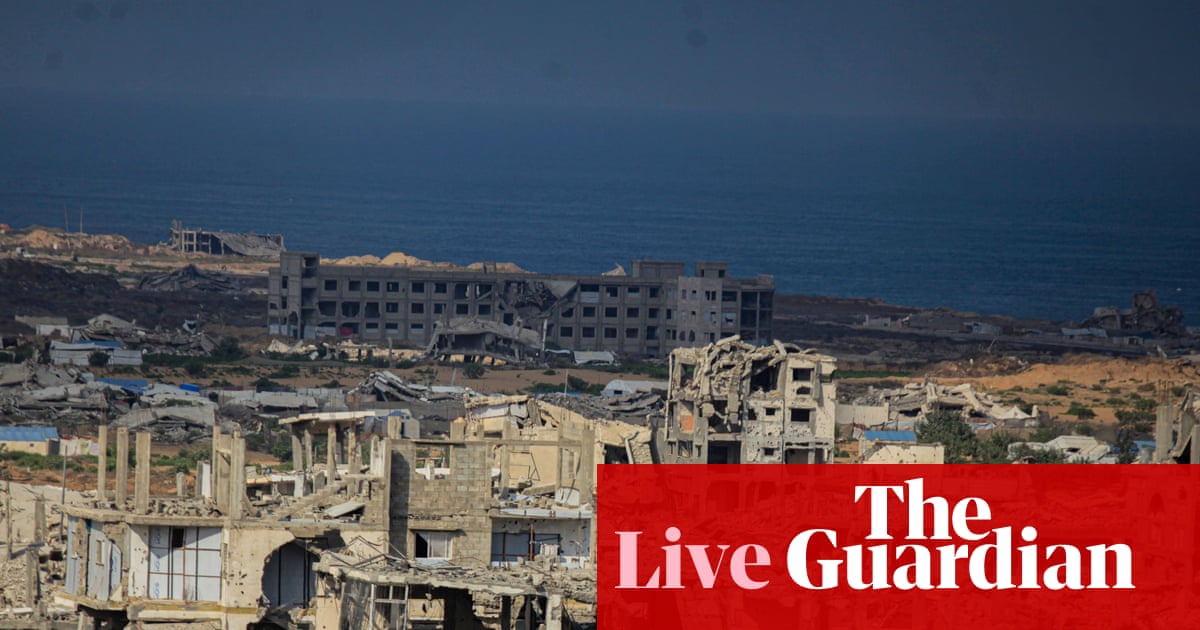
Netanyahu's rejection of the US-endorsed Gaza ceasefire plan, which includes a phased Israeli withdrawal linked to Hamas disarmament, signals a significant hurdle in international efforts to end the conflict. Hamas, in turn, urges the US to pressure Israel to accept the roadmap, highlighting the deep divisions over the terms of peace and security in the region.
Imagine two kids, Israel and Hamas, are fighting over toys in a sandbox, Gaza. A grown-up, the US, suggests a plan: Hamas gives up some toys, and Israel slowly leaves the sandbox. But Israel's leader, Netanyahu, says 'No way! Hamas has to give up ALL their fighting toys, for real, before we even think about leaving!' So, the fighting continues because they can't agree on how to stop.
Analysis
The latest developments in the Middle East crisis reveal a significant impasse in efforts to establish a lasting peace in Gaza. Israeli Prime Minister Benjamin Netanyahu has unequivocally rejected a 15-point plan, endorsed by US President Donald Trump and Hamas, which aimed to facilitate a ceasefire and a phased Israeli withdrawal from Gaza. Netanyahu's primary contention is the nature of Hamas's disarmament, insisting on a "genuinely" disarmed Hamas before any Israeli military pullout. This stance directly contradicts the plan's provision for a gradual disarmament linked to Israeli withdrawal, suggesting a fundamental disagreement on the sequence and conditions of peace.
Netanyahu's Rejection
Prime Minister Netanyahu's rejection of the US-backed Gaza plan stems from his demand for a complete and verifiable disarmament of Hamas. He stated that Israel "will not carry out any withdrawal until Hamas is genuinely disarmed and will continue to thwart threats against our forces and our citizens." This position highlights Israel's deep-seated security concerns and its insistence that Hamas not only surrender weapons but also destroy its military infrastructure. Netanyahu's remarks at a cabinet meeting, as reported by Reuters, indicate ongoing discussions with the US, where Israel is asserting its objections to certain aspects of the plan, emphasizing its resolve to "stand our ground on these matters." The Israeli leader's definition of "real disarmament, not fictitious disarmament," suggests a profound distrust of any proposed mechanism that does not guarantee the complete incapacitation of Hamas.
The US-Backed Gaza Plan
The 15-point document, announced by the Board of Peace (BoP) and endorsed by Hamas, outlined a comprehensive roadmap for de-escalation and governance in Gaza. It proposed a "complete disarmament" of Hamas and other armed groups, to be "gradual, sequential and time-bound," and explicitly linked to a phased Israeli withdrawal from areas under its control. The plan also called for an International Verification Committee (IVC) to oversee the process and the establishment of a National Committee for the Administration of Gaza (NCAG), composed of Palestinian professionals, to take over administrative functions. This framework, initially hailed by President Trump as a "monumental step toward ending the fighting," aimed to create a pathway for reconstruction and stability, but its implementation is now jeopardized by Israel's firm rejection of its core tenets.
Hamas and Iranian Leadership
In response to Netanyahu's rejection, a Hamas official, Bassem Naim, urged the US to exert pressure on Israel to accept the next phase of the Gaza plan. Naim's statement to AFP underscores Hamas's belief that external mediation and pressure are necessary to overcome Israeli intransigence, which he attributed to "internal political and electoral reasons." Separately, the article briefly touches upon Iranian President Masoud Pezeshkian's meeting with Supreme Leader Mojtaba Khamenei, noting the latter's rare public appearance since succeeding his father. This meeting, covering military affairs and the economy, including resource management and foreign exchange, provides a glimpse into Iran's internal dynamics amidst the broader regional tensions, though its direct link to the Gaza plan's immediate future is not explicitly detailed.
Key points
- Israeli Prime Minister Benjamin Netanyahu has rejected a US-backed 15-point Gaza plan.
- Netanyahu vows no military withdrawal from Gaza until Hamas is "genuinely" disarmed.
- The US plan, endorsed by Hamas, proposed a gradual disarmament linked to phased Israeli withdrawal.
- Hamas official Bassem Naim called on the US to pressure Israel to accept the agreement.
- The plan included establishing a National Committee for the Administration of Gaza (NCAG) and an International Verification Committee (IVC).
Despite the current rejection, the existence of a US-backed plan and ongoing dialogue between Israel and the US, as noted by Netanyahu, suggests that diplomatic channels remain open. Continued international pressure and negotiation could potentially lead to a revised agreement that addresses Israel's security concerns while still paving the way for a ceasefire and eventual withdrawal.
Netanyahu's firm rejection of the US plan and his insistence on complete disarmament before withdrawal indicate a prolonged conflict. This deadlock risks further escalation, continued humanitarian crisis in Gaza, and could undermine future diplomatic efforts, potentially leading to a more entrenched and violent situation in the Middle East.


