Minister Ahsan seeks NFC reforms to ease federal burden
Ahsan Iqbal says the NFC formula leaves the federal government short on funds and wants reforms tied to population control and welfare costs.
Intelligence analysis by GPT-5.4 Mini
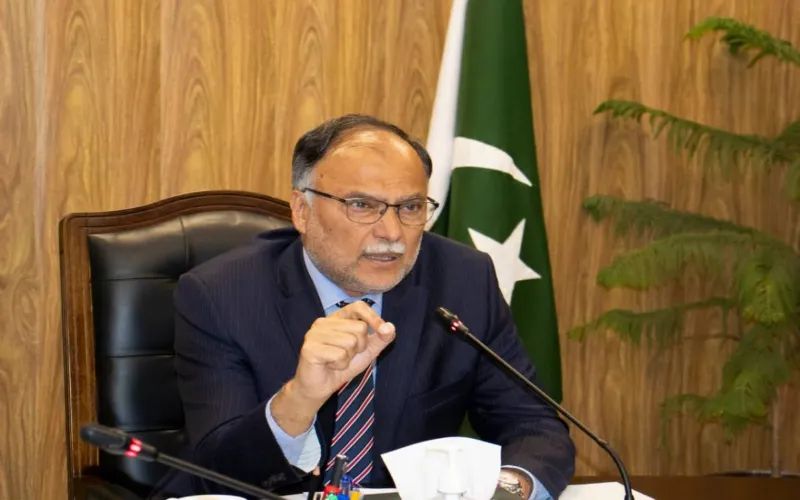
Planning Minister Ahsan Iqbal says Pakistan's current NFC Award formula is squeezing federal finances and making it harder to fund national projects. He also argues provinces should shoulder more of the welfare burden, including support for BISP beneficiaries in their own areas.
Ahsan Iqbal says the government’s money is split in a way that leaves the center with too little cash, like a household where one person pays most bills but keeps getting less of the allowance. He wants provinces to carry more of the cost for local help and to reward places that keep population growth under control.
Analysis
Federal finances under strain
Planning Minister Ahsan Iqbal says the current National Finance Commission formula is leaving the federal government with too little room to pay for major national work. His main complaint is that a large share of revenue goes to the provinces, which limits the center's ability to finish development schemes and other strategic projects.
Welfare and provincial responsibility
Iqbal said the government is not planning to end the Benazir Income Support Program, but he wants provinces to help fund beneficiaries living within their borders. He argued that poverty reduction and social welfare fall under provincial responsibility after the 18th Constitutional Amendment, and that provinces should support their own residents through their own resources. In his view, that would reduce pressure on the federal budget and free up money for national priorities.
Population growth as a fiscal issue
The minister also repeated his call for NFC changes that reward provinces for controlling population growth. He said Pakistan's rapid population increase is already putting pressure on health, education, jobs, water, food, and other basic services. He noted that 82% of NFC distribution is tied to population size, and said the system should create incentives for better population management rather than rewarding growth alone.
Timing and political context
His remarks come ahead of the 2026-27 federal budget, due on June 10. Iqbal also denied reports that the federal government was considering placing Karachi under federal control, saying no such proposal is being discussed. The article frames his comments as part of a broader push to rethink how money and responsibilities are shared between the federation and the provinces.
Key points
- Ahsan Iqbal says the current NFC formula leaves the federal government financially squeezed.
- He wants provinces to support BISP beneficiaries in their own areas rather than relying only on federal funds.
- He argues that population control should be rewarded in future NFC arrangements.
- He says rapid population growth is straining health, education, jobs, water, and food systems.
- He denied reports that Karachi could be placed under federal control.
If the NFC formula is revised, the federal government could have more money for national development projects and other top priorities. The proposed population-growth incentives could also push provinces to plan better for schools, hospitals, jobs, and basic services.
The proposal could deepen tensions between the center and provinces if they see the changes as shifting costs onto them. If no reform happens, the federal government may remain under pressure, with less room to fund major projects and social spending.