Moore Threads plans Hong Kong listing after posting 147% jump in first-half revenue
Chinese AI chip developer Moore Threads plans to seek a listing in Hong Kong after reporting a 147% jump in first-half revenue, aiming to secure fresh capital and expand its international presence.
Intelligence analysis by Gemini 2.5 Flash
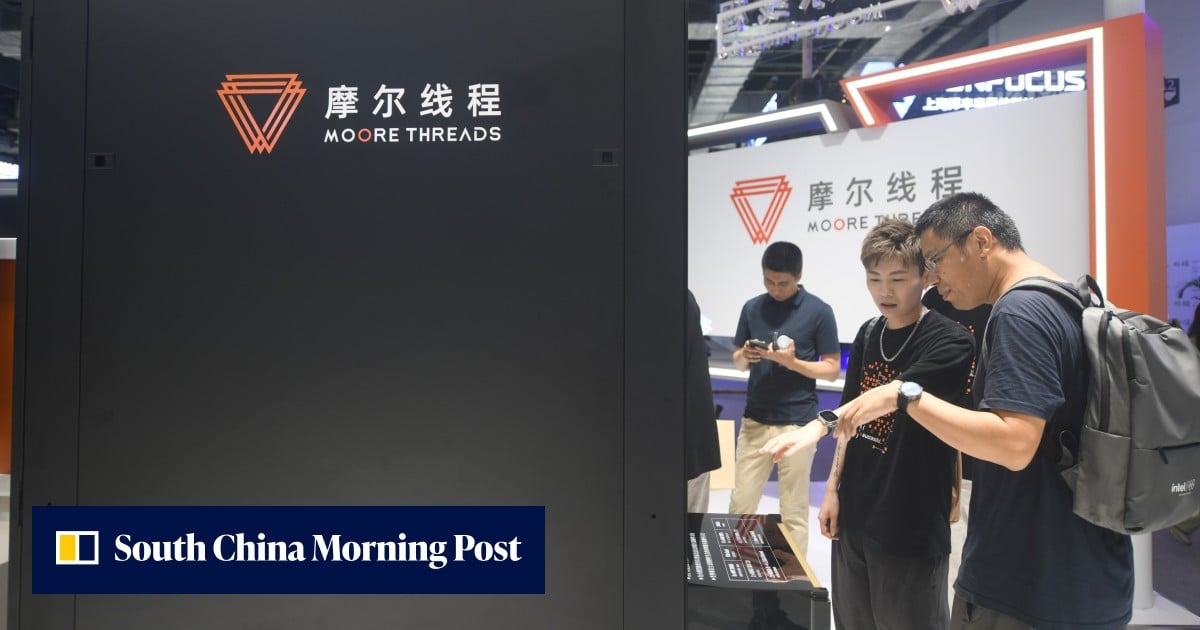
Moore Threads, a prominent Chinese AI chip maker often compared to Nvidia, is pursuing a Hong Kong listing to deepen its global strategic footprint and attract more capital. This strategic move follows a significant financial performance, with the company's first-half revenue soaring by 147% amid robust demand for domestic computing power.
A Chinese company that makes special computer brains, like the ones that help AI think, is growing super fast! They made a lot more money this year and now want to sell more shares in Hong Kong. It's like they're opening a second, bigger store in a new city to get more money to build even better computer brains and become a really big player.
Analysis
Moore Threads
Moore Threads, a Beijing-based developer of graphics processing units (GPUs), has emerged as a significant player in China's burgeoning artificial intelligence chip sector. Often referred to as one of China's "little Nvidias," the company is at the forefront of developing home-grown computing power, a strategic priority for the nation. Its recent financial performance underscores its rapid growth, with first-half revenue reaching 1.7 billion yuan (US$252 million), marking a substantial 147 percent increase year-on-year. This impressive revenue jump indicates strong market adoption and demand for its products within China.
Despite its rapid expansion, Moore Threads is still navigating the path to profitability. The company reported a net loss of 11.6 million yuan in the first half, though this represents a significant narrowing from the 271 million yuan loss recorded a year earlier. This improvement suggests that while the company is investing heavily in growth and development, its operational efficiency is improving, and it is moving closer to breaking even. The pursuit of fresh capital through a Hong Kong listing is a clear indicator of its ambition to further scale operations and accelerate its technological advancements.
Hong Kong Listing
Moore Threads' decision to pursue a listing on the main board of the Hong Kong stock exchange is a strategic move designed to achieve several key objectives. The company's board has approved a plan to issue H shares, signaling a clear intent to tap into international capital markets. This listing is explicitly aimed at deepening the firm's "international strategic footprint," which suggests a desire to enhance its global visibility and market access beyond its current Shanghai listing.
Furthermore, the Hong Kong listing is intended to attract and retain top talent, a critical factor in the highly competitive AI chip industry. By offering shares on an international exchange, Moore Threads can potentially appeal to a broader pool of skilled professionals. The move is also expected to "further enhance corporate governance and core competitiveness," indicating a commitment to adopting international best practices in its corporate structure and operational efficiency. This listing adds to a series of high-profile Chinese tech companies debuting in Hong Kong, reflecting the market's continued appeal for mainland firms seeking capital and international exposure.
147 Percent
The reported 147 percent jump in Moore Threads' first-half revenue is a pivotal highlight, underscoring the company's rapid ascent in the AI chip market. This significant growth, translating to 1.7 billion yuan in revenue, is directly attributed to the booming demand for home-grown computing power within China. As geopolitical tensions continue to influence global supply chains and technological independence, China has placed a strong emphasis on developing its domestic semiconductor industry, creating a fertile ground for companies like Moore Threads.
This substantial revenue increase positions Moore Threads as a formidable challenger to established global players, particularly Nvidia, in the critical domain of AI hardware. The growth trajectory suggests that the company is successfully capturing market share and meeting the needs of Chinese enterprises and research institutions. The narrowed net loss, alongside the revenue surge, indicates a positive trend in the company's financial health, providing a stronger foundation for its ambitious expansion plans and its ongoing efforts to innovate in the highly capital-intensive chip development sector.
Key points
- Moore Threads, a Chinese AI chip developer, plans a Hong Kong listing to issue H shares.
- The company reported a 147% jump in first-half revenue, reaching 1.7 billion yuan (US$252 million).
- Its net loss significantly narrowed to 11.6 million yuan from 271 million yuan a year earlier.
- The listing aims to deepen its "international strategic footprint," attract talent, and enhance corporate governance.
- Moore Threads previously went public on Shanghai's Star Market in December.
The Hong Kong listing could provide Moore Threads with crucial capital for accelerated research and development, enabling it to enhance its AI chip technology and compete more effectively with global leaders. This expansion could also attract top international talent, strengthening its technological capabilities and broadening its market reach.
Despite the significant revenue growth, Moore Threads still reported a net loss, indicating that profitability remains a challenge. The success of the Hong Kong listing and its ability to attract international talent and deepen its "strategic footprint" could be hampered by geopolitical tensions or intense competition in the global chip market.