More than a pet: Can autism assistance dogs gain a foothold in Singapore?
Autism assistance dogs help individuals with autism manage anxiety, interrupt harmful behaviours, and provide steady companionship for greater confidence and independence. However, challenges include public unfamiliarity, limited access, high costs, and requiring long-ter…
Intelligence analysis by Llama
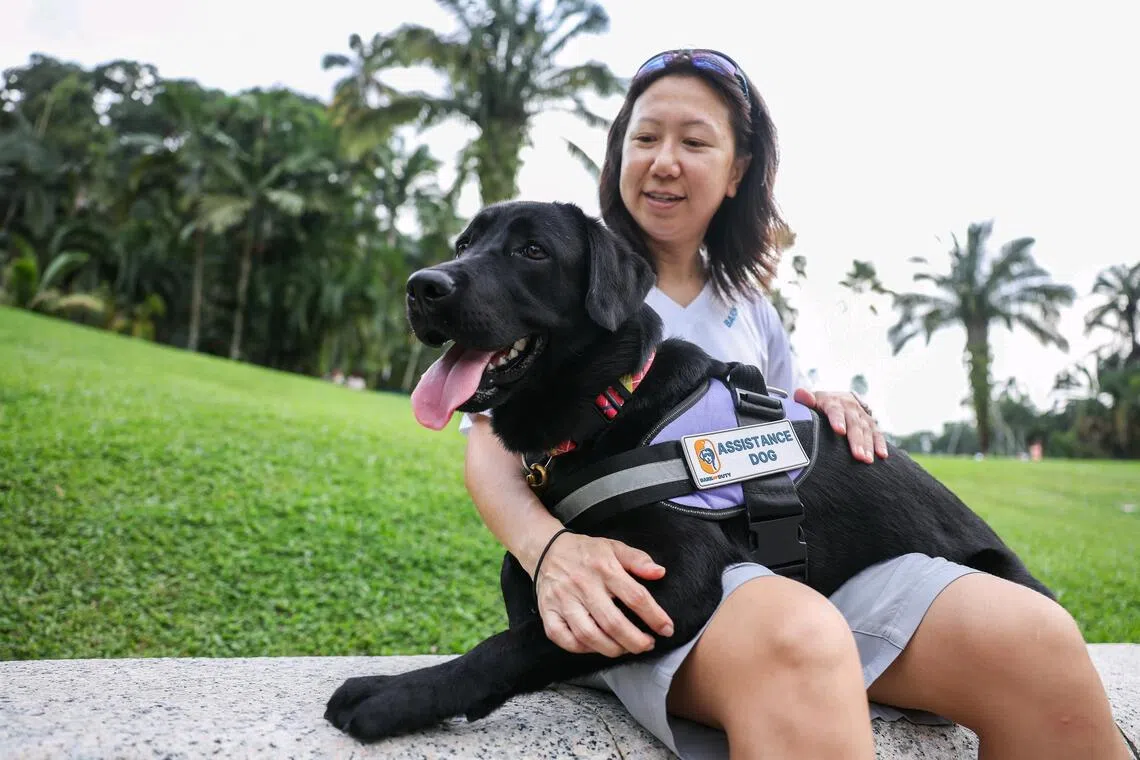
Autism assistance dogs are being trained in Singapore to help individuals with autism, but challenges such as public unfamiliarity and high costs are limiting their adoption. Experts say the evidence on their effectiveness is still emerging, but they may provide meaningful complementary support for some individuals with autism.
Autism assistance dogs are special dogs that help people with autism feel less anxious and more confident. They are trained to do specific tasks, like interrupting bad behaviors and providing comfort. But it's not easy to get one of these dogs, and it can be very expensive.
Analysis
Autism Assistance Dogs in Singapore: A Growing Trend but with Challenges Ahead
Autism assistance dogs are being trained in Singapore to help individuals with autism manage anxiety, interrupt harmful behaviours, and provide steady companionship for greater confidence and independence. However, challenges such as public unfamiliarity, limited access, high costs, and requiring long-term commitment from families are limiting their adoption.
According to Christine Ho, founder of Bark of Duty, a social enterprise that trains assistance dogs, many Singaporeans are unfamiliar with assistance dogs or associate them only with guide dogs for the visually impaired. Public concerns over dogs in restaurants, on public transport, and in other shared spaces, coupled with the long-term commitment required from families, continue to limit demand for such dogs.
Training an autism assistance dog is also costly. Families training their own dogs typically spend $7,000 to $10,000 over one to two years, while professionally trained assistance dogs can cost from $25,000. Not every dog makes the cut, as prospective dogs first undergo temperament assessments before their learning, which covers obedience, public access skills, confidence building, and disability-specific tasks.
Despite these challenges, experts say the evidence on the effectiveness of autism assistance dogs is still emerging. Senior psychologist Bonnibel Tan from KK Women's and Children's Hospital noted that although some families report benefits, it remains unclear whether autism assistance dogs provide consistent benefits beyond those that may also arise from having a well-matched companion dog.
Clinical psychologist Ronina Stevens, director of The Other Clinic, which supports mental wellness, said such assistance dogs are not a treatment for autism. Research is still developing, though evidence suggests they can improve safety, emotional regulation, community participation, and quality of life. 'They do not reduce autistic traits,' she said. 'Rather, they help the individual navigate an environment that is often overwhelming or unpredictable.'
For some people with autism, interacting with a dog may feel less socially demanding than interacting with another person. However, families must also consider the cost and availability of specialised training, the child's comfort and safety around dogs, their capacity to care for the animal, housing and public-access considerations, and the dog's welfare.
In conclusion, while autism assistance dogs are being trained in Singapore, challenges such as public unfamiliarity, limited access, high costs, and requiring long-term commitment from families are limiting their adoption. Experts warn that families need to consider the costs and resources involved, as well as the availability of specialised training and the child's comfort and safety around dogs.
Key points
- Autism assistance dogs are being trained in Singapore to help individuals with autism manage anxiety, interrupt harmful behaviours, and provide steady companionship for greater confidence and independence.
- Challenges such as public unfamiliarity, limited access, high costs, and requiring long-term commitment from families are limiting their adoption.
- Experts say the evidence on the effectiveness of autism assistance dogs is still emerging, but they may provide meaningful complementary support for some individuals with autism.
- Families must consider the costs and resources involved, as well as the availability of specialised training and the child's comfort and safety around dogs.
If autism assistance dogs become more widely accepted and accessible in Singapore, they could provide meaningful support for individuals with autism, helping them navigate overwhelming environments and improve their quality of life.
The high costs and limited access to autism assistance dogs in Singapore may continue to limit their adoption, leaving individuals with autism without the support they need to manage their anxiety and behaviors.