Morocco detains dozens of migrants trying to cross into Ceuta, reports say
Moroccan authorities detained over 100 migrants attempting to cross into the Spanish exclave of Ceuta. This follows a large influx last month and heightened security measures.
Intelligence analysis by Gemini 2.5 Flash Lite
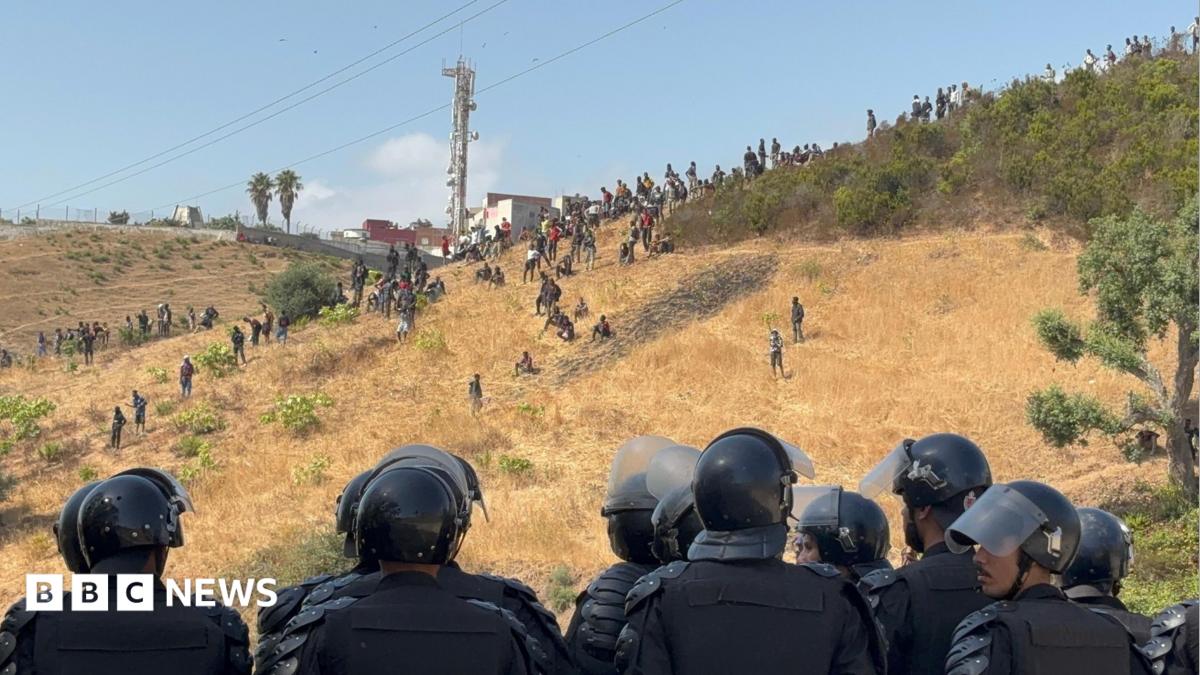
Moroccan authorities have intercepted and detained over 100 migrants, primarily from sub-Saharan Africa, who were attempting to cross into the Spanish exclave of Ceuta. The operation involved significant security forces and followed social media calls for a mass crossing, amid heightened tensions between Spain and Italy over migration.
Imagine Ceuta is a small island belonging to Spain, but it's right next to Morocco. Lots of people want to get to Spain, so they try to swim or climb over the fence to reach this island. Moroccan police are trying to stop them, like guards at a gate, because too many people came last time and it caused problems for everyone.
Analysis
Moroccan Security Operations
Moroccan authorities reported detaining 111 individuals in and around Fnideq, a town situated approximately 3 kilometers from the border with Ceuta. The majority of those detained were identified as being from sub-Saharan Africa. Security forces, including those in riot gear, were reportedly deployed and used tear gas to disperse groups of migrants who had gathered on nearby hills. This action comes after Morocco's government acknowledged monitoring social media activity that was encouraging a mass crossing attempt on Saturday. The government had also issued warnings about prosecuting organizers and participants of such attempts, indicating a firm stance against irregular migration towards the Spanish exclave.
Heightened Border Surveillance
Following a significant influx of migrants in late July, both Morocco and Spain have substantially increased security measures along the border. Spanish newspaper El País reported that security at the breakwater entrance was "10 times stronger than the previous day." Morocco had deployed army officers, navy speedboats, and drones to the border on Saturday. Spain, in response, deployed over 1,500 security officers to patrol the area and has also installed a metal fence and a floating barrier. These measures are a direct response to the crisis that saw approximately 78,000 migrants arrive in Ceuta within hours in late July, a situation that resulted in numerous deaths and significant diplomatic strain.
Diplomatic Tensions and EU Response
The recent migration crisis has exacerbated tensions between EU nations, particularly concerning the Schengen area of free movement. Italy, supported by Finland and Denmark, suspended the Schengen arrangement with Spain and introduced border checks, citing fears of a new wave of arrivals. Italy's Foreign Minister stated that Spain should focus on Morocco as the source of the problem rather than its own border controls. Spain's Prime Minister Pedro Sánchez reacted angrily, emphasizing that Ceuta is not part of the Schengen area and that migrants arriving there do not reach the Spanish mainland. This diplomatic spat underscores the complex challenges of managing migration flows and the differing approaches among EU member states.
Key points
- Moroccan authorities detained over 100 migrants attempting to cross into the Spanish exclave of Ceuta.
- The operation involved significant security forces, including riot police and tear gas.
- This incident follows a large influx of migrants in late July and heightened border security by both Morocco and Spain.
- The situation has caused diplomatic tensions between Spain and Italy regarding migration management within the EU.
- Social media calls for a mass crossing were monitored by Moroccan authorities.
The increased security measures and cooperation between Morocco and Spain could lead to more stable border management, reducing the risk of dangerous crossings and mitigating the humanitarian crisis. A more coordinated European response might also emerge, addressing the root causes of migration and ensuring fairer distribution of responsibilities among member states.
The intensified security could push migrants towards even more perilous routes or methods of entry, increasing the risk of casualties. Continued diplomatic friction between EU nations over migration could weaken the bloc's solidarity and its ability to formulate a cohesive, humane, and effective long-term migration policy.


