NA Panel Unanimously Recommends Two Bills to Strengthen Power Sector Framework
A National Assembly panel backed two government bills to tighten Pakistan's power-sector rules and reviewed grid, load-shedding, and staffing issues.
Intelligence analysis by GPT-5.4 Mini
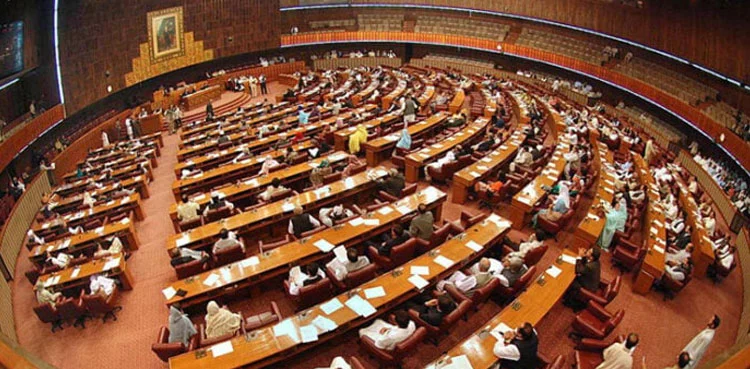
The National Assembly Standing Committee on Power Division unanimously supported two amendment bills and pushed the Power Division on practical problems across the sector, including grid upgrades, load management, theft, and staff placement.
Pakistan's power committee looked at two law changes and also talked about broken parts of the electricity system, like weak lines, theft, and places needing new grid stations. It is like fixing the rules in a school while also repairing the wires and lights in the classrooms.
Analysis
What the committee did
The National Assembly Standing Committee on Power Division unanimously recommended passage of two government bills: the Regulation of Generation, Transmission and Distribution of Electric Power (Amendment) Bill, 2026 and the Electricity (Amendment) Bill, 2026. According to the Power Division, the proposed changes are mainly procedural and technical, meant to bring the law in line with administrative needs.
What else was discussed
Beyond the bills, the committee spent time on operational problems in the sector. It adopted the report of a sub-committee led by MNA Babar Nawaz Khan and sent its findings to the Power Division for action. The report focused on the proposed 132 KV Haripur-II Grid Station, with the sub-committee saying the site should be moved from Sarai Saleh to Padhana, Haripur after technical review.
The convener said the proposed location at Sarai Saleh was not technically feasible, while Padhana was considered more suitable. He also said relocating the project could reduce costs and that about 0.5 million people would benefit from the grid station at Padhana. The committee also heard that the land already acquired at Sarai Saleh could be used by HAZECO for other purposes.
Other sector issues on the agenda
The committee raised the need for around 100 transformers to provide three-phase electricity in areas now receiving two-phase supply. It also discussed placement of GENCO employees in DISCOs, saying staff should as far as possible be adjusted near their domiciles. The Power Division said unauthorized upgrades granted to GENCO staff would be investigated.
Several other items were deferred or pushed to future meetings, including the 132 KV Patan Grid Station in Kohistan. The committee also planned to examine SEPCO-related issues, including detection charges, electricity theft, conductor and transformer theft, and repair work. For Larkana and nearby districts, it flagged overloading, load shedding, the proposed 220 KV grid station, line replacements, new transformers, and links to improve evacuation capacity.
The committee also asked for feeder-wise details of load shedding, electricity theft, and tariff rates in HESCO and SEPCO, and recommended inviting the NEPRA chairman to brief members on regulation and load shedding.
Key points
- The committee unanimously recommended two amendment bills for the power sector.
- The Power Division said the proposed changes are procedural and technical.
- The panel backed moving the proposed Haripur-II Grid Station site from Sarai Saleh to Padhana after technical review.
- It also flagged load shedding, theft, and transmission problems in SEPCO, HESCO, and Larkana-related areas.
- The committee asked for feeder-wise data and said the NEPRA chairman should brief members next time.
If the bills move forward, the power sector could get a cleaner legal framework that better matches how the system is run today. The committee's focus on technical fixes, grid relocation, and targeted infrastructure upgrades could help reduce bottlenecks in affected areas.
The meeting also showed how many unresolved problems remain, from load shedding and theft to staffing and project delays. If follow-up action is slow, the bills may pass without improving daily electricity service or resolving the operational issues the committee highlighted.