NASA Readies The X-59 For Its First Supersonic Flight, SpaceX's Starship Grounded And More Science Stories
NASA is preparing the X-59 for its first supersonic test flight, while the FAA has grounded SpaceX's Starship after a mishap.
Intelligence analysis by GPT-5.4 Mini
This week’s science roundup centers on NASA’s X-59 nearing a key supersonic test and the FAA pausing Starship flights after a booster landing problem. The piece also briefly flags other space news, including Blue Origin and Webb telescope findings.
NASA has an airplane called the X-59 that is meant to go faster than sound without making a big boom. It is about to try its first really fast flight, like a race car reaching a new top speed for the first time.
SpaceX’s Starship had a test flight that mostly worked, but one part of the rocket landed badly. Because of that, the FAA said SpaceX has to pause flights for a checkup.
The article is like a weekly scoreboard for space news: one team is getting ready for a big new test, and another team has to stop and fix a problem before trying again.
Analysis
NASA’s X-59 nears supersonic tests
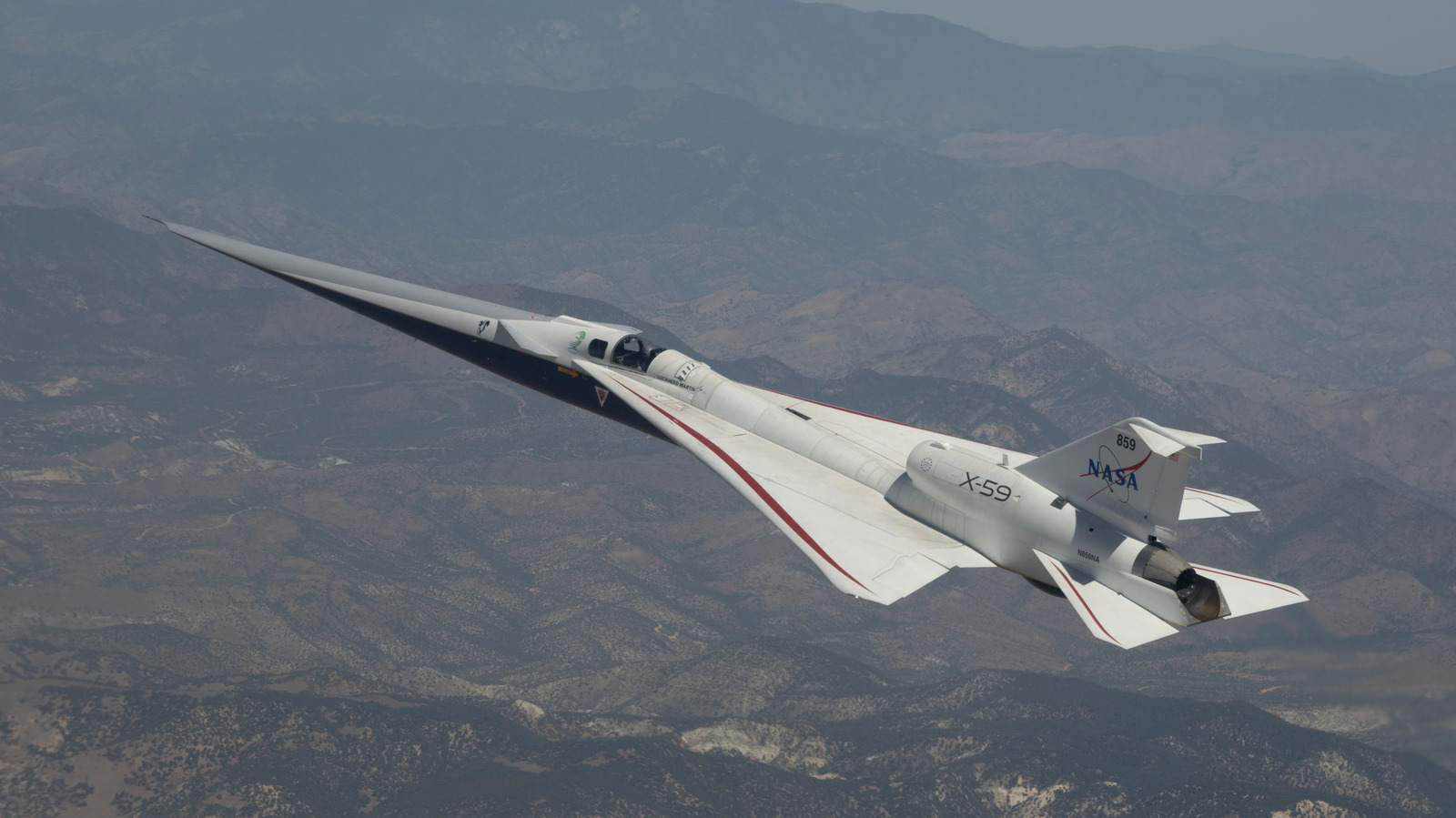
NASA says its X-59 quiet supersonic research plane is ready for its next major step. The aircraft first flew in October and has completed additional flights since then, and the agency now plans to push it into its first supersonic run in early June. According to NASA, that flight should top 630 mph at about 43,000 feet.
A later “mission conditions” test is set to go faster still, reaching 925 mph, or Mach 1.4, at roughly 55,000 feet. After that, NASA plans to try the plane’s maximum speed: Mach 1.6, or about 1,218 mph, at 60,000 feet. The article notes that NASA is not yet demonstrating the X-59’s quiet-thump concept in this phase, because a traditional supersonic chase plane will fly alongside it and its louder booms will mask whatever the X-59 produces.
Starship faces an FAA pause
SpaceX’s Starship V3 completed much of its recent test flight goal set, but the mission did not end cleanly. The booster separated, attempted its boostback burn, and later hit a hard splashdown after failing to light all planned engines for landing. Starship itself continued and splashed down in the Indian Ocean as planned.
The FAA said the May 22 launch resulted in a mishap and ordered SpaceX to carry out an investigation. The agency said it will oversee the process and approve SpaceX’s final report and corrective actions. The article says this kind of grounding is common after launch problems, and that SpaceX has often returned to flight relatively quickly once safety questions are resolved.
The wider roundup
The story also points readers to other recent science headlines: NASA’s plans for more lunar missions, Blue Origin’s New Glenn rocket being cleared again after an FAA review, New Glenn’s later launchpad explosion during a hotfire test, and Webb’s observation of a possible very early supermassive black hole.
Key points
- NASA says the X-59 is ready for its first supersonic flight in early June.
- The X-59’s next tests are planned to reach Mach 1.4 and then Mach 1.6.
- SpaceX’s Starship was grounded by the FAA after a booster landing mishap.
- The FAA said no public injury or property damage was reported.
- The roundup also mentions Blue Origin and a Webb telescope black hole finding.