Nearly 2,500 People Protest in Tunis Against Government and Deteriorating Living Conditions
Around 2,500 people demonstrated in Tunis against President Kaïs Saïed on the fifth anniversary of his institutional power grab, also protesting severe heatwave-induced power and water cuts and rising prices.
Intelligence analysis by Gemini 2.5 Flash
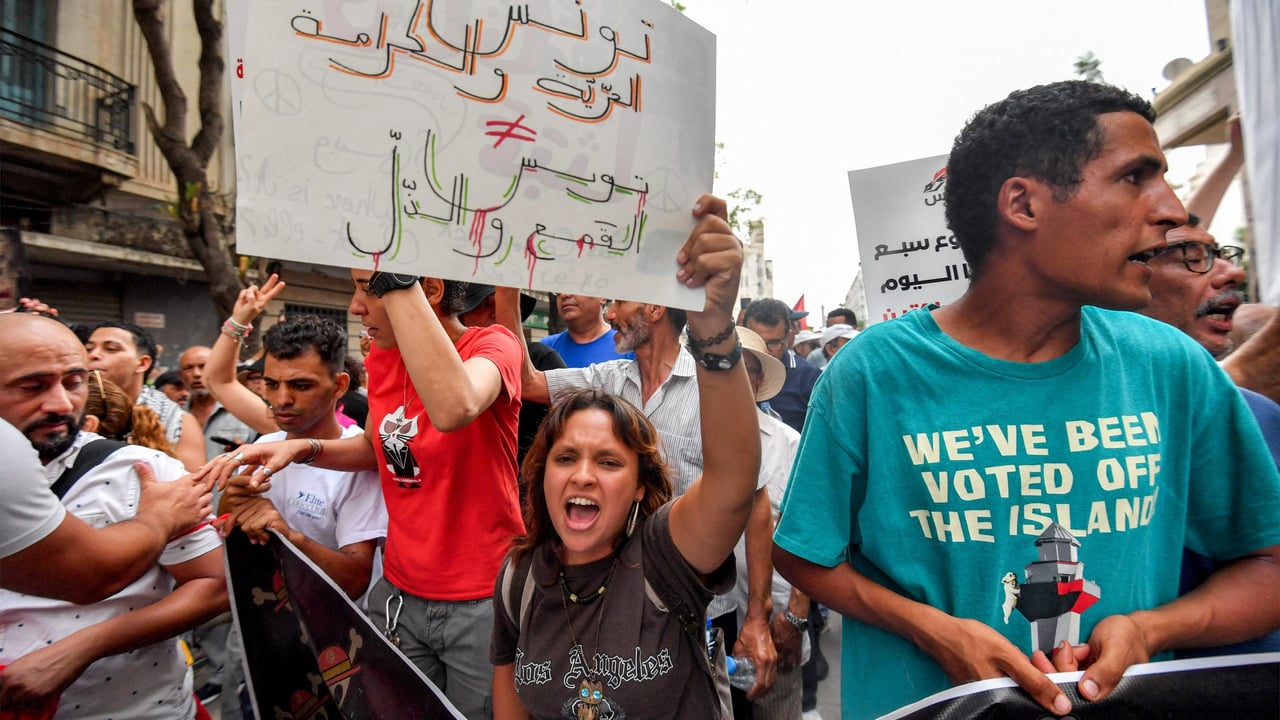
Tunisia saw significant protests on July 25th, marking five years since President Kaïs Saïed's power consolidation. Demonstrators voiced strong opposition to his rule and highlighted the worsening living conditions, exacerbated by frequent electricity and water outages amidst a harsh heatwave, leading to calls for accountability and a return to republican principles.
Imagine a country where people are really hot because of a big heatwave, and the electricity keeps going out, so they can't even cool down or get water sometimes. On top of that, prices for things are going up. So, about 2,500 people went to the streets to tell their leader, President Saïed, that they're unhappy with how things are going, especially since it's been five years since he took a lot of power. They want things to get better and for their country to be fair again.
Analysis
Five Years of Saïed's Rule Under Scrutiny
The recent demonstration in Tunis, drawing approximately 2,500 participants, marked a significant moment of public dissent against President Kaïs Saïed's leadership. Occurring on the fifth anniversary of his institutional power grab, the protest underscored deep-seated political grievances. Chants like "Get out!" and calls for accountability from opposition figures, such as Wissem Sghaier of the Al Joumhouri party, reflect a widespread sentiment that the country has deviated from its republican values and principles under the current administration. The gathering serves as a potent reminder of the ongoing struggle for democratic governance and checks and balances in Tunisia, a nation that once spearheaded the Arab Spring.
Socio-Economic Hardship Fuels Discontent
The political protests were significantly amplified by the severe deterioration of living conditions, particularly the impact of a scorching heatwave. Tunisia is currently experiencing programmed electricity and sometimes water cuts, straining an already overwhelmed national grid struggling to meet demand, especially for air conditioning. This has not only caused immense public frustration but also raised serious public health concerns, with the Tunisian Organization of Young Doctors (OTJM) reporting between 150 and 200 heat-related deaths in recent days, though official figures remain unconfirmed. The economic hardship, characterized by rising prices and essential service disruptions, directly fuels the public's anger and provides a tangible basis for their calls for change.
International Tensions and Future Outlook
The domestic unrest is further complicated by emerging international tensions, as evidenced by the summoning of the French ambassador. This diplomatic incident followed the broadcast of an interview by a French public channel with an individual reportedly sought by Tunisian justice, which the Tunisian foreign minister deemed an attack on national sovereignty and an "explicit call for sedition." This development highlights the sensitivity of Tunisia's political landscape and its relations with international partners. The combination of internal political opposition, severe socio-economic distress, and strained diplomatic ties paints a challenging picture for Tunisia's immediate future, suggesting continued instability and a potential for further escalation of both domestic and international pressures.
Key points
- Approximately 2,500 people protested in Tunis on July 25th against President Kaïs Saïed.
- The demonstration marked the fifth anniversary of Saïed's institutional power grab.
- Protesters also denounced deteriorating living conditions, including frequent electricity and water cuts during a severe heatwave.
- The Tunisian Organization of Young Doctors reported 150-200 heat-related deaths, though official figures are unavailable.
- The French ambassador was summoned after a French channel interviewed a person sought by Tunisian justice, which Tunisia deemed an attack on its sovereignty.
The ongoing protests, coupled with severe infrastructure failures and unaddressed public health concerns, suggest a high risk of continued social unrest and political instability in Tunisia. The government's inability to provide basic services amidst a crisis could further erode public trust, potentially leading to more widespread demonstrations and a deepening of the country's economic and political challenges.