Nepal-China flood disaster: What’s the latest toll, how many are missing?
Devastating floods near the Nepal-China border have killed at least 734 people, with over 3,000 still missing, including hundreds of workers at hydropower projects.
Intelligence analysis by Gemini 2.5 Flash

A glacier collapse in the Himalayas triggered catastrophic floods and landslides along the Trishuli and Bhotekoshi river systems, burying villages and impacting hydropower sites. Rescue efforts are severely hampered by adverse weather and challenging terrain, with authorities also monitoring a new barrier lake for potential secondary flooding.
Imagine a giant ice cube high up in the mountains suddenly breaking apart and melting super fast, sending a huge rush of water and mud down the rivers like a giant muddy wave. This happened near Nepal and China, causing terrible floods that have sadly killed many people and left thousands missing, including workers building big power plants. Rescuers are trying their best to find everyone, but it's like trying to dig through a giant, sticky mud puddle in bad weather, and they're even watching a new lake that formed to make sure it doesn't burst and cause more floods.
Analysis
The recent catastrophic floods near the Nepal-China border have unveiled a multi-faceted crisis, with the death toll climbing to at least 734 and thousands still unaccounted for. The disaster, triggered by a glacier collapse high in the Himalaya mountains, has devastated communities along the Trishuli and Bhotekoshi river systems. The sheer scale of the missing, particularly the 900 workers from various hydropower projects, points to significant economic and social disruption beyond the immediate human tragedy. The event also underscores the increasing vulnerability of Himalayan regions to climate change impacts, as glacial melt and extreme weather contribute to such devastating natural phenomena.
734 Deaths
The official death toll has reached 734, a grim figure that continues to rise as bodies are discovered, some washing up in neighboring India. This number reflects the immediate and severe impact of the flash floods and landslides that swept through villages and towns. The challenge of managing the deceased is also becoming apparent, with local morgues reportedly running out of space and authorities struggling with identification, necessitating the distribution of unidentified bodies to 21 hospitals for preservation and DNA testing. This logistical hurdle adds another layer of complexity to the humanitarian crisis.
The high number of fatalities highlights the sudden and overwhelming nature of the disaster, leaving little time for evacuation or protective measures in many areas. The destruction of infrastructure and the remote locations of many affected communities further complicate the recovery and identification processes. The international community's attention is drawn to the need for robust disaster preparedness and response mechanisms in regions prone to such extreme events, especially given the potential for future climate-induced disasters.
Hydropower Projects
A significant concern revolves around the more than 900 workers missing from 11 hydropower project sites and tunnels in Nepal's Rasuwa and Nuwakot districts. These projects, crucial for Nepal's energy infrastructure, have become focal points for rescue operations, with teams from the Nepali Army, Armed Police Force, and Nepal Police deployed. The involvement of workers from Nepal, India, South Korea, and China also gives the disaster an international dimension, highlighting the cross-border nature of labor in such large-scale infrastructure projects.
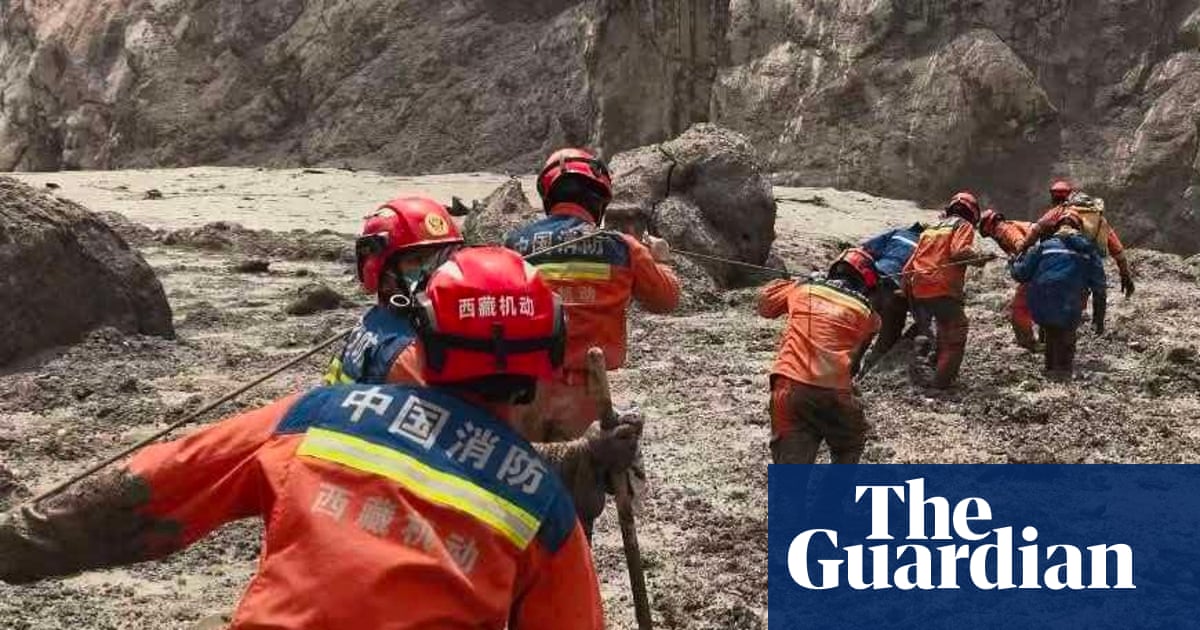
Rescue efforts at sites like the 216-megawatt Upper Trishuli-1 and the 22MW Chilime Hydropower project are proving exceptionally challenging due to adverse weather conditions, mud-filled tunnels, and extensive debris. The inability to access trapped workers underscores the inherent risks associated with constructing and operating such facilities in geologically unstable and climatically sensitive environments. The long-term implications for Nepal's energy sector and the safety protocols for future projects in similar terrains will likely be subjects of intense scrutiny following this disaster.
Gyirong County
The disaster's impact extends across the border into China's Tibet region, specifically Gyirong County, where 16 deaths have been reported. Chinese authorities are actively monitoring a new barrier lake that formed one kilometer upstream at the port of Gyirong, using satellites, radars, and drones to assess the risk of a second flood. This cross-border monitoring and coordination are critical, as any further breach could exacerbate the humanitarian crisis in both Nepal and China.
The involvement of Chinese authorities in monitoring the barrier lake and their confidence in providing a 30-minute notice if the situation deteriorates demonstrates a level of technological capability and preparedness. However, the presence of 261 foreign nationals from 23 countries still missing in Tibet's affected areas underscores the global reach of this disaster. The coordinated efforts between Nepal and China, alongside assistance from countries like India, are essential for effective search and rescue, as well as for mitigating future risks in this shared, vulnerable Himalayan ecosystem.
Key points
- At least 734 people have died in floods near the Nepal-China border, with over 3,000 still missing.
- A glacier collapse in the Himalaya mountains triggered the catastrophic flooding and landslides.
- Around 933 workers from 11 hydropower projects in Nepal's Rasuwa and Nuwakot districts are missing.
- Rescue efforts are severely hampered by adverse weather, mud-filled tunnels, and extensive debris.
- Chinese authorities are monitoring a new barrier lake in Gyirong County, Tibet, for potential secondary floods.
- Nepal is struggling with the storage and identification of mounting dead bodies, lacking sufficient refrigeration and DNA testing capabilities.
Despite the immense challenges, rescue operations have resumed, and authorities are closely monitoring the newly formed barrier lake with confidence in providing early warnings. The deployment of a joint team of military and police personnel, along with international assistance from India, suggests a concerted effort that could lead to more successful rescues and better management of potential secondary threats.
The sheer number of missing individuals, coupled with adverse weather conditions, mud-filled tunnels, and a shortage of facilities for identifying bodies, points to a prolonged and difficult recovery. The ongoing threat from the barrier lake and the extensive damage to infrastructure suggest that the humanitarian crisis and long-term rebuilding efforts will be substantial and complex.