Nepal Demands Climate Compensation from India, China, and US After Catastrophic Floods
Nepal has formally demanded climate compensation from India, China, and the United States following devastating floods caused by glacier collapse, arguing these major emitters have a 'moral and legal obligation' to pay for damages.
Intelligence analysis by Gemini 2.5 Flash
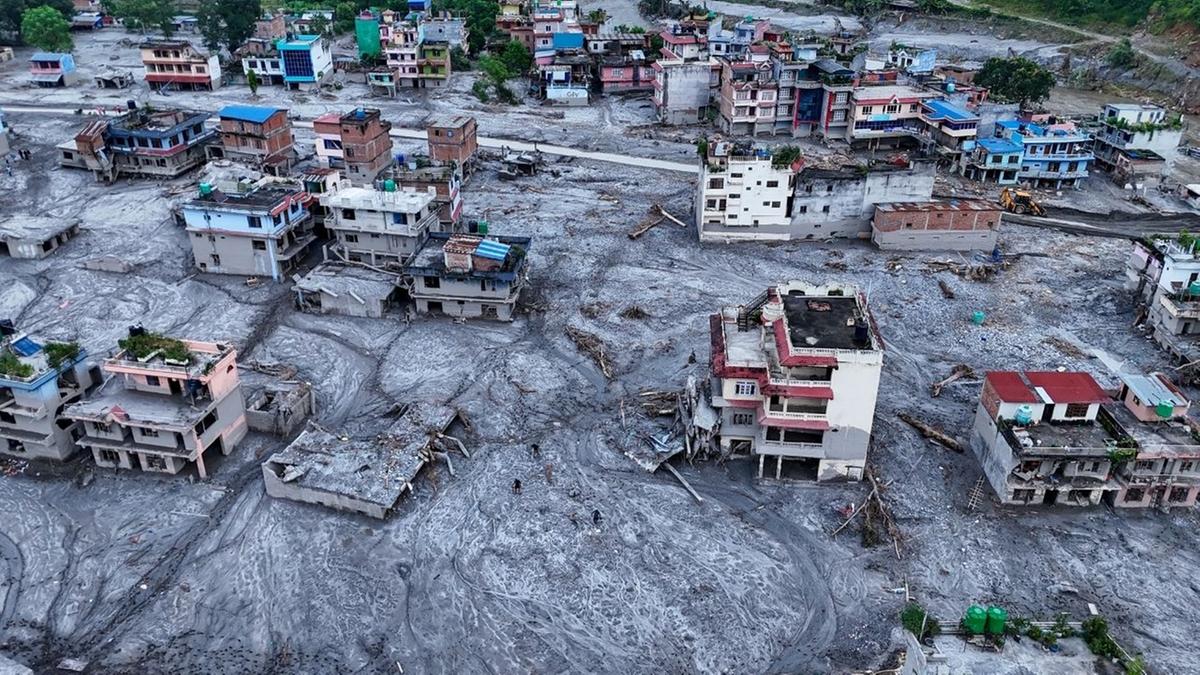
Following catastrophic floods in the Bhotekoshi River region that resulted in over 1,100 deaths and 4,500 missing, Nepal's Foreign Minister Shishir Khanal has asserted that major greenhouse gas emitters like India, China, and the US must provide compensation, not just aid. Nepal contends it is disproportionately suffering the severe consequences of global warming despite its negligibl…
Imagine a small country, Nepal, is like a little kid whose house got flooded really badly because big kids next door, like India, China, and the US, kept leaving the water running and didn't clean up their mess. Now, Nepal is saying, "Hey, this isn't just a favor; you guys caused this problem with all your pollution, so you should help us fix our house and pay for the damage!" They're asking for money to rebuild because the floods were caused by melting ice in the mountains, which is happening because the world is getting warmer.
Analysis
Nepal's recent demand for climate compensation from India, China, and the United States marks a significant shift in its approach to addressing the impacts of global warming. The country, which contributes minimally to global greenhouse gas emissions, is experiencing severe consequences, exemplified by the catastrophic floods in the Bhotekoshi River region. These floods, triggered by a large avalanche and glacier collapse in the Tibet-Nepal border area, have led to immense loss of life, with over 1,100 bodies recovered and approximately 4,500 people still missing across three districts. The scale of the disaster has prompted Nepal to move beyond seeking traditional humanitarian aid, instead framing its request as a matter of 'justice and compensation,' asserting a 'moral and legal obligation' on the part of historically high-emitting nations.
Shishir Khanal
Foreign Minister Shishir Khanal has been a vocal proponent of this new stance, emphasizing that Nepal is paying the highest price for a global crisis it did not create. He explicitly stated that aid should not be viewed as charity but as a responsibility owed by developed countries. Khanal highlighted the rapid melting of Himalayan glaciers and the increasing frequency of floods as direct results of global climate change, phenomena that disproportionately affect Nepal. His statements underscore a growing sentiment among vulnerable nations that the burden of climate change adaptation and loss and damage should not fall solely on those least responsible for the crisis.
Khanal's diplomatic pivot from 'economic aid' to 'justice and compensation' reflects a broader international movement advocating for climate reparations. By targeting the world's top three emitters—China, the United States, and India—Nepal is challenging the traditional framework of international assistance. This move could set a precedent for other climate-vulnerable nations to demand similar compensation, potentially reshaping global climate finance discussions and the responsibilities of major industrial powers. The official letters sent by Nepal's Ministry of Finance to these nations, alongside an application to the International Climate Fund, demonstrate a concerted effort to formalize these demands on the international stage.
Bhotekoshi River
The devastation along the Bhotekoshi River serves as a stark reminder of the immediate and severe impacts of climate change on fragile ecosystems and human settlements. The torrent of icy water, rocks, and debris that engulfed populated areas illustrates the destructive power of glacier lake outburst floods (GLOFs), which are becoming more frequent and intense due to rising global temperatures. The loss of entire villages and the high casualty count underscore the urgent need for robust climate adaptation measures and financial support for recovery efforts in such regions. Nepal's argument is that its own capacity to cope with such large-scale disasters is overwhelmed, necessitating external assistance rooted in accountability.
The Bhotekoshi incident also highlights the interconnectedness of the Himalayan region and its downstream impacts. The article warns that the disappearance of Himalayan glaciers jeopardizes the water security of over 200 crore (2 billion) people in South Asia who depend on rivers like the Ganga and Trishuli. This broader regional implication strengthens Nepal's case for compensation, as the consequences of glacial melt extend far beyond its borders, affecting neighboring countries, including India, which relies heavily on Himalayan-fed rivers for agriculture, drinking water, and hydropower. The potential for widespread water insecurity underscores the systemic nature of the climate crisis and the shared vulnerability of the South Asian subcontinent.
200 crore people
The warning about the water security of 200 crore people in South Asia is a critical element of Nepal's argument, elevating the issue beyond a localized disaster to a regional existential threat. The melting of Himalayan glaciers, often referred to as the 'Third Pole,' directly impacts major river systems that sustain vast populations across India, Bangladesh, and other South Asian nations. If these glaciers continue to recede at an accelerated pace, it could lead to initial increases in flood events, followed by long-term water scarcity, profoundly affecting agriculture, livelihoods, and overall societal stability in one of the world's most densely populated regions. This shared vulnerability provides a strong basis for regional cooperation on climate action and potentially for shared responsibility in addressing climate-induced damages.
Nepal's Foreign Minister Shishir Khanal explicitly linked the fate of Himalayan glaciers to the 'existence of South Asian culture,' emphasizing the profound cultural and economic ties to these river systems. This framing aims to garner broader support for Nepal's compensation demands by illustrating the far-reaching consequences of inaction. The demand for compensation from India, China, and the US is not merely about financial aid for Nepal's immediate recovery but also about securing the long-term environmental and societal stability of the entire South Asian region. The outcome of Nepal's appeal could therefore have significant implications for future climate negotiations and the principle of common but differentiated responsibilities.
Key points
- Nepal has demanded climate compensation from India, China, and the United States following catastrophic floods.
- The floods, caused by glacier collapse in the Tibet-Nepal border region, have resulted in over 1,100 deaths and 4,500 missing.
- Nepal's Foreign Minister Shishir Khanal views this compensation as a 'moral and legal obligation' for major polluting nations, not charity.
- Nepal argues its contribution to global greenhouse gas emissions is near zero, yet it suffers severe consequences of global warming.
- The disappearance of Himalayan glaciers threatens the water security of over 2 billion people in South Asia, including those dependent on rivers like the Ganga.
- Nepal's Ministry of Finance has sent official letters to these nations and applied for emergency funds from the International Climate Fund.
If India, China, and the US acknowledge their historical responsibility and provide substantial climate compensation, it could establish a vital precedent for climate justice globally. This could empower vulnerable nations like Nepal to rebuild, adapt to future climate impacts, and foster stronger regional and international cooperation on environmental challenges, potentially leading to more equitable burden-sharing in addressing the climate crisis.
A refusal by the major emitting nations to provide the demanded compensation could severely strain diplomatic relations with Nepal, leaving the country to bear the immense costs of climate disasters alone. This might exacerbate humanitarian crises, hinder long-term recovery efforts, and potentially lead to increased regional instability and resentment over perceived climate injustice, further complicating efforts to address shared environmental concerns.