New discovery unearths statues of King Ramses II in Nile Delta
Archaeologists have unearthed two colossal statues of King Ramses II and an inscribed pink granite block in Behbeit al-Hagar, Gharbiya Governorate, offering new insights into the New Kingdom's presence in the Nile Delta.
Intelligence analysis by Gemini 2.5 Flash
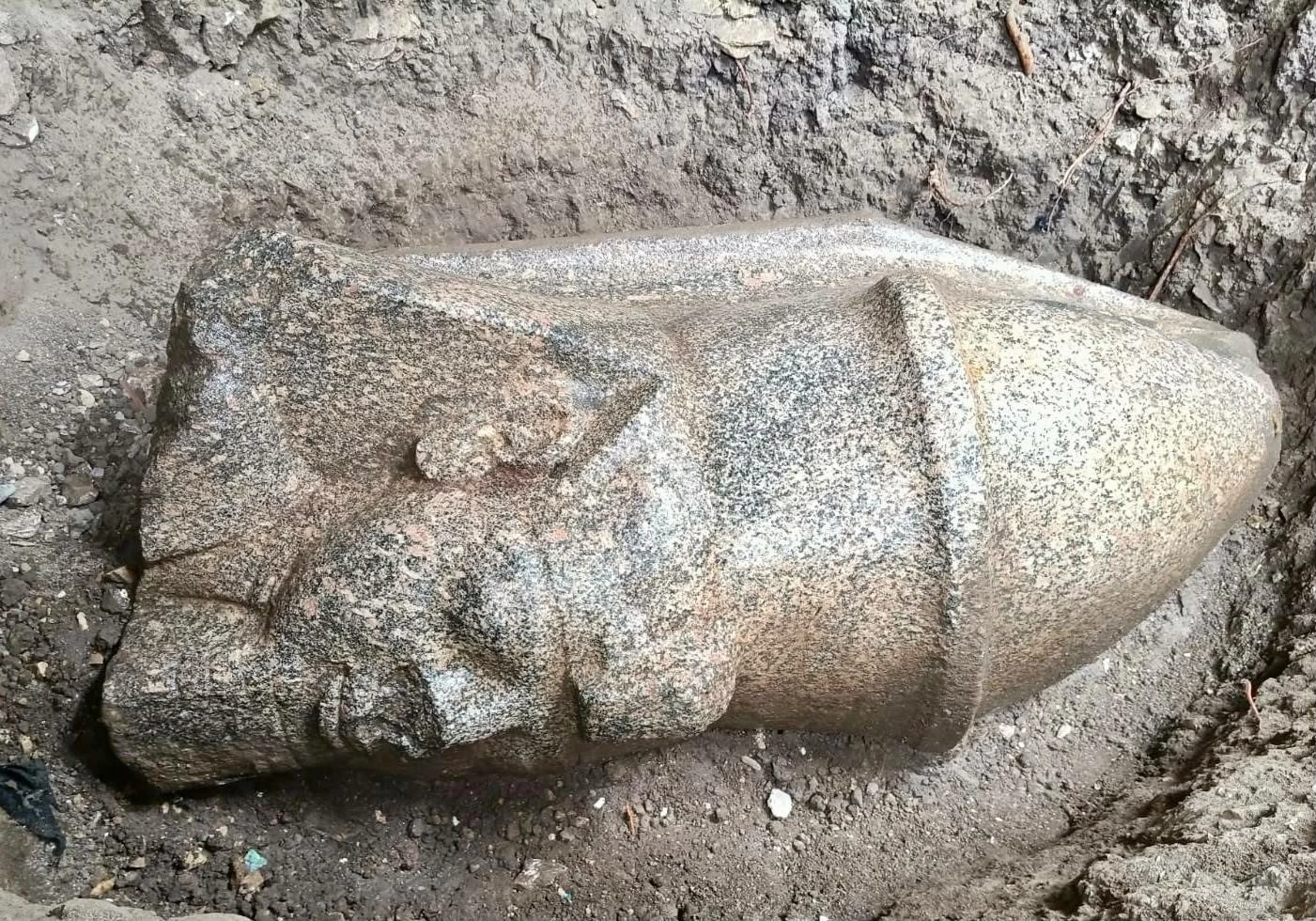
A significant archaeological find in Egypt's Nile Delta, specifically at Behbeit al-Hagar, has revealed major royal artifacts from the reign of King Ramses II. The discovery includes a 1.6-meter statue head and a 2.4-meter torso of the pharaoh, alongside a granite block bearing royal inscriptions, highlighting his extensive political and religious authority in a region less known for …
Imagine finding giant old toys of a super powerful king named Ramses II in a place where people didn't expect to see them! These big stone statues, one with a special crown and another with a fancy head scarf, show that King Ramses II was very important and wanted everyone, even far away in the Nile Delta, to know he was in charge, like leaving your favorite action figures all over your house to show it's yours.
Analysis
Behbeit al-Hagar
Behbeit al-Hagar, located in the Gharbiya Governorate, has long been recognized for its historical significance, primarily due to its massive ancient temple dedicated to the goddess Isis. The recent archaeological excavations at this site have further cemented its importance, revealing artifacts that underscore its role during the New Kingdom period. An Egyptian antiquities researcher, Tamer al-Menshawy, confirmed that the discovery highlights the historical importance of this specific location.
Continued excavation work at Behbeit al-Hagar is anticipated to provide deeper insights into the architectural context of these royal monuments. Researchers expect to understand how these grand structures were integrated into the broader temple complexes of the Delta, offering a more complete picture of ancient Egyptian urban and religious planning in the region. The initial report by a local citizen about finding the granite block was instrumental in initiating these crucial archaeological efforts.
King Ramses II
The newly unearthed artifacts provide compelling evidence of King Ramses II's strategic use of monumental statuary to project his political and religious authority across Egypt. The primary find is a massive 1.6-meter-tall statue head depicting the pharaoh wearing the Double Crown, a powerful symbol of the unification of Upper and Lower Egypt. Scholars estimate that the complete statue would have originally stood at an impressive 8.5 meters, a testament to the scale of his architectural ambitions.
Further reinforcing his royal identity, the rear pillar of the statue head contains inscriptions of Ramses II's Horus name, "Hor-Ka-Nakht Mery-Maat." Additionally, excavators uncovered a 2.4-meter-tall torso and head of a second royal statue, this one adorned with the traditional Nemes headcloth. Despite missing its base and lower limbs, the well-preserved facial features closely resemble the first colossal piece, suggesting a consistent artistic representation. A 1.3-meter pink granite block was also recovered, inscribed with significant royal titles such as "Nesu-Bity" (King of Upper and Lower Egypt) and "Sa-Re" (Son of Ra), further emphasizing his divine and temporal power.
Nile Delta
The discovery significantly alters the understanding of the New Kingdom's presence and the extent of royal monumental construction in the Nile Delta. Historically, well-known southern centers like Luxor and Abu Simbel have been the primary focus for monumental statuary and grand architecture from Ramses II's reign. This new find demonstrates that the pharaoh actively utilized grand architecture and monumental statuary to assert his authority throughout the Delta region as well.
This expansion of known monumental sites into the northern reaches of Egypt indicates a more pervasive and deliberate strategy by Ramses II to consolidate his power and influence across the entire kingdom. The presence of such colossal statues in Behbeit al-Hagar suggests that the Delta was not merely a peripheral region but an integral part of the pharaoh's grand vision for asserting his political and religious dominance. The ongoing work will likely reveal more about the specific integration of these royal monuments into the Delta's temple complexes, providing a richer narrative of the region's ancient history.
Key points
- Two colossal statues of King Ramses II were discovered in Behbeit al-Hagar, Gharbiya Governorate, Egypt.
- One statue head, 1.6 meters tall, depicts Ramses II wearing the Double Crown, symbolizing unified Egypt.
- A second statue's torso and head, 2.4 meters tall, were also found, wearing the traditional Nemes headcloth.
- A 1.3-meter pink granite block inscribed with royal titles like "King of Upper and Lower Egypt" was recovered.
- The discovery highlights Ramses II's assertion of political and religious authority in the Nile Delta, beyond southern centers.
- A local citizen's initial report to the Ministry of Tourism and Antiquities led to the archaeological team's prompt excavation.
The ongoing excavations at Behbeit al-Hagar promise to reveal more about the architectural context of these royal monuments, potentially offering a more complete picture of how such grand structures were integrated into the Delta's temple complexes and further enriching Egypt's archaeological heritage.