New GPUThor attack defeats NVIDIA ECC protection for root access
Researchers demonstrate a new Rowhammer attack called GPUThor that can bypass ECC protections on NVIDIA GPUs, leading to DoS and privilege escalation.
Intelligence analysis by Qwen 2.5 (3B)
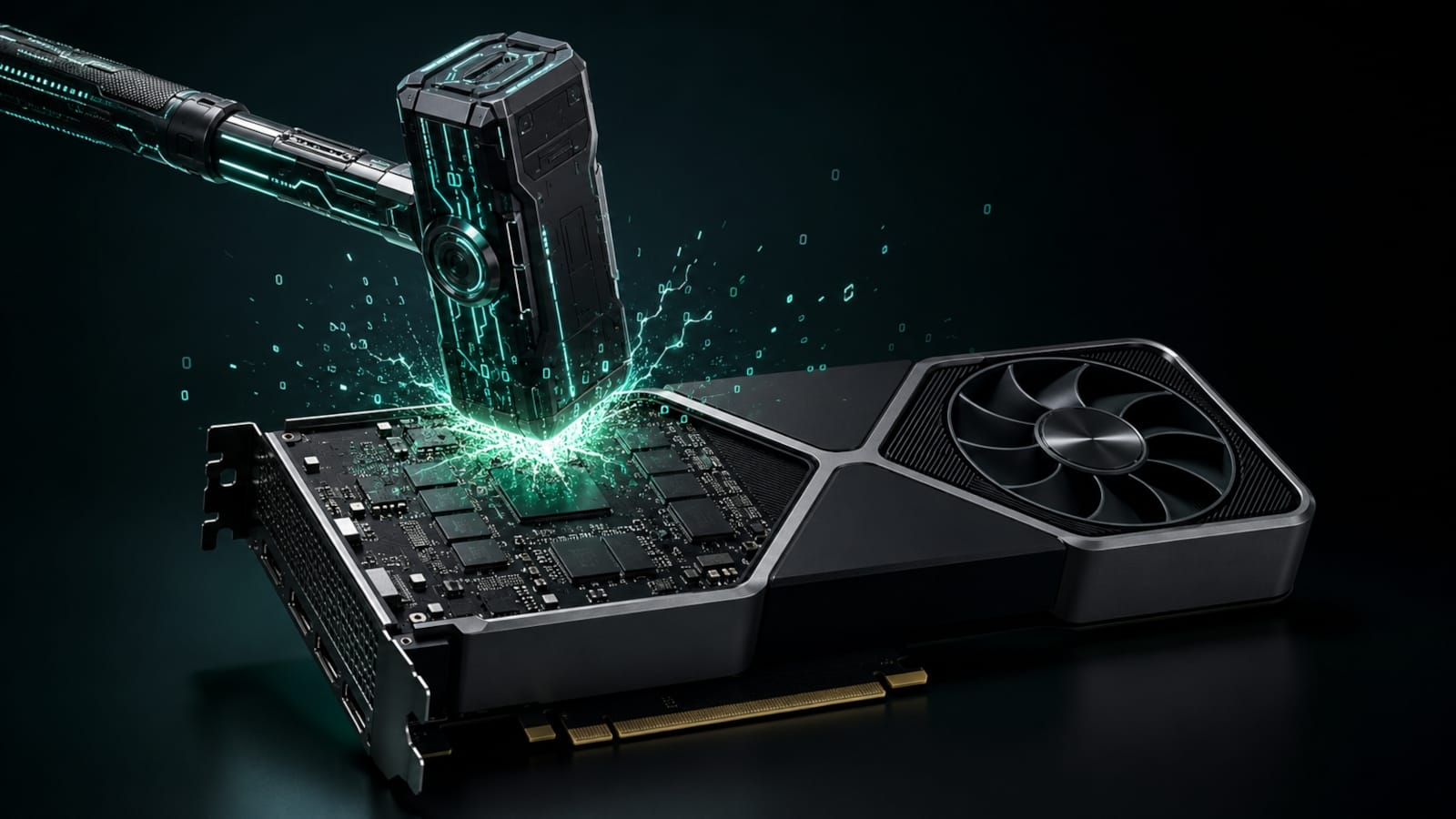
Researchers have developed a new Rowhammer attack, GPUThor, that can bypass error-correcting code (ECC) protections on NVIDIA GPUs, enabling denial-of-service (DoS) and root-level privilege escalation.
Imagine your computer's memory is like a big box of Lego blocks. Sometimes, the Lego blocks can get mixed up, and that can cause problems. A new trick called GPUThor can make the Lego blocks get mixed up faster, which can cause your computer to stop working or let bad people do bad things.
Analysis
{"heading_1":"The GPUThor Attack","subheading_1":"Details of the Attack","paragraph_1":"NVIDIA recommends enabling both SYS-ECC and IOMMU/DMA isolation, monitoring GPU error telemetry, and restricting the sharing or execution of untrusted workloads. The company notes that no bit flips were observed on the tested GDDR6X or HBM2e GPUs using the same attack patterns.","paragraph_2":"The researchers recommend avoiding cross-tenant GPU sharing where possible, monitoring ECC error counters, and restricting untrusted CUDA workloads. They added that complete protection will likely require stronger multi-bit ECC and hardware-level defenses in future GPUs.","subheading_2":"Impact of the Attack","subheading_3":"Mitigations and Defense"}
Key points
- Researchers have developed a new Rowhammer attack called GPUThor that can bypass ECC protections on NVIDIA GPUs.
- The attack can induce a DoS state on an ECC-enabled RTX A6000, causing the GPU to reset every two hours and terminating all workloads.
- The more interesting attack is escalating privileges to root level, which the researchers claim is possible by corrupting GPU page tables.
- NVIDIA recommends enabling SYS-ECC and IOMMU/DMA isolation, monitoring GPU error telemetry, and restricting the sharing or execution of untrusted workloads.
- The researchers recommend avoiding cross-tenant GPU sharing where possible, monitoring ECC error counters, and restricting untrusted CUDA workloads.
With better protections in the future, we can prevent the bad people from using this trick to cause problems.
If bad people find a way to use this trick, it could cause your computer to stop working or let them do bad things.