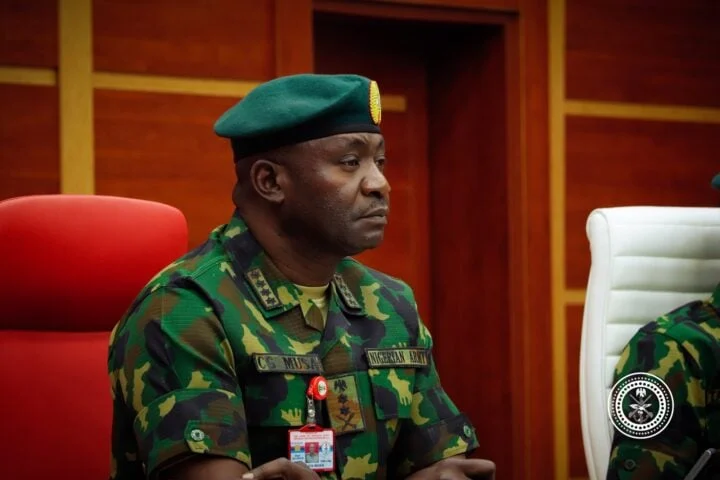
Nigeria: Terrorist Attacks Declining, Security Forces Gaining Ground - Defence Minister
Nigeria's Defence Minister, Gen. Christopher Musa (retd.), asserts significant improvements in the country's security situation, with terrorist attacks declining and security forces gaining ground against various criminal groups.
Intelligence analysis by Gemini 2.5 Flash
The Defence Minister claims that large-scale terrorist assaults have reduced in intensity and frequency due to intensified military operations pushing into militant enclaves. While acknowledging ongoing isolated incidents and kidnappings, he emphasizes progress, but also expresses concern over local logistics support for terrorists and the ideological resilience of these groups.
Imagine Nigeria is playing a big game of hide-and-seek with some bad guys. The Defence Minister says the good guys, the soldiers, are getting much better at finding them and making it harder for them to cause trouble. They're not doing as many big attacks as before, and the soldiers are even rescuing people who were taken. But, some people are still accidentally helping the bad guys by giving them food or gas, which makes it tough to stop them completely.
Analysis
Christopher Musa
Defence Minister General Christopher Musa (retd.) has presented an optimistic assessment of Nigeria's security landscape, highlighting a marked reduction in the scale and frequency of terrorist attacks. He attributes this progress to intensified operations by security forces, which are reportedly pushing deeper into the strongholds of groups like Boko Haram and various bandit factions. Musa's claims suggest a strategic shift, moving beyond defensive postures to more aggressive engagement within enemy territories.
The minister also pointed to the successful rescue of hundreds of abducted Nigerians, often through operations that were deliberately kept from public view due to their sensitive nature. Despite these reported gains, Musa voiced significant concern regarding the continued provision of logistical support—such as food, water, and fuel—to terrorists by local populations. He stressed that cutting off these supply lines is crucial for truly debilitating the groups, as their operational capacity is directly tied to their ability to sustain themselves.
2027 elections
The Defence Minister acknowledged a recurring pattern of increased attacks around electoral periods, a trend observed over several past cycles. While difficult to definitively link individual incidents to political motivations, this observation underscores a persistent vulnerability in Nigeria's security framework during times of political transition. The government is reportedly taking proactive measures to address this, with plans to review and strengthen security arrangements, particularly around President Bola Tinubu, in anticipation of the upcoming 2027 elections.
This focus on electoral security suggests a recognition of the potential for destabilization during politically charged times, where criminal and terrorist elements might exploit existing tensions. The minister's statement implies a commitment to ensuring a more secure environment for the democratic process, learning from past experiences where security challenges have often escalated in the run-up to national polls.
Niger
Nigeria's extensive and often porous borders, particularly those shared with neighboring countries like Niger and Cameroon, remain a significant security challenge, according to General Musa. These vast and difficult-to-govern frontiers facilitate the movement of terrorists and weapons, complicating efforts to contain insurgencies within Nigeria. The cross-border nature of these threats necessitates robust regional cooperation to effectively manage security.
In response to these challenges, Nigeria has intensified collaboration with its neighbors, including Niger, Chad, Cameroon, and the Benin Republic, to enhance border security. Furthermore, the government is deploying additional security formations, surveillance technology, drones, cameras, and control centers to monitor and secure these critical areas. This multi-faceted approach aims to disrupt the flow of illicit materials and personnel, thereby bolstering national security and regional stability.
Key points
- Nigeria's Defence Minister, Gen. Christopher Musa, reports a significant decline in large-scale terrorist attacks and increased success by security forces.
- Military operations have intensified against Boko Haram, bandits, and other criminal groups, pushing into their enclaves.
- Hundreds of abducted Nigerians have been rescued through both public and unpublicized operations.
- Concerns remain over the continued supply of logistics (food, fuel) to terrorists by some Nigerians, which sustains their activities.
- The government is enhancing border security with neighboring countries and deploying surveillance technology to address challenges posed by vast, difficult-to-govern borders.
If the reported decline in large-scale attacks and increased operational success continue, Nigeria could see a significant improvement in overall security, fostering greater stability and allowing for economic development in previously volatile regions. Enhanced regional cooperation and the deployment of advanced surveillance technology could further solidify these gains, making the country safer for its citizens.
Despite the minister's optimistic claims, the continued provision of logistics to terrorists by some Nigerians and the ideological resilience of these groups pose significant long-term challenges. The vast, porous borders, particularly with Niger and Cameroon, could also allow for persistent cross-border movement of militants, potentially undermining security gains and leading to a resurgence of attacks.