Nike's new Hyperslides heat and vibrate your feet to help you recover after workouts
Nike and Hyperice announced the Air Zoom Hyperslide, $249 magnetic-pod-equipped slides that heat (109–117°F) and vibrate to aid post-workout recovery, shipping September 29.
Intelligence analysis by Llama
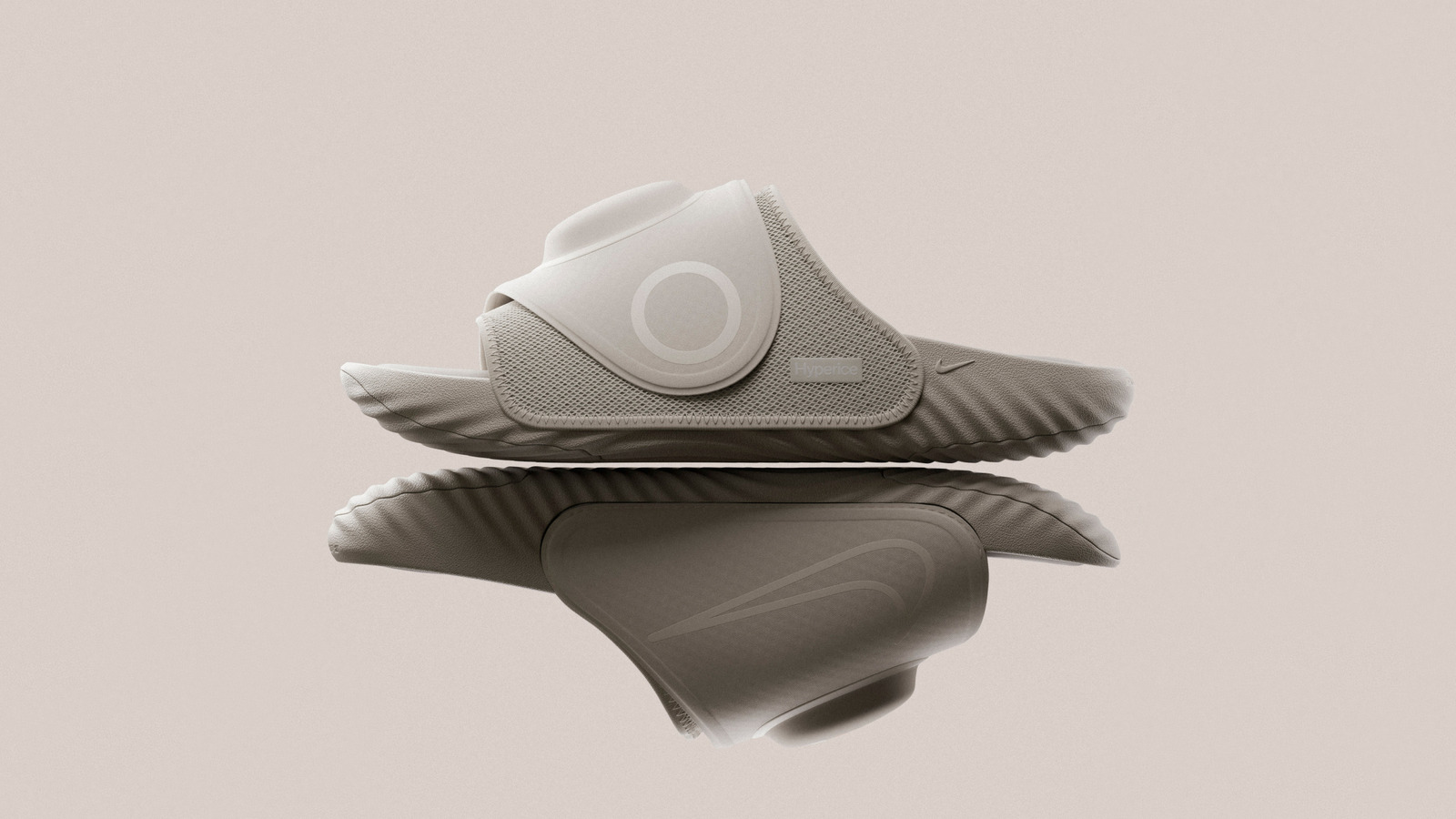
Nike and recovery-tech specialist Hyperice are releasing the Air Zoom Hyperslide, a $249 slide with snap-on magnetic pods offering three heat levels and three vibration settings. It's the duo's second wearable collaboration after the Hyperboot.
Nike and a company called Hyperice made fancy slippers with little magnet-click pods on top that get warm and buzz to help tired feet feel better after exercise. They cost $249 and you can charge them with a USB-C cable, kind of like a phone.
Analysis
Pods Over Pneumatics
Unlike its predecessor, the Hyperboot, which relied on air-compression massage through inflatable bladders, the Air Zoom Hyperslide takes a more modular route. Recovery happens through the Hyperslide Pods, which snap magnetically onto the top of each slide. The detachability is significant: the footwear itself is a relatively conventional cushioned slide, while the expensive electronic bits live in reusable pods that can be removed for charging, swapped between pairs, or replaced if one fails. Battery life lands at roughly an hour per the companies' estimates, with USB-C charging and onboard LEDs to signal heat, vibration, and remaining power. That design tradeoff trades the Hyperboot's enveloping compression for a smaller, lighter form factor aimed at the casual slip-on-after-the-gym use case.
The Hyperice Partnership, Round Two
The Hyperslide is the second collaboration between Nike and Hyperice, following the Hyperboot announced a year earlier. Hyperice has built its brand around recovery hardware for athletes, including percussion massagers and Normatec-style compression boots, and the partnership gives Nike a credible technical partner without requiring the apparel giant to build the electronics expertise in-house. The Air Zoom Hyperslide's pricing at $249 positions it as a premium lifestyle-recovery product, and its eligibility for purchase with FSA/HSA funds suggests the companies are pitching it as a genuine wellness tool, not just a novelty. Distribution through Best Buy and Dick's Sporting Goods alongside Nike and Hyperice's own sites broadens the retail footprint considerably compared to a direct-to-consumer-only launch.
A Niche Within a Niche
Recovery tech sits at an unusual intersection of fashion, fitness, and medical-adjacent hardware, and products like the Hyperslide sit firmly at the consumer end of that spectrum. The author notes that a year of Hyperboot use appeared to reduce leg tightness and knee pain, though the effect came from the compression feature the Hyperslide omits, raising a real question about whether vibration alone delivers comparable benefits. Percussive and vibration-based recovery remains contested in sports science, with enthusiasm often outpacing the evidence base. The Hyperslide is also notably the second generation of a product line, suggesting Nike sees enough commercial signal to keep iterating, even as the broader category of heated, vibrating footwear remains small enough that a single product cycle can meaningfully shape its trajectory.
Key points
- Nike and Hyperice's Air Zoom Hyperslide costs $249 and ships September 29 at Nike, Hyperice, Best Buy, and Dick's Sporting Goods.
- Magnetic Hyperslide Pods provide three heat levels (109–117°F) and three vibration settings, controllable via the Hyperice app or onboard buttons.
- Pods run about an hour per charge via USB-C; the slides themselves are available in 15 US sizes and two colors (black and Orewood tan).
- It's the second Nike-Hyperice collaboration, following the Hyperboot, and is eligible for FSA/HSA purchase.
- Unlike the Hyperboot, the Hyperslide lacks the air-compression massage that the reviewer credits for the previous product's perceived recovery benefits.
If the Hyperslide finds a market, it validates the modular pod approach as a template for future Nike-Hyperice collaborations, and the FSA/HSA eligibility could open a wider health-conscious buyer base. The lower price and easier form factor compared to the Hyperboot may also pull in casual gym-goers who found the boot too specialized.
The Hyperslide lacks the compression feature that the author credits for the Hyperboot's perceived recovery benefits, and vibration-only recovery tools have mixed support in the sports science literature. At $249, the price may feel steep for what is effectively a heated, vibrating slipper, especially given the ~1-hour battery life per charge cycle.


