No bailouts for Jaguar Land Rover amid reports of thousands of job cuts, says minister
Jaguar Land Rover plans up to 4,000 redundancies, but Business Secretary Jonathan Reynolds has ruled out government bailouts, emphasizing competitiveness over intervention. The cuts come as JLR battles Trump tariffs and Chinese competition.
Intelligence analysis by Gemini 2.5 Flash
Jaguar Land Rover, owned by the Indian conglomerate Tata Motors, is facing significant job cuts, potentially up to 4,000, as it seeks to implement £1.7bn in cost reductions over two years. Despite union pressure, the UK government, through Business Secretary Jonathan Reynolds, has stated it will not provide financial bailouts, instead focusing on making the carmaker competitive amidst…
Imagine a big car company called Jaguar Land Rover is having a tough time selling cars because of new taxes on its cars in America and lots of new, cheaper cars from China. So, they might have to let go of about 4,000 people who work for them. The government says it won't give them money to stop this, but wants the company to become super good at making cars so it can compete better.
Analysis
Jaguar Land Rover, a cornerstone of the UK's manufacturing sector and owned by Indian conglomerate Tata Motors, is grappling with a confluence of severe economic headwinds, necessitating a significant restructuring effort. The company's announcement of a voluntary redundancy program, potentially leading to up to 4,000 job losses, underscores the precarious position of even established automotive giants in the current global landscape. This move, representing almost 12% of JLR’s 34,000-strong UK workforce, is part of a broader £1.7bn cost-cutting initiative aimed at shoring up the business against a slump in sales and external pressures. The expected redundancies are reportedly weighted towards more senior roles in management and research and development, rather than shop floor production workers, indicating a strategic effort to streamline operations and reduce overheads.
Jonathan Reynolds
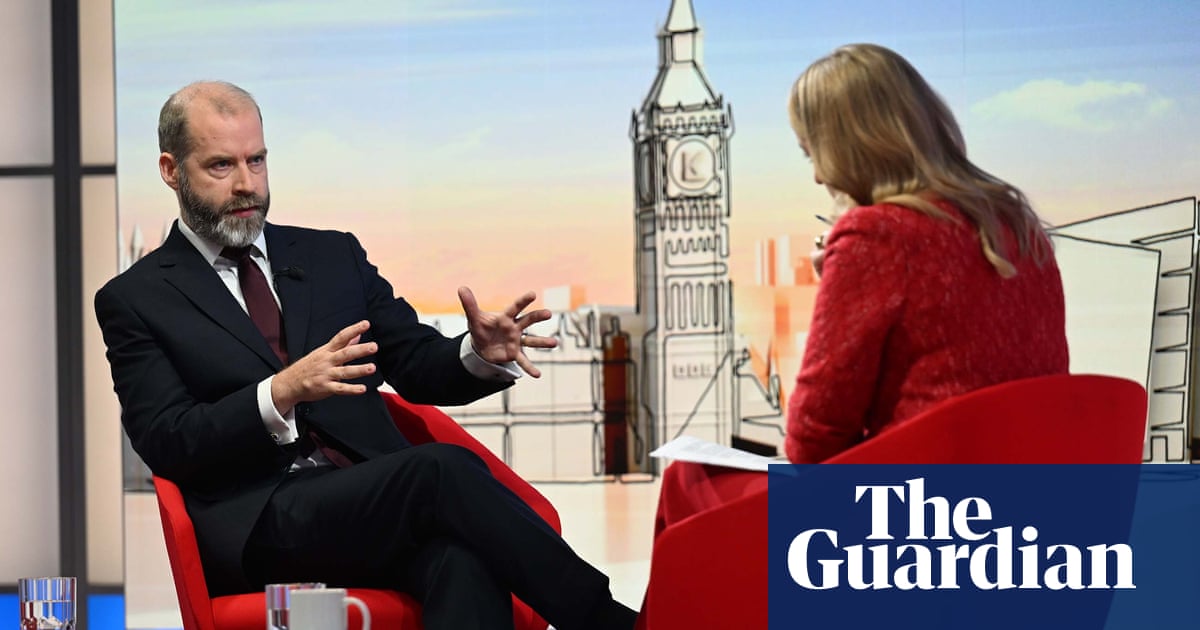
The UK Business Secretary, Jonathan Reynolds, has firmly articulated the government's position regarding the impending job cuts at Jaguar Land Rover, stating that direct financial bailouts are not on the table. Speaking on the BBC’s Laura Kuenssberg show, Reynolds emphasized that his role is not to “intervene and run businesses,” but rather to foster an environment where companies can become “as competitive as possible.” This stance signals a departure from previous interventions, such as the £1.5bn guaranteed loan facility provided to JLR last year after a cyber-attack, none of which was ultimately drawn down.
While ruling out bailouts, Reynolds did hint at other avenues of government support for the struggling automotive sector. He refused to dismiss the possibility of relaxing government targets for UK automakers to achieve 80% zero-emission car sales by 2030, a policy that would effectively ban new petrol and diesel car sales by 2035. Carmakers and unions have consistently lobbied for a slower transition, arguing that the current targets outpace actual customer demand and impose undue financial strain. Reynolds also mentioned the government's willingness to invest “alongside” industry, citing the 2024 Labour government's £500m investment in Tata's Port Talbot steelworks, though that investment did not prevent 2,500 job losses.
4,000 redundancies
The scale of the proposed job cuts at Jaguar Land Rover, potentially reaching 4,000 positions, highlights the severe challenges facing the company. These redundancies are a direct response to pressure from its parent company, Tata Motors, to offset a significant slump in sales. The initial phase is expected to be a voluntary redundancy program, but the company has not ruled out compulsory job losses, which could be detailed as early as Monday.
The impact of these cuts extends beyond the immediate workforce, posing a significant political challenge for figures like Andy Burnham, who has recently championed a pledge to “reindustrialise” Britain. The concentration of job losses in senior management and R&D roles suggests a strategic recalibration of JLR's operational structure, aiming to reduce fixed costs and improve efficiency in a highly competitive market. Union leaders, including Unite general secretary Sharon Graham, are scheduled for crunch talks with JLR chief executive PB Balaji, where they are expected to advocate for retraining and voluntary options to mitigate the impact of compulsory job losses.
Trump tariffs
A major contributing factor to JLR's current predicament is the ongoing fallout from Donald Trump’s tariff wars, which have significantly impacted the carmaker's crucial American market. Initially, Trump imposed tariffs of 27.5% on British cars, later reducing them to 10% as part of a US-UK trade deal. Despite this reduction, the tariffs have created persistent headwinds for JLR models like the Range Rover and Defender, making them less competitive in the US.
Beyond the tariffs, JLR has also contended with intense competition from Chinese models, such as the Jaecoo 7, which has rapidly climbed the ranks to become one of Britain’s top-selling cars, directly eating into JLR's sales. Furthermore, the company suffered a crippling cyber-attack last year that halted production for several weeks and had a noticeable impact on the UK economy and its supply chains. These external factors are not unique to JLR; the article notes that German carmaker Volkswagen also plans to cut 50,000 jobs due to similar pressures from US tariffs and Chinese competition, underscoring a systemic challenge across the global automotive industry.
Key points
- Jaguar Land Rover plans up to 4,000 job cuts, representing nearly 12% of its UK workforce.
- Business Secretary Jonathan Reynolds ruled out government bailouts, prioritizing competitiveness over direct financial intervention.
- The redundancies are part of a £1.7bn cost-reduction plan driven by a slump in sales, Trump tariffs, Chinese competition, and a cyber-attack.
- Union leaders will engage in crunch talks to push for voluntary redundancies and retraining options to avoid compulsory job losses.
- The government is considering watering down 2030 zero-emission car sales targets to support carmakers facing challenging market conditions.
The government's focus on making JLR more competitive, coupled with potential flexibility on zero-emission targets, could lead to a more sustainable and efficient company in the long run. The existing, undrawn £1.5bn loan facility also suggests a safety net remains available should conditions worsen significantly.
The substantial job cuts and the government's refusal of a direct bailout could severely impact the UK's manufacturing sector and local economies, potentially undermining pledges to reindustrialize Britain. Continued global trade tensions and fierce competition might force further restructuring and job losses across the automotive industry.
Market signals
- TATAMOTORS Reports of significant job cuts at its subsidiary Jaguar Land Rover due to challenging market conditions could negatively impact investor sentiment for Tata Motors.
AI-generated analysis of potential market relevance. Not financial advice.