No community too remote for clean water, says Deputy President
South African Deputy President Paul Mashatile launched water service projects in KwaZulu-Natal, reaffirming the government's commitment to providing clean water as a constitutional right to all communities, including remote ones.
Intelligence analysis by Gemini 2.5 Flash
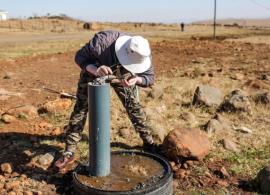
Deputy President Paul Mashatile emphasized that access to clean water is a fundamental human right and a core government priority, especially for rural communities. The launch of the Babanango Community Water Supply Scheme and Msinga Borehole Water Supply Intervention, coinciding with Mandela Day, underscores the government's dedication to improving lives and honoring Nelson Mandela's…
Imagine a big leader in South Africa saying that everyone, even kids living in very far-off villages, should have clean water to drink, just like it's a rule in their country's book. They've started new projects, like building big water pipes and treatment plants, to bring fresh water to places that have waited a long time. But they also need everyone to help look after these new water systems so they don't get broken.
Analysis
Upholding a Constitutional Right to Water
Deputy President Paul Mashatile's remarks at the launch of the Mandela Day Water Services Project in KwaZulu-Natal underscore the South African government's commitment to a fundamental constitutional right: access to clean water. Mashatile explicitly stated that denying a community clean water is to deny them dignity, opportunity, and the full enjoyment of their constitutional rights. This framing elevates water provision beyond a mere service to a matter of human rights and social justice, aligning with Nelson Mandela's legacy of improving the lives of vulnerable communities.
The launch included significant interventions such as the Babanango Community Water Supply Scheme, designed to deliver up to 500,000 litres of treated water daily, and the Msinga Borehole Water Supply Intervention. These projects, along with 27 other decentralized water supply initiatives across KwaZulu-Natal, are practical demonstrations of the government's declaration that "access to water cannot be a privilege enjoyed by some; but must be a reality for all." This initiative aims to bring hope and dignity to areas that have long struggled with unreliable water access.
Addressing South Africa's Water Challenges
The Deputy President openly acknowledged the significant water supply challenges facing South Africa, attributing them to a confluence of factors including climate variability, aging infrastructure, rapid population growth, pervasive vandalism, and years of underinvestment. These systemic issues have created substantial backlogs in service delivery, particularly in rural and underserved areas. The government's response includes the National Water Access Acceleration Programme, which aims to expand access to safe and reliable water.
Key interventions under this program involve accelerating water provision through borehole development, protecting natural springs, promoting rainwater harvesting, and rehabilitating existing water schemes. Furthermore, the Water Services Infrastructure Grant is being strategically utilized to address the critical infrastructure backlogs in these vulnerable communities. These multi-faceted approaches are designed not only to provide immediate relief but also to build long-term resilience and sustainability in the nation's water supply systems.
Fostering Community Stewardship and Collaboration
A crucial aspect highlighted by Deputy President Mashatile is the importance of cooperation and community involvement in ensuring the success and longevity of these water projects. He emphasized the value of collaboration between national, provincial, and local government spheres, alongside traditional leaders and communities, under the District Development Model (DDM). This model aims to improve service delivery through coordinated planning and execution across all levels of governance, ensuring that resources are effectively deployed and managed.
Beyond governmental collaboration, Mashatile issued a strong call for community ownership and active participation in safeguarding the newly installed infrastructure. He urged residents to protect these vital assets against vandalism and misuse, stressing that the sustainability of such investments depends heavily on community vigilance. This appeal underscores the understanding that while government initiates and funds these projects, their long-term benefit relies on the collective responsibility of the communities they serve, ensuring that future generations can continue to benefit from these essential services.
Key points
- Deputy President Paul Mashatile launched water service projects in KwaZulu-Natal, emphasizing clean water as a constitutional right.
- The Babanango Community Water Supply Scheme and Msinga Borehole Water Supply Intervention are key projects, alongside 27 other decentralized initiatives.
- Government acknowledges significant water supply challenges including climate change, aging infrastructure, population growth, vandalism, and underinvestment.
- Interventions include the National Water Access Acceleration Programme, borehole development, spring protection, and the Water Services Infrastructure Grant.
- The Deputy President urged communities to protect new infrastructure against vandalism for long-term sustainability, highlighting the District Development Model for inter-governmental cooperation.
If these water projects are successfully implemented and maintained, millions of South Africans in rural areas could gain consistent access to clean water, significantly improving public health, dignity, and economic opportunities. The collaborative governance model and community involvement could foster greater trust and shared responsibility, leading to more sustainable development outcomes.
Despite the government's commitment, the long-standing challenges of climate variability, aging infrastructure, population growth, and particularly vandalism, pose significant risks to the sustainability of these projects. Without robust protection and continued investment, these new schemes could face similar issues, potentially leaving communities still underserved and eroding public confidence.