No point in being a victim: Annette Lee, 34, on dealing with S'porean cynicism towards local films & influencers
Annette Lee, the 34-year-old Singaporean influencer-turned-filmmaker, released her debut feature 'Dream Stall' to unusually warm reception locally despite online cynicism about her social media origins.
Intelligence analysis by Llama
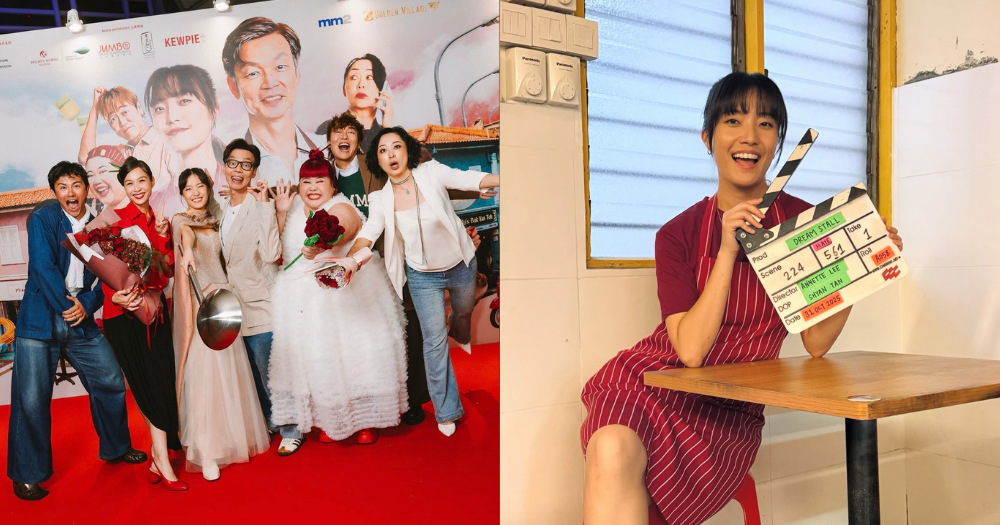
A profile of Annette Lee, who went from SGAG influencer to directing and starring in her debut feature film 'Dream Stall', confronting Singaporean skepticism about both local films and influencer-turned-creators.
Annette Lee used to make funny short videos online in Singapore. People on the internet teased her and said she should just stick to being an influencer. Instead, she spent years saving up, wrote a movie about a bak kut teh stall, directed it, acted in it, and even sang on the soundtrack. Lots of people in Singapore don't like local films, but her movie was a hit anyway. Her big lesson: stop calling yourself a victim and just keep making things.
Analysis
From SGAG Skits to a Bak Kut Teh Love Letter
Annette Lee's path to feature filmmaking runs through Singapore's most recognisable meme factory. After majoring in digital filmmaking at university, she joined SGAG in 2016 and, by her account, ended up in front of the camera only because no one else would be — the platform's video team was a one-person operation at the time. That constraint shaped her instincts as a self-described "one-man show" who would write, shoot, direct, produce, edit and then star in her own content. Her debut feature, "Dream Stall", is built in the same mould: she conceptualised and directed it, co-wrote the script, plays protagonist Enya, and even sings on the soundtrack. The film frames itself as, in the article's words, "a love letter to the Singaporean identity, analogised through a bak kut teh stall" — a deliberately local premise for a filmmaker whose earlier work lived on phone screens rather than cinema screens.
Funding It Without Selling Out
The business model behind "Dream Stall" is, in some ways, as distinctive as the film. Lee told Mothership she rejected the well-worn Singaporean template of "badvertisements", the article's phrasing, and instead assembled a patchwork of sponsors, outside investors and her own savings. Sponsors were admitted only when they slotted naturally into the storyboard — Singapore Oceanarium hosted a plot-pivotal date scene — and she stresses she took nothing from her family. "I just work like dog for the last few years," she is quoted as saying, with the candid self-explanation that the project was a passion bet rather than a commercial one. Her husband, she adds, was initially "very worried" because the margins looked thin. The accounts are notable because they sidestep the standard sponsorship-heavy route and lean on the creator economy infrastructure Lee built for a decade.
Cynicism as Default — and Choosing Not to Be Its Target
The harder obstacle, the article suggests, was cultural rather than financial. Lee acknowledges a "default negative" sentiment toward local art, compounded by her profile as a young, female, influencer-turned-director. On a HardwareZone thread, commenters dismissed her acting, the local film scene and her social media roots; one told her to "go fly kite lah." Yet when the journalist raises this directly, Lee reframes it: "People have been so nice," she insists. The dismissal, in her telling, comes from a minority, and the productive response is not to litigate each comment. She rejects the victim frame explicitly, telling Mothership, "if every day you wake up and you remind yourself that you're a victim, you'll never get anything done." It is a philosophy she layers onto her own self-assessment as a "recovering perfectionist", and it gives the profile its narrative spine: a creator who took Singaporean scepticism as a known cost rather than an insurmountable barrier — and whose film, the article reports, drew unusually warm responses from media and MPs, framed as the most notable local cinematic success since Anthony Chen's "Ilo Ilo" in 2013.
Key points
- Annette Lee, 34, directed, co-wrote, produced and stars in her debut feature 'Dream Stall', a Singapore-identity story centred on a bak kut teh stall
- She funded the film through a mix of sponsors, investors and personal savings after rejecting the 'badvertisements' model she associates with Singaporean productions
- Lee started her on-camera career at SGAG in 2016 after launching the platform's video team, working as a 'one-man show'
- The film was encouraged by filmmaker Anthony Chen shortly after Lee gave birth and during her confinement period
- She dismisses HardwareZone-era comments telling her to 'go fly kite lah' as a minority view, framing her response as refusing to see herself as a victim
- Mothership frames the film's reception as the most notable local cinematic success since Anthony Chen's 'Ilo Ilo' in 2013
If 'Dream Stall's' reception converts curiosity into repeat viewership, it could open a sustainable funding route for Singaporean creators who bypass the traditional advertisement-driven model and arrive through social media — potentially widening what local cinema looks like beyond the Jack Neo template Lee pushes back against.
Without sustained audience turnout, the film's warm reception risks reading as a one-off and the entrenched 'default negative' posture toward local productions could blunt investor appetite for the next round of Singaporean features, especially those led by creator-economy figures.