NTSB investigators confirm Tesla driver overrode Full Self-Driving system in fatal crash
NTSB investigators say a Tesla driver manually overrode Full Self-Driving by flooring the accelerator to 100% in a fatal Texas crash, reaching over 70 mph before hitting a home.
Intelligence analysis by Llama
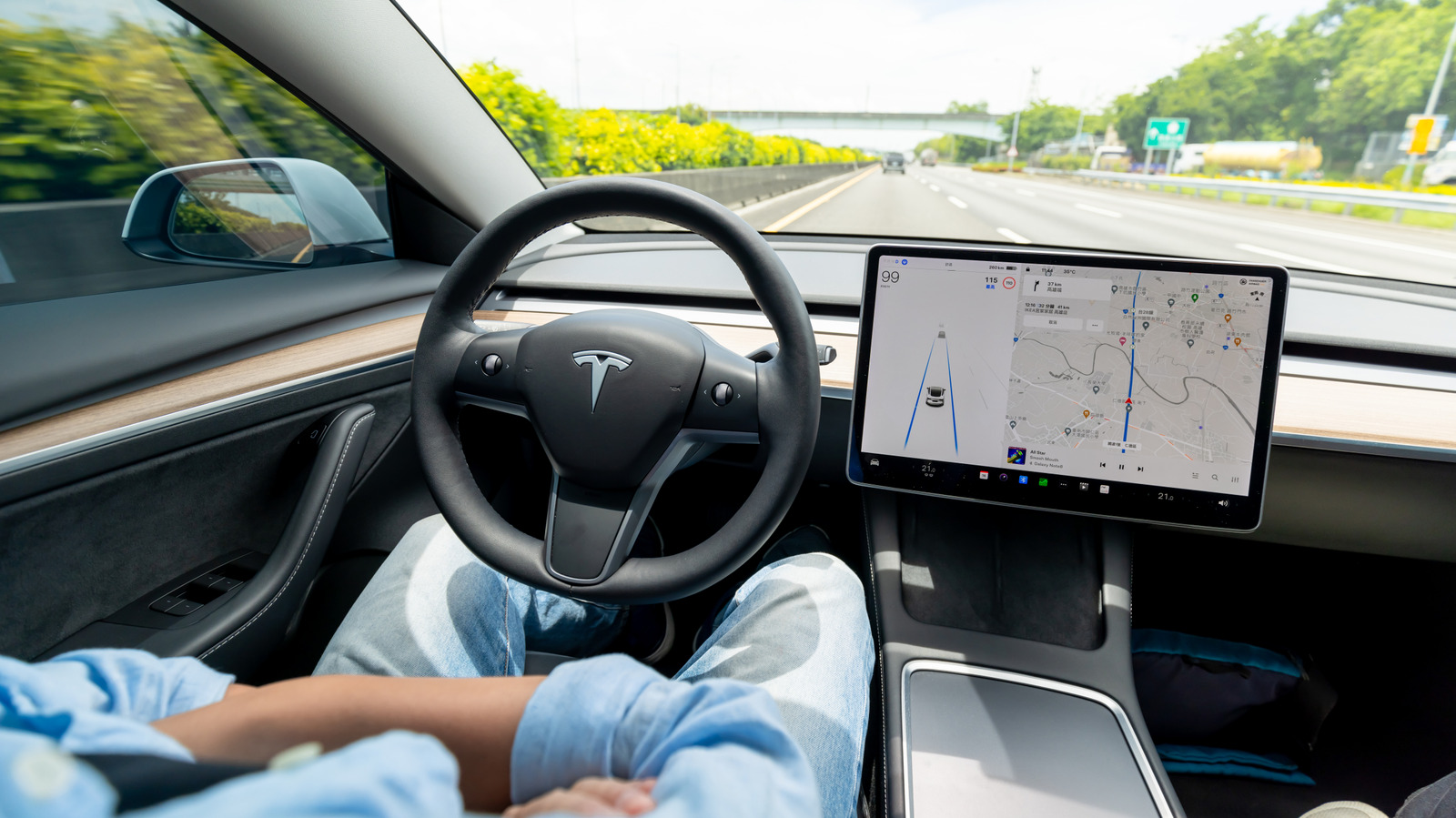
Federal investigators have confirmed that the driver of a Tesla Model 3, not the car's Full Self-Driving software, was responsible for accelerating into a Texas home in June, killing a resident. The finding reframes the crash as a driver failure, but it also lands amid growing regulatory scrutiny of Tesla's driver-assist technology.
A man was driving a Tesla that can drive itself, but he pressed the gas pedal all the way down to pass another car, which turned off the self-driving mode. The car went really fast, crashed into a house, and the person inside died. Investigators checked and confirmed the car wasn't driving itself at the end — the man was.
Analysis
A Pedal, Not a Software Glitch
The NTSB's preliminary report puts to rest the early theory that Tesla's Full Self-Driving (Supervised) software caused a Model 3 to plow into a Texas home in June, killing Martha Avila. According to investigators, the driver, Michael Butler, pressed the accelerator to 100% just before the crash, a manual input that disabled FSD and sent the car hurtling through a residential neighborhood at more than 70 mph. The Wall Street Journal reports Butler told authorities he had been completing a DoorDash delivery and engaged FSD while changing music on the center touchscreen, claiming he then "passed out." No alcohol or drugs were found in his system, and the brake pedal was never applied in the final minutes before impact. Tesla AI head Ashok Elluswamy had already pointed to the accelerator override on X in June, and the NTSB's finding now gives that account the weight of a federal investigation.
Liability Tilts Away From Tesla, for Now
For Tesla, the preliminary report is a defensive win: the crash was not a software failure but a driver override, the kind of edge case the company has long argued is outside FSD's responsibility. Avila's family filed a wrongful death suit on June 24 accusing both Butler and Tesla of negligence, and Butler was charged with manslaughter in July. Even so, the crash is feeding into a broader pattern that has drawn federal attention well beyond this single incident. The National Highway Traffic Safety Administration is running its own probe into the Texas wreck and, in October 2025, opened a wider investigation into Tesla's self-driving technology, a review that could still expose weaknesses in how FSD handles driver disengagement, pedal inputs, and the seam between human and machine control.
The Supervision Problem
FSD (Supervised) is marketed as requiring an attentive driver, yet the system is engaged on public roads thousands of times a day by people juggling deliveries, children, commutes, and touchscreens. Butler's reported sequence, enabling autonomy to free his hands, then losing consciousness, is exactly the failure mode regulators have worried about. The NTSB's confirmation that a single pedal press can disable FSD effectively answers one question ("was this the car's fault?") while sharpening another: what minimum safeguards should be required before a driver is allowed to hand over control at all? With NHTSA's broader Tesla probe still open, this crash is likely to feature as a case study rather than a closed file.
Key points
- NTSB says the Tesla driver pressed the accelerator to 100%, overriding Full Self-Driving before the fatal crash in Texas
- The vehicle was traveling at more than 70 mph, according to investigators, matching a 73 mph figure Tesla's AI head posted on X
- The driver told authorities he was making a DoorDash delivery and passed out after engaging FSD; no alcohol or drugs were found
- The victim's family filed a wrongful death suit on June 24, and the driver was charged with manslaughter in July
- NHTSA is also investigating the crash and is already conducting a broader probe into Tesla's self-driving technology
Even with the driver override confirmed, the case could become evidence in NHTSA's wider Tesla investigation, potentially forcing software changes, recalls, or stricter driver-monitoring requirements. Each new fatal crash involving FSD erodes public trust in autonomous-driving claims and invites tighter federal rules that could slow Tesla's autonomy roadmap.