NVIDIA Alpamayo 2 Super, the Frontier Open Model for Robotaxis and Autonomous Vehicles, Now Available for Commercial Use
NVIDIA Alpamayo 2 Super, a frontier open model for robotaxis and autonomous vehicles, is now available for commercial use. It offers advanced reasoning capabilities and is part of the Alpamayo family, the most-adopted open reasoning models for autonomous driving on Huggin…
Intelligence analysis by Llama
NVIDIA Alpamayo 2 Super is a frontier open model for robotaxis and autonomous vehicles that offers advanced reasoning capabilities. It is part of the Alpamayo family and is available for commercial use.
Imagine you're in a self-driving car, and it needs to make a decision about what to do next. Alpamayo 2 Super is a special computer program that helps the car make good decisions by understanding the situation and reasoning about what to do. It's like having a super-smart copilot that can help the car navigate complex situations.
Analysis
Open Licensing for Production AVs
Alpamayo 2 Super is available on Hugging Face under OpenMDW-1.1, the Linux Foundation's permissive license for open AI model distributions. This license covers fine-tuning, derivative models, and commercial redistribution, allowing AV developers, automakers, truckmakers, and suppliers to adapt Alpamayo to their own data, driving policies, and deployment strategies.
Benchmark-Leading Reasoning at Frontier Scale
Alpamayo 2 Super ranks first on LingoQA, an autonomous driving reasoning benchmark, among nearly 40 models evaluated. In NVIDIA testing using the Lingo-Judge metric, it outperformed Qwen2.5-VL 72B by 17.0 points, Gemini 2.5 Pro by 15.1 points, and GPT-4o by 23.2 points, demonstrating state-of-the-art reasoning for driving-centric scenarios.
A Multitask Foundation Model for Robotaxis and Autonomous Driving
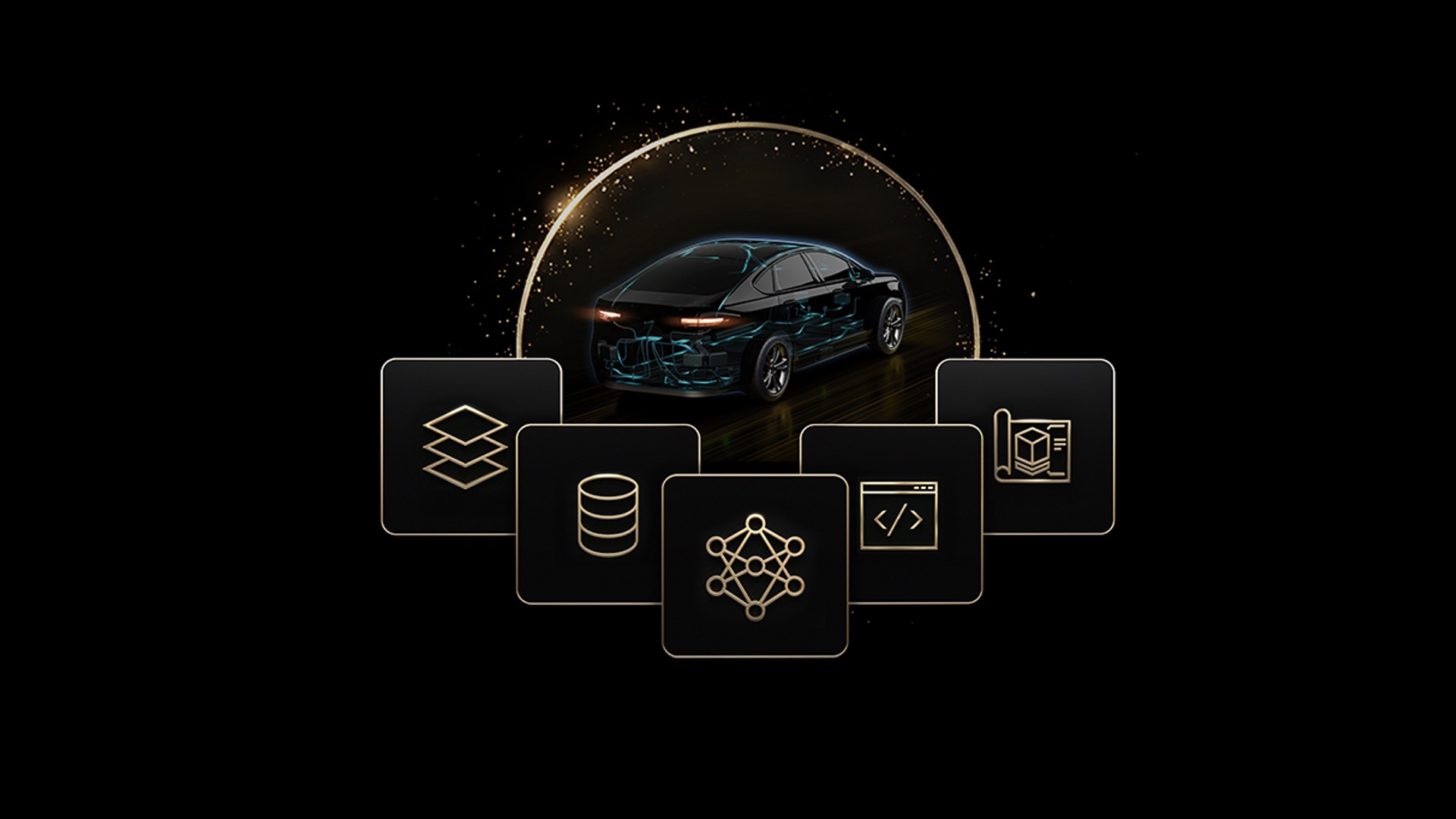
For each driving situation, Alpamayo 2 Super can produce five tightly coupled outputs: a trajectory describing the vehicle's planned path, a chain-of-causation (CoC) trace that explains the reasoning behind the decision, a meta-action that captures the model's intent, reasoning auto-labels that generate CoC annotations for training and validation data, and visual question answering responses with 2D visual grounding that link the model's answers to specific regions in camera images.
Key points
- NVIDIA Alpamayo 2 Super is a frontier open model for robotaxis and autonomous vehicles.
- It offers advanced reasoning capabilities and is part of the Alpamayo family.
- Alpamayo 2 Super is available for commercial use and can be fine-tuned, adapted, and redistributed under the OpenMDW-1.1 license.
- It ranks first on LingoQA, an autonomous driving reasoning benchmark, and demonstrates state-of-the-art reasoning for driving-centric scenarios.
- Alpamayo 2 Super can produce five tightly coupled outputs for each driving situation, including a trajectory, a chain-of-causation (CoC) trace, a meta-action, reasoning auto-labels, and visual question answering responses with 2D visual grounding.
The availability of Alpamayo 2 Super for commercial use could lead to faster development and deployment of autonomous driving systems, which could improve road safety and reduce traffic congestion.
However, the development and deployment of autonomous driving systems also raises concerns about job displacement and cybersecurity risks. If not properly addressed, these risks could undermine the benefits of autonomous driving.