Nvidia CEO Jensen Huang resigns over affairs scandal and company appoints interim CEO – as it happened
Nvidia CEO Jensen Huang has resigned following reports of extramarital affairs, including one with an alleged Chinese spy. CFO Colette Kress is interim CEO.
Intelligence analysis by Gemini 2.5 Flash Lite
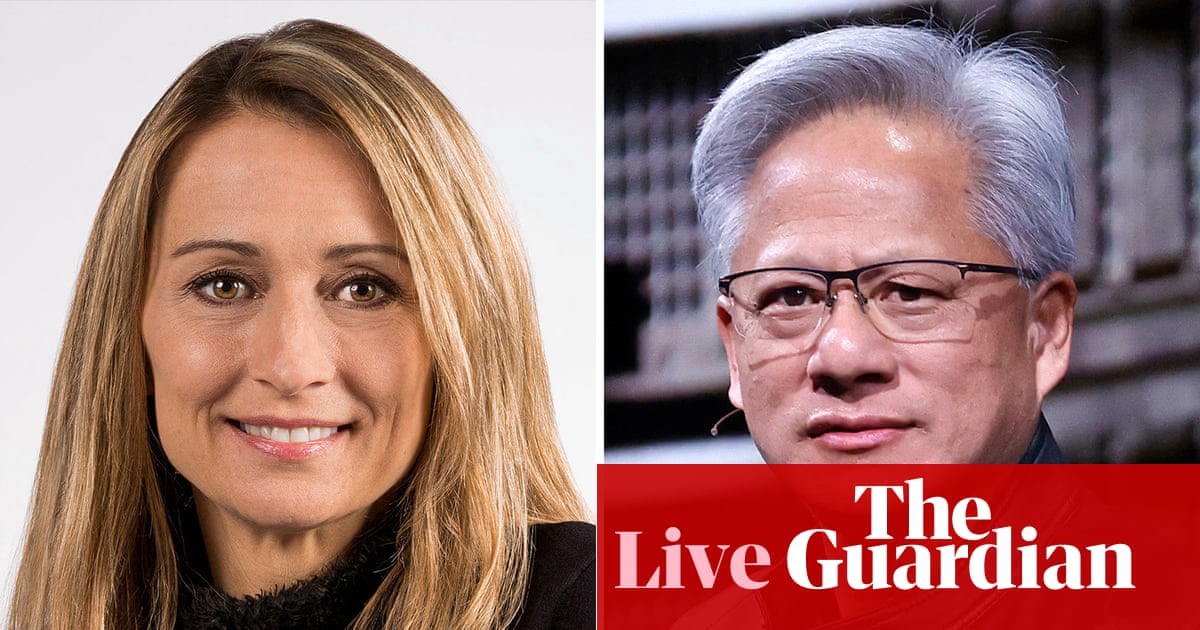
The dramatic resignation of Nvidia CEO Jensen Huang, a pivotal figure in the AI boom, over extramarital affairs, including one with an alleged Chinese spy, has sent shockwaves through the tech industry and global markets. The company's shares initially plunged, reflecting investor uncertainty, before partially recovering.
Imagine the captain of a super-fast spaceship, who built it himself, suddenly has to leave. Everyone is worried if the ship will still fly as fast and if they'll reach their destination. The company's money-makers (shares) got wobbly because of this big change at the top.
Analysis
Jensen Huang's Departure
Jensen Huang, the co-founder and long-serving CEO of Nvidia, has stepped down amidst a scandal involving multiple extramarital affairs. The most sensational of these allegations involves an alleged Chinese spy, Alice Huang, with whom he reportedly had a relationship. This affair, coupled with reports of another intimate relationship with a second employee, Kimberly Powell, vice-president of healthcare, has led to his immediate resignation from his roles as CEO, president, and board member. The company's board of directors, while acknowledging his "profound" contributions, did not directly address the personal conduct revelations in their official statement, focusing instead on his legacy in building Nvidia into a global technology powerhouse.
Financial and Market Repercussions
The news of Huang's resignation triggered a significant sell-off in Nvidia's stock. Shares plummeted by 14% upon the opening of Wall Street trading, reflecting deep investor concern over the leadership vacuum and the potential implications for the company's strategic direction and operational stability. While the stock recovered some of its initial losses to close over 4% down, the volatility underscores the market's sensitivity to leadership changes at such a critical juncture for the AI sector. The company's market value has seen a substantial decline of $888 billion this week, highlighting the immense financial weight Jensen Huang carried.
Succession and Future Uncertainty
Nvidia's board has appointed Chief Financial Officer Colette Kress as interim CEO while they search for a permanent successor. The process will involve considering both internal and external candidates. Speculation about potential replacements has already begun, with names like former Apple CEO Tim Cook, Arm Holdings CEO Rene Haas, and AMD CEO Lisa Su being mentioned. The scandal has also drawn attention from political figures, with former President Donald Trump suggesting Tim Cook as a replacement. Furthermore, the alleged connections between Alice Huang and businesses that may have benefited Nvidia's competitor, Huawei, raise serious questions about potential conflicts of interest and national security concerns, with reports indicating Jensen Huang may be asked to appear before Congress.
Key points
- Nvidia CEO Jensen Huang has resigned due to reports of extramarital affairs, including one with an alleged Chinese spy.
- CFO Colette Kress has been appointed as interim CEO.
- Nvidia's share price plunged significantly following the announcement, reflecting investor concerns.
- The scandal involves allegations of relationships with two employees, one of whom is reportedly linked to Nvidia's competitor, Huawei.
- The company's board is initiating a search for a permanent CEO, considering both internal and external candidates.
Nvidia's board is committed to finding a strong successor, and the interim leadership under CFO Colette Kress aims to maintain operational stability. The company's foundational role in AI technology and its robust product pipeline could allow it to weather this leadership transition and continue its growth trajectory.
The scandal and leadership vacuum could create significant internal disruption and external investor distrust, potentially slowing down innovation and impacting Nvidia's ability to secure crucial supply chain partnerships. The geopolitical implications of the alleged Chinese spy connection could also lead to increased regulatory scrutiny and international trade complications.