NVIDIA Open Sources First GPU-Accelerated Medical Physics Simulation Framework
NVIDIA has open-sourced a GPU-accelerated medical physics simulation framework within Isaac for Healthcare, enabling developers to model anatomy-device interactions and train medical robots faster. This framework significantly reduces training time by running thousands of…
Intelligence analysis by Gemini 2.5 Flash
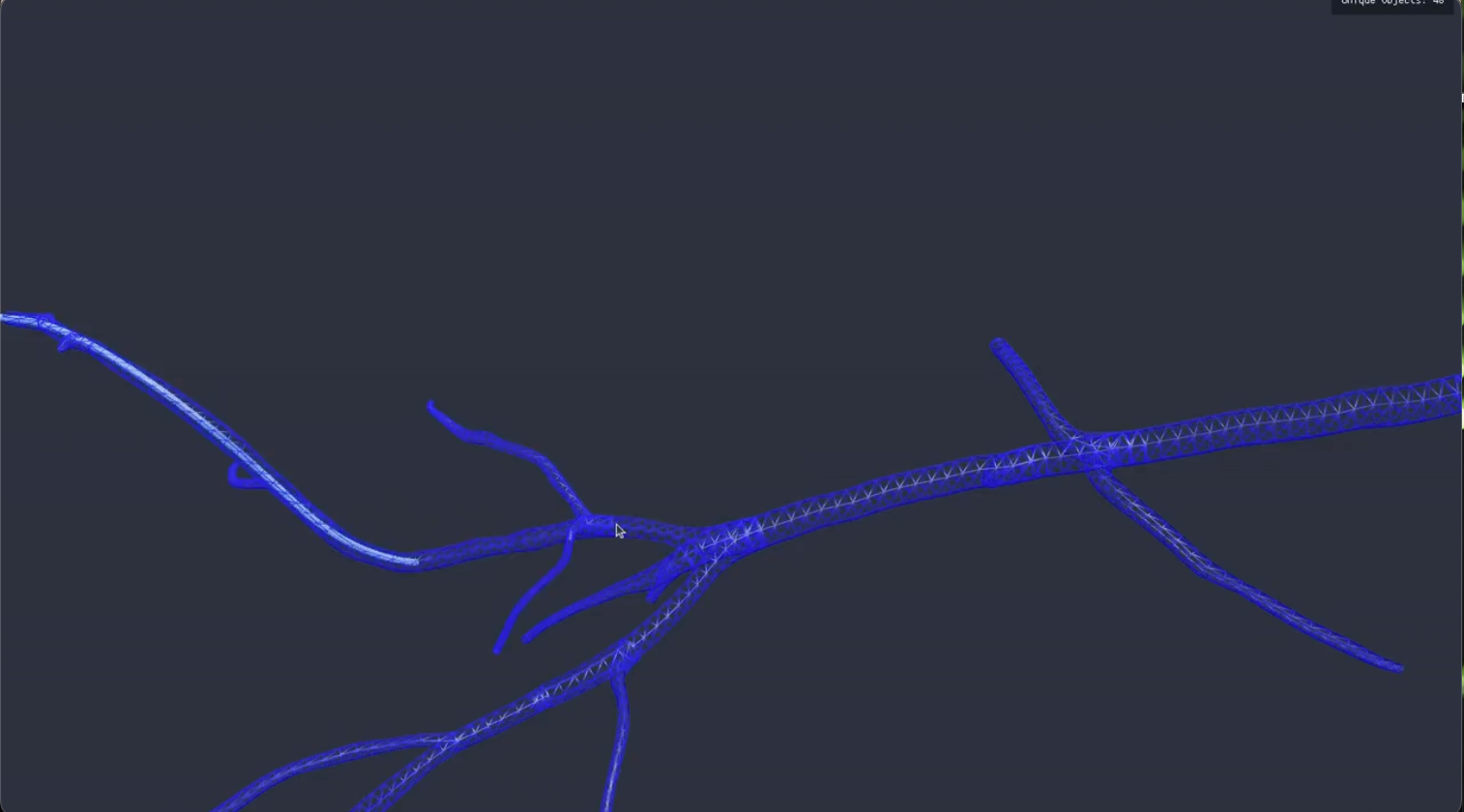
NVIDIA's new open-source Medical Physics Simulation framework, part of Isaac for Healthcare, leverages GPU acceleration to allow medical robotics developers to create virtual training grounds. It simulates complex anatomy-device interactions and sensor inputs, drastically cutting down the time needed to train and test robot behaviors before physical prototyping, thereby accelerating i…
Imagine teaching a robot doctor how to do surgery without actually practicing on a real person. NVIDIA made a super-fast computer game where robots can practice thousands of times in a pretend body. It's like a flight simulator for doctors, but for tiny robots, helping them learn how to move and feel things inside the body much quicker and safer before they ever touch a real patient.
Analysis
Bridging the Data Gap in Medical Robotics
One of the most significant bottlenecks in the advancement of healthcare robotics is the immense challenge of acquiring sufficient, varied data. Medical robots need to learn how to interact with diverse anatomies, handle instruments that bend and slip, and navigate noisy or incomplete imaging data. Crucially, developers require data for rare, edge-case scenarios that are difficult and costly to capture in real-world clinical settings, making comprehensive training and testing a formidable task.
NVIDIA's new Medical Physics Simulation framework directly addresses this critical data scarcity. Integrated within NVIDIA Isaac for Healthcare and now open source, this GPU-accelerated capability allows developers to model intricate anatomy-device interactions, generate hard-to-capture scenarios virtually, and conduct extensive in silico testing. This virtual training ground enables the development and evaluation of robot policies long before the need for expensive and time-consuming hardware-heavy testing.
The Power of Open-Source and GPU Acceleration
The decision to open-source the Medical Physics Simulation framework is particularly impactful for the healthcare sector. Transparency is paramount in medical technology, as teams require clear insight into the data, models, and weights that govern system behavior, especially for regulatory review. Open access allows developers to inspect the framework, adapt it to their specific devices and workflows, reproduce results, and identify limitations, fostering trust and accelerating responsible innovation.
The framework's power is amplified by its GPU acceleration, leveraging NVIDIA CUDA and built upon NVIDIA Warp, Newton, and Cosmos technologies. This enables the simultaneous execution of hundreds, even thousands, of parallel simulation environments. Benchmarks cited in the article demonstrate a dramatic reduction in training time, cutting a process that once took over five hours for 8,192 robot-training environments to under two minutes. This transforms simulation from a bespoke engineering project into a scalable, reusable infrastructure for robot builders.
Furthermore, the framework intelligently combines classical physics simulation with generative AI physics simulation. Classical methods accurately model known physical rules such as device contact, friction, and motion. Complementing this, NVIDIA Cosmos-H Dreams, a real-time generative AI capability, models visual scene dynamics learned from procedural data. This hybrid approach provides developers with a richer, more comprehensive method to build and rigorously test healthcare robotics systems in virtual environments before progressing to physical prototypes and lab testing.
Real-World Impact and Industry Adoption
The impact of this framework is already being demonstrated by leaders in medical robotics. Companies like CMR Surgical and Cambridge Consultants, part of Capgemini, are actively utilizing Cosmos-H-Dreams to implicitly learn interaction physics for soft-tissue surgical procedures and generate patient-specific simulations. CMR Surgical has notably contributed nearly 500 hours of anonymized clinical data from its Versius Surgical Robotic System to the Open-H Embodiment open dataset, benefiting a range of procedures from cholecystectomy to hysterectomy.
Other major players are also integrating this technology into their development pipelines. Johnson & Johnson MedTech is employing Isaac for Healthcare’s Medical Physics Simulation and a Cosmos-based foundation model to construct digital twins of its endoluminal MONARCH platform, focusing on complex urology and kidney-stone scenarios. XCath is leveraging the framework for endovascular autonomy policy training, while Inner Logic is accelerating medical technology evolution by generating synthetic data and producing in silico evidence to support regulatory pathways. Medtronic Structural Heart is exploring its application with simulated X-ray sensing to generate data for catheter navigation research, underscoring the broad utility and transformative potential of NVIDIA's open-source simulation framework across diverse medical robotics applications.
Key points
- NVIDIA open-sourced its GPU-accelerated Medical Physics Simulation framework for healthcare robotics.
- The framework enables modeling of anatomy-device interactions and sensor inputs, drastically reducing robot training time.
- It combines classical physics simulation with generative AI physics simulation (Cosmos-H Dreams).
- Industry leaders like CMR Surgical, Johnson & Johnson MedTech, and Medtronic are already using or exploring the technology.
- Open-sourcing promotes transparency, reproducibility, and faster innovation in medical robotics.
The open-sourcing of this framework could significantly accelerate the development and deployment of safer, more effective medical robots globally. By providing a common, transparent platform, it fosters collaboration, reduces development costs, and allows for more rigorous testing, ultimately leading to improved patient outcomes and broader access to advanced medical procedures.
While open-sourcing promotes transparency, the complexity of medical physics simulation still requires significant expertise and resources, potentially limiting adoption for smaller teams. Furthermore, ensuring the accuracy and reliability of simulated data for regulatory approval remains a challenge, as real-world variability can be difficult to fully capture virtually.