NVIDIA Research Unlocks Advanced Grasping, Smarter Autonomous Driving and Agent Training at Scale
NVIDIA Research presented three CVPR papers on grasping, driving and virtual agent training. Each leans on large-scale training to improve generalization.
Intelligence analysis by GPT-5.4 Mini
The article ties three NVIDIA Research papers to one theme: training at scale makes AI systems more adaptable. It covers a zero-shot grasping model, a faster driving-reasoning model, and a foundation model for embodied agents trained across games.
NVIDIA says three AI projects got better by practicing on huge amounts of different examples. One helps robot hands grab new objects, one helps cars think faster, and one helps game-like agents learn in many virtual worlds, like practicing on a giant playground before the real test.
Analysis
Three papers, one idea
NVIDIA frames the work around a common claim: systems trained on broad, diverse data are more likely to generalize. At CVPR, it is presenting three research efforts aimed at different parts of physical AI: robot grasping, autonomous driving, and embodied agent training.
Grasping without retraining
GraspGen-X is described as the first foundation model for zero-shot grasping. The problem it addresses is straightforward: many grasping systems are tied to one gripper shape, so each new robot hand usually means a new training cycle. NVIDIA says GraspGen-X is built to avoid that bottleneck by using geometry and contact information to propose grasp poses for new grippers and unfamiliar objects. To train it, the researchers generated 2 billion simulated grasps across thousands of object shapes and synthetic gripper configurations. The article says the model can work with several commonly used grippers out of the box and can be paired with curoboV2 for motion planning in unknown environments.
Faster reasoning for cars
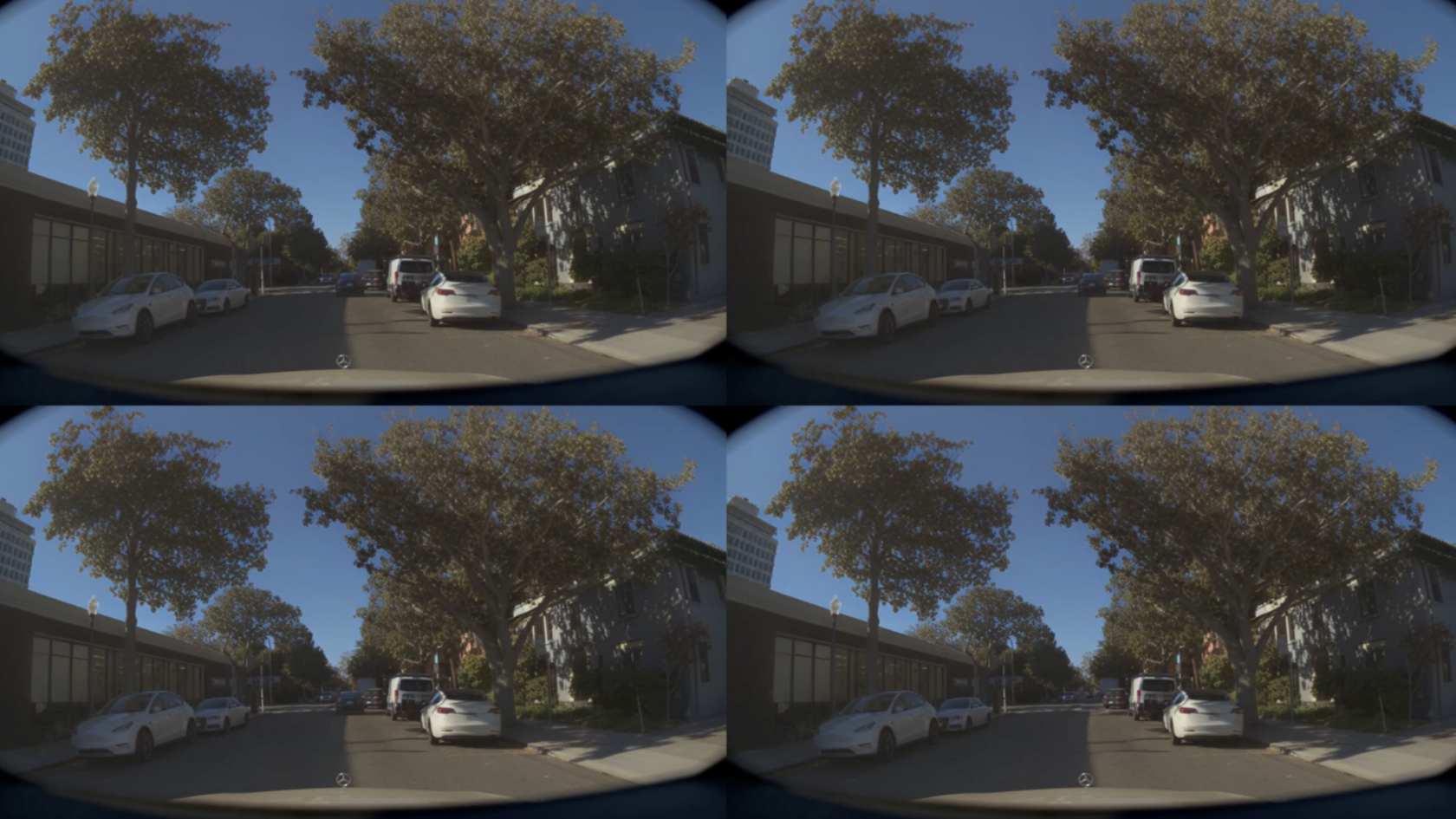
LCDrive tackles a different constraint: autonomous vehicles need reasoning that is fast enough for embedded hardware. Instead of generating text-based chain-of-thought, the model uses compact latent representations that encode spatial information. NVIDIA says the model alternates between proposing actions and predicting the resulting world state, then uses that prediction to refine its next step. The article claims this yields comparable trajectory quality to text-based reasoning while using roughly half the tokens. It was built on NVIDIA Alpamayo and trained with supervision from existing vehicle data.
Training agents in virtual worlds
NitroGen extends the Isaac GR00T architecture into virtual environments. NVIDIA says games provide structured, varied worlds that can serve as large-scale training grounds for embodied agents. The model was trained across more than 1,000 games and 40,000 hours of interaction, and the article says it improves performance by up to 52% over previous state-of-the-art methods in low-data settings. NVIDIA also says NitroGen is open source on GitHub and Hugging Face.
The broader pattern
The article’s through line is clear: if AI is exposed to enough diversity during training, it should perform better when it meets something new. NVIDIA is positioning these models as building blocks for robotics, driving systems and agentic software that need to work across many situations, not just one narrow benchmark.
Key points
- NVIDIA Research presented three CVPR papers focused on grasping, autonomous driving and embodied agents.
- GraspGen-X is described as the first foundation model for zero-shot grasping and was trained on 2 billion simulated grasps.
- LCDrive replaces text-based reasoning with latent representations to make driving decisions faster on embedded hardware.
- NitroGen trains embodied agents across more than 1,000 games and 40,000 hours of interaction.
- The article’s core message is that training at scale helps AI generalize across new tasks and environments.
If these results hold up outside the lab, robot developers could spend less time retraining for each new gripper and more time deploying useful systems. Faster on-device reasoning for cars and broader virtual training for agents could also make AI more practical in real-world settings.
The gains depend on large-scale simulation, existing vehicle data and broad training coverage, so real-world deployment may still expose gaps the paper does not resolve. If the models fail to transfer cleanly across hardware, environments or tasks, the promised generalization could be narrower than it sounds.