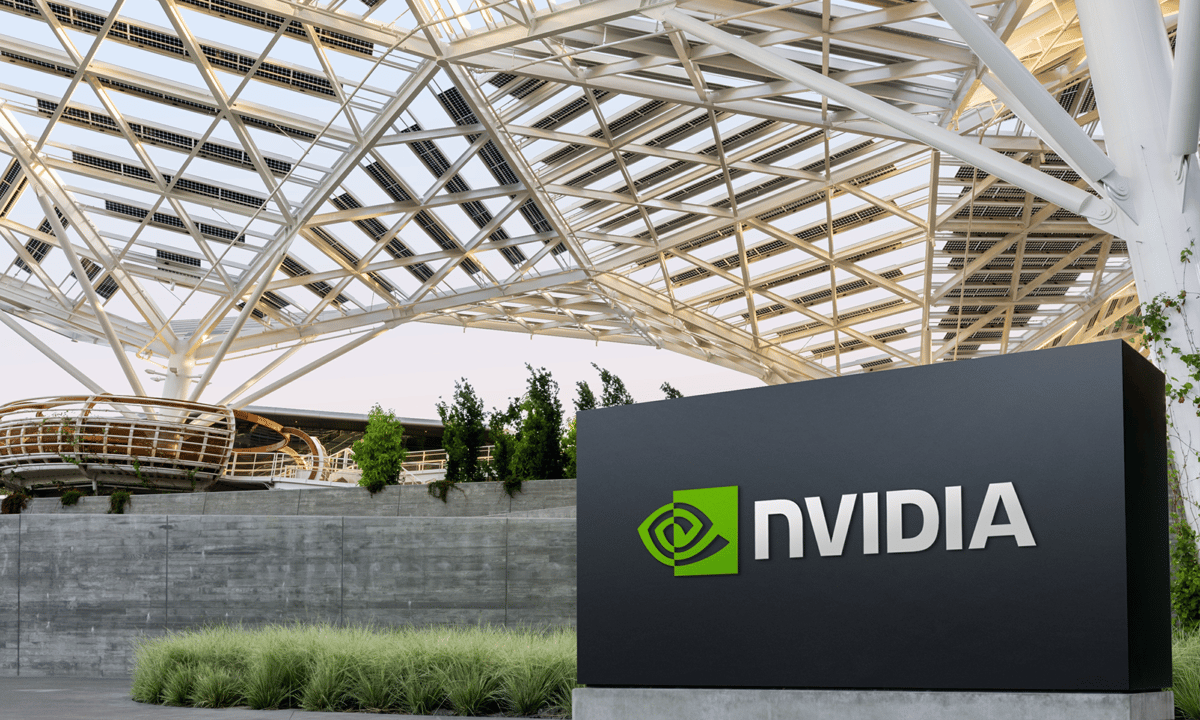
Nvidia: The AI Stack Is Changing
Nvidia faces long-term challenges from Qualcomm's modular acquisition and OpenAI's Jalapeño chip, which threaten its CUDA software ecosystem. The company's strong profitability and nearly 50% consensus upside continue supporting its long-term thesis.
Intelligence analysis by Llama

Nvidia's CUDA software ecosystem is under threat from Qualcomm's modular acquisition and OpenAI's Jalapeño chip. Despite this, the company's strong profitability and nearly 50% consensus upside continue supporting its long-term thesis.
Imagine you have a super powerful computer that can do lots of things at the same time. Nvidia makes the software that helps this computer work really well. But now, some other companies are making new kinds of computers that can do things even better. This makes it harder for Nvidia to keep making the best software. But Nvidia is still a very strong company and has a lot of money, so it's likely to be okay.
Analysis
A $60B Vote of Confidence
Nvidia's CUDA software ecosystem is under threat from emerging technologies that challenge its dominance. Qualcomm's $3.9 billion modular acquisition and OpenAI's Jalapeño chip introduce credible long-term challenges to Nvidia's software ecosystem. These developments highlight the need for Nvidia to adapt and innovate in order to maintain its market position.
Why Custom Silicon Adoption Is Accelerating
Custom silicon adoption is accelerating, overwhelming AI demand. This trend is driven by the need for specialized hardware that can efficiently process complex AI workloads. Nvidia's strong position in the market, combined with its ability to innovate and adapt, positions it well to capitalize on this trend.
The Road Ahead
Nvidia trades at just 23x forward earnings despite expected FY2027 revenue of $393 billion and FY2028 revenue approaching $559 billion. The company's strong profitability and nearly 50% consensus upside continue supporting its long-term thesis. While emerging technologies pose a threat to Nvidia's CUDA software ecosystem, the company's ability to innovate and adapt positions it well to maintain its market position.
Key points
- Nvidia's CUDA software ecosystem is under threat from emerging technologies that challenge its dominance.
- Custom silicon adoption is accelerating, overwhelming AI demand.
- Nvidia trades at just 23x forward earnings despite expected FY2027 revenue of $393 billion and FY2028 revenue approaching $559 billion.
If Nvidia can successfully adapt to the emerging technologies that challenge its CUDA software ecosystem, it could lead to significant growth and increased market share. The company's strong position in the market, combined with its ability to innovate and adapt, positions it well to capitalize on this trend.
If Nvidia fails to adapt to the emerging technologies that challenge its CUDA software ecosystem, it could lead to a decline in market share and revenue. The company's strong profitability and nearly 50% consensus upside continue supporting its long-term thesis, but this is not a guarantee of success.