NVIDIA Vera Rubin Maximizes Intelligence per Dollar for Post-Training Workloads – a Key Metric for Agentic AI
NVIDIA's new Vera Rubin platform and Nemotron 3 Ultra model are designed to optimize "intelligence per dollar" for agentic AI's continuous post-training workloads, which are crucial for refining models in dynamic environments.
Intelligence analysis by Gemini 2.5 Flash
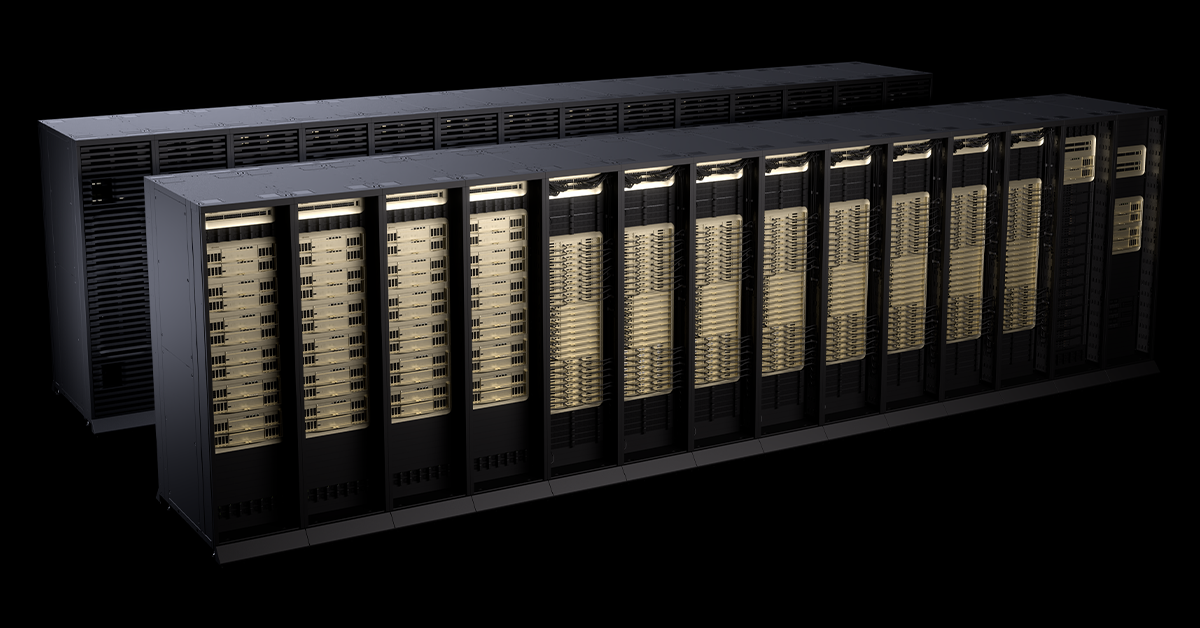
Agentic AI models require constant post-training to adapt to shifting environments, tools, and edge cases, making continuous refinement a central workload. NVIDIA introduces "intelligence per dollar" as a key metric for this process, aiming to maximize the yield of every learning cycle through its new Vera Rubin platform and Nemotron 3 Ultra model.
Imagine a robot learning to do a new job, like building a complicated toy. It doesn't just learn once; it keeps practicing and getting feedback to get better and faster, especially when the toy parts change. NVIDIA is making special computer brains (like Vera Rubin) and smart programs (like Nemotron) that help these robots practice super efficiently. This means the robots learn more cool tricks for every dollar spent on their training, making them much smarter and more useful without costing too much money.
Analysis
The Imperative of Continuous Post-Training for Agentic AI
The advent of agentic AI marks a significant shift from traditional generative models. Unlike models that merely respond to prompts, agentic AI is tasked with achieving goals, necessitating continuous adaptation as environments, tools, and unforeseen edge cases evolve. This makes post-training—the phase of refining a model after initial data training—no longer a one-time event but an ongoing, iterative process. The article emphasizes that the compute footprint for agentic AI grows not from individual large runs, but from the ceaseless nature of these refinement cycles, which loop back from production as new problems emerge. This continuous learning is critical for agents to plan, utilize diverse tools, and recover from errors encountered during operation, distinguishing them from models focused solely on token prediction.
Defining and Maximizing 'Intelligence per Dollar'
NVIDIA introduces 'intelligence per dollar' as the paramount metric for the agentic era, extending beyond the traditional 'cost per token' used for inference. While cost per token measures the operational efficiency of delivering AI outputs, intelligence per dollar assesses the overall investment in building and maintaining a model's capability and relevance. The two metrics are inherently linked: improvements in cost per token directly contribute to a better intelligence per dollar, as every point of intelligence built into a model enhances the value of each token served. This new metric underscores the economic viability of continuous learning, focusing on maximizing the yield of every forward (inference) and backward (weight update) pass in the reinforcement learning cycle that underpins agentic model refinement.
NVIDIA's Strategic Platforms for Post-Training Optimization
To address the demands of agentic AI, NVIDIA has engineered its Vera Rubin platform and the Nemotron 3 Ultra model specifically to maximize intelligence per dollar. The Vera Rubin platform is co-designed to handle the intensive, never-ending post-training loads, enabling more rollouts per run and a greater number of environments in play. This platform aims to make the frequent post-training cycles economically viable, building upon the capabilities of the Blackwell platform which already lowers the cost per run. The Nemotron 3 Ultra, an open-weight, 550-billion-parameter mixture-of-experts (MoE) model, showcases this optimization by achieving a 71.7% score on the SWE-bench coding benchmark, demonstrating its ability to fix real software bugs. Companies like Prime Intellect are already leveraging NVIDIA's Blackwell and Dynamo for inference orchestration, with plans to scale reinforcement learning environments further using Vera Rubin and integrate open-source tools like NeMo Gym, highlighting the practical application of these advancements in accelerating training-to-inference iteration loops.
Key points
- Agentic AI models require continuous post-training to adapt to dynamic environments and tools, making it a central workload.
- NVIDIA introduces 'intelligence per dollar' as a key metric for agentic AI, measuring the cost to build and maintain model capability.
- The Vera Rubin platform is specifically designed to maximize intelligence per dollar for these continuous post-training workloads.
- NVIDIA Nemotron 3 Ultra, a 550-billion-parameter MoE model, demonstrates high performance in coding tasks, showcasing the effectiveness of NVIDIA's post-training recipe.
- The Blackwell platform and Vera Rubin aim to make frequent, intensive post-training economically viable, enabling faster iteration and greater efficiency.
This focus on 'intelligence per dollar' could lead to significantly more capable and adaptable AI agents that can continuously learn and improve in dynamic real-world environments. It promises to make the development and deployment of advanced AI more economically viable, fostering innovation and accelerating the integration of AI into complex tasks.


