Nvidia’s Jensen Huang expected to testify before Congress amid calls for crackdown on China chip exports – live
Nvidia CEO Jensen Huang resigned following reports of an affair with a suspected Chinese spy, intensifying calls in Congress for stricter US export controls on advanced AI chips to China.
Intelligence analysis by Gemini 2.5 Flash
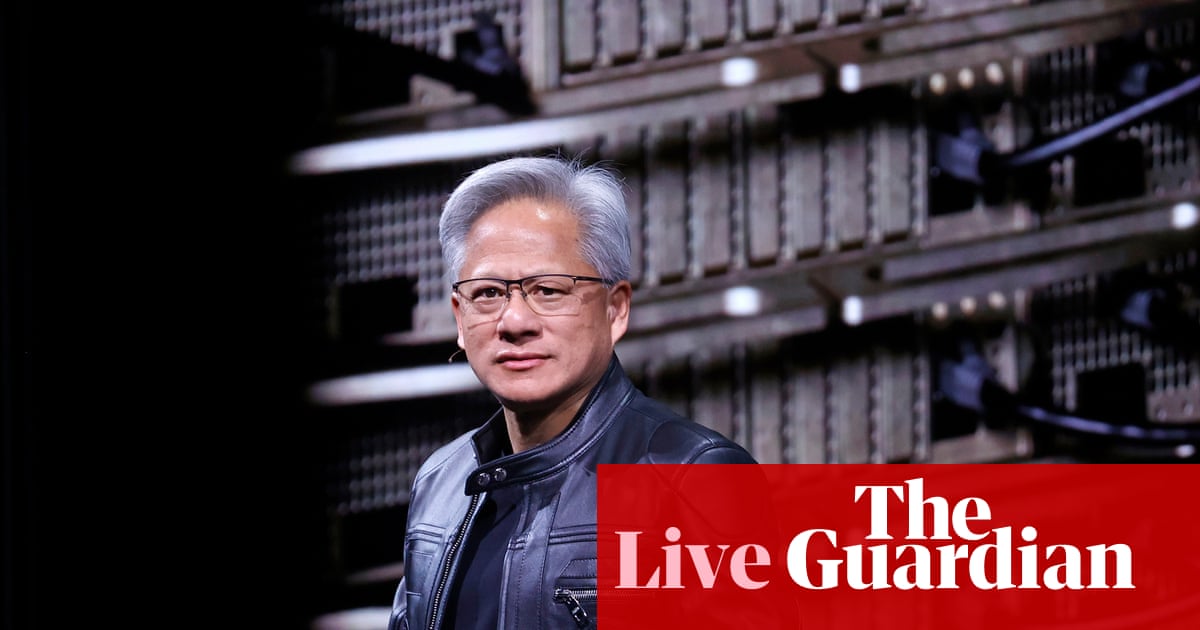
The unexpected resignation of Nvidia CEO Jensen Huang, linked to an alleged affair with a suspected Chinese spy, has reignited a fierce debate in Washington over the strength of US export policies. Lawmakers are now pushing for tougher restrictions on advanced AI chip sales to China, fearing their use in developing superior AI systems and prompting a congressional testimony from Comme…
Imagine a super-smart toy company boss, Mr. Huang, suddenly left his job because he was friends with someone who might have been secretly working for another country. Now, the grown-ups in charge are worried that the other country might get their hands on the super-smart toy parts, called chips, that help make amazing new toys. So, they're thinking about making it much harder for those chips to leave their country, like putting a big lock on the toy box.
Analysis
Jensen Huang
The abrupt resignation of Jensen Huang as CEO of Nvidia has sent significant ripples through the global technology landscape, particularly within the artificial intelligence sector. Huang, a figure often described as having "rock-star status" in China, stepped down following reports of a romantic involvement with a businesswoman suspected by US authorities of spying for the Chinese government. This personal scandal has rapidly escalated into a geopolitical flashpoint, directly impacting the strategic competition between the United States and China over advanced technological supremacy.
Huang's three-decade tenure at the helm of Nvidia saw him transform the company into a dominant force in graphics processing units (GPUs), which are now indispensable for training cutting-edge AI models. His departure, viewed with surprise and mourning on Chinese social media, has created a leadership vacuum at a critical juncture for Nvidia. The incident has not only raised questions about corporate security and executive conduct but has also provided fresh impetus for Washington's ongoing efforts to curb China's access to advanced semiconductor technology.
China Chip Exports
The controversy surrounding Jensen Huang has significantly amplified existing calls within the US Congress for a more stringent crackdown on chip exports to China. Lawmakers from both sides of the aisle, including House Speaker Mike Johnson, have expressed a "growing consensus" on limiting China's access to advanced AI chips, which are seen as foundational to China's burgeoning AI development. The US has long sought to restrict these exports, driven by national security concerns and a desire to maintain its technological lead in the global AI race.
The annual defense authorization bill, a crucial piece of legislation, is now being eyed by Congressional Republicans as a vehicle to attach new restrictions on these exports. This legislative push underscores the deep-seated anxieties in Washington regarding the dual-use nature of advanced AI chips, which could potentially bolster China's military capabilities or its surveillance state. The scandal has effectively closed what some critics perceived as gaps in existing US export controls, prompting Chinese AI companies to reportedly seek Nvidia chip capacity outside China in anticipation of tighter regulations.
Howard Lutnick
In the wake of the Nvidia scandal, US Commerce Secretary Howard Lutnick has been called to testify before Congress, specifically the Senate Banking Committee. Lutnick's department is under scrutiny because it was mandated to review companies for national security risks before the Trump administration permitted Nvidia to sell advanced chips to China. Lawmakers are seeking clarity on what the administration knew about Jensen Huang's extramarital affair with the woman accused of spying for China, and how this information, or lack thereof, influenced export policy decisions.
Secretary Lutnick has "proactively agreed to appear voluntarily" to address these questions, according to his spokesperson. His testimony is expected to shed light on the Commerce Department's due diligence processes and the criteria used to balance economic interests with national security imperatives in the highly sensitive semiconductor trade. The congressional inquiry into Lutnick's role highlights the broader governmental responsibility in overseeing critical technology exports and the potential for high-profile corporate scandals to trigger significant policy re-evaluations.
Key points
- Nvidia CEO Jensen Huang resigned following reports of a romantic relationship with a businesswoman suspected of spying for China.
- His resignation has intensified calls in the US Congress for stricter export controls on advanced AI chips to China.
- Lawmakers from both parties express concern that China's access to these chips could boost its AI development and national security capabilities.
- US Commerce Secretary Howard Lutnick is expected to testify before Congress regarding the scandal and the department's oversight of chip export policies.
- Chinese AI companies are reportedly trying to secure Nvidia chip capacity outside China due to anticipated tighter US restrictions.
Stricter export controls could bolster US national security and maintain its technological lead, potentially fostering domestic innovation in AI and chip manufacturing. This could ensure critical technologies remain secure and support the development of advanced systems within the US.
Overly aggressive export controls might alienate allies, provoke retaliatory measures from China, and hinder global technological collaboration, potentially slowing overall AI progress and harming US companies like Nvidia by limiting their access to a major market.


