NVIDIA's RTX Spark is an AI "superchip" that will power Windows laptops and desktops
NVIDIA unveiled RTX Spark, a Windows-focused AI chip for laptops and small desktops with up to 1 petaflop of AI power.
Intelligence analysis by GPT-5.4 Mini
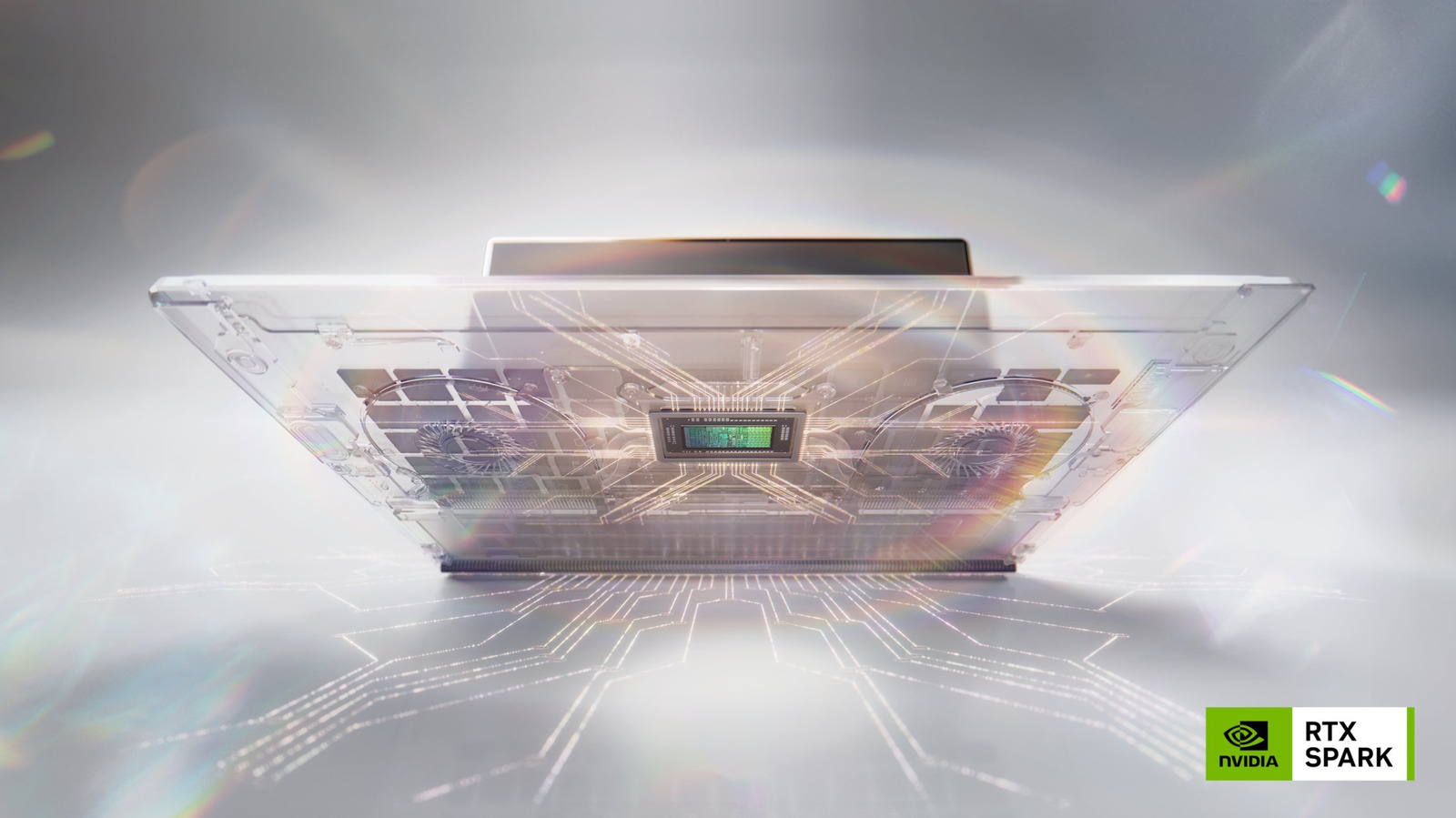
At Computex, NVIDIA introduced RTX Spark as a Windows-oriented AI superchip for laptops and compact desktops. The company says it blends Blackwell GPU performance, Arm CPU cores, and large unified memory for AI workloads and gaming.
NVIDIA made a new computer brain called RTX Spark. It is meant for laptops and small desktop computers, and it is built to help with AI jobs while also doing regular computer work fast.
Think of it like a tiny engine that can do many jobs at once. NVIDIA says it can be strong like a big gaming chip, but still use less electricity.
The company wants these computers to feel more like smart helpers. It says the chip should work in new Windows laptops from big computer makers and help people who make videos, games, or AI tools.
Analysis
What NVIDIA announced
NVIDIA introduced RTX Spark at Computex as a new system-on-chip for Windows laptops and small desktops. The company positions it as a portable counterpart to its DGX Spark mini-desktop, but aimed at consumer and creator machines instead of Linux-based systems.
What it can do
NVIDIA says RTX Spark delivers up to 1 petaflop of AI compute and includes 6,144 Blackwell RTX cores plus 20 MediaTek Arm CPU cores. The company claims it is broadly comparable to an RTX 5070 laptop GPU, but with much lower power draw. It also includes an NPU that meets Microsoft’s Copilot+ requirement of 40 TOPS, though NVIDIA says it is primarily emphasizing the tensor cores in the Blackwell GPU for AI work.
The chip can access unified memory ranging from 16GB to 128GB, and NVIDIA says power draw can run from single-digit watts up to 80W. The company also said there are no plans to pair the chip with separate discrete GPUs.
Platform and ecosystem angle
NVIDIA says RTX Spark will appear in new systems including the Surface Laptop Ultra and Dell XPS 16, along with machines from "every single major OEM." Microsoft says it optimized Windows 11 workload profile scheduling for the chip, and NVIDIA says it has worked with Microsoft for several years on the design.
Why this matters
RTX Spark is NVIDIA’s attempt to make Windows PCs feel like AI-first devices. The company is also signaling support for older Windows apps through Prism emulation and says it is working with major anti-cheat providers to improve game compatibility. That makes the chip relevant not just for AI development, but for everyday PC buyers who want performance without a big power hit.
Key points
- NVIDIA unveiled RTX Spark as a Windows-focused AI superchip for laptops and small desktops.
- The company says the chip offers up to 1 petaflop of AI performance and uses Blackwell RTX cores.
- RTX Spark includes 20 MediaTek Arm CPU cores and unified memory that can scale from 16GB to 128GB.
- Microsoft says it tuned Windows 11 scheduling for the chip, and NVIDIA says it has worked with Microsoft for years.
- NVIDIA is pitching the chip as a consumer-friendly way to bring AI-first computing into everyday PCs.