Ocean Mining VP Jason Hughes: BIP-110 on Track to Fail as Miner Signaling Stays Below 1%
Ocean Mining VP Jason Hughes discusses the BIP-110 proposal and miner signaling, stating it's not inevitable and could cause a chain split.
Intelligence analysis by Qwen 2.5 (3B)
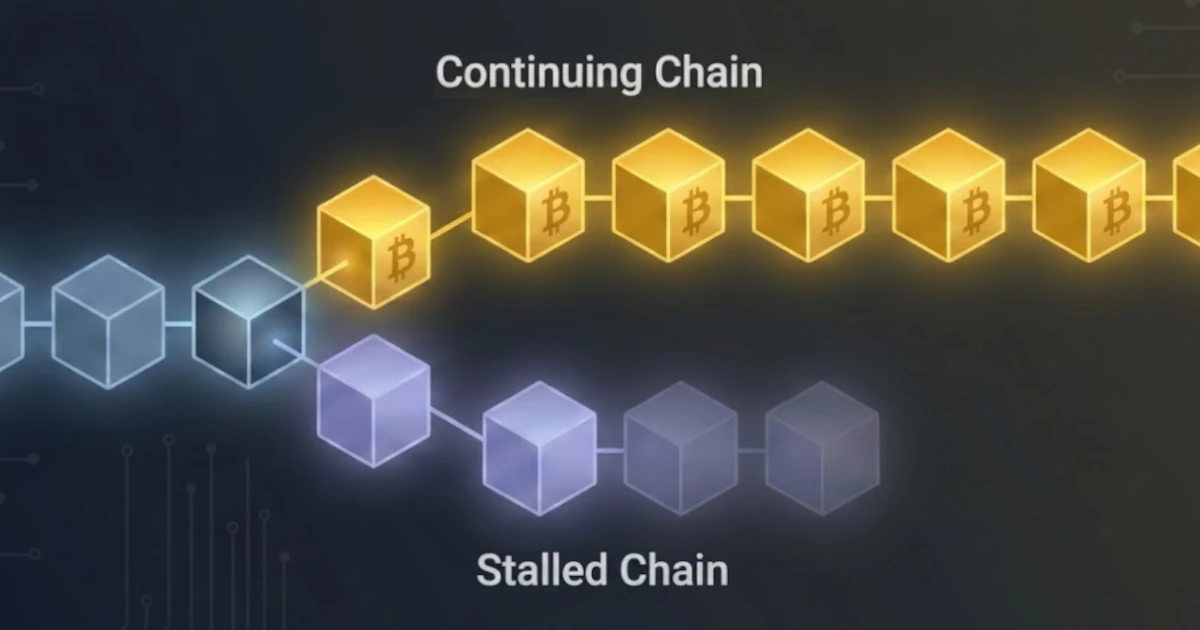
Ocean Mining VP Jason Hughes expresses concerns about the BIP-110 proposal, suggesting it may fail and potentially lead to a chain split if miners don't signal support for it.
BIP-110 is like a new rule in Bitcoin mining. If enough miners agree on it (like when you and your friends decide what game to play), it can happen. But if not many miners agree, it might cause problems because some miners won't follow the new rule.
Analysis
{"
Miner Signaling: A Crucial Aspect of BIP-110 Implementation":-15.3487296,"Jason Hughes explains that miner signaling is a critical component for the success or failure of BIP-110. He notes that only 0.6% of blocks over the past 60 days have signaled support for BIP-110, which he considers a stark contrast to Segwit's baseline support of around 1/3rd of the network’s hashrate.":"","
The Risk of Chain Split":-15.3487296,"Jason Hughes warns that if miners do not signal for BIP-110, it could lead to a chain split in a minority hashrate situation. He emphasizes the importance of monitoring miner signaling and staying on the heaviest chain.":"","
Historical Comparisons":-15.3487296,"Jason Hughes compares the support for BIP-110 with that of Segwit, noting that while Segwit had 1/3rd of the network's hashrate signaling support, BIP-110 currently only has around 15% signaling. He argues this is not enough to ensure its success.":"","
The Role of Centralized Crawler":-15.3487296,"Jason Hughes mentions that his personal private crawler puts the number of BIP-110 nodes signaling support much lower than 15%, suggesting a more conservative estimate of support for the proposal.":"","
The Need for Vigilance":-15.3487296,"Jason Hughes advises miners to remain vigilant and monitor miner signaling closely. He suggests that if major pools continue not to signal for BIP-110, it may be a sign of the proposal's failure.":""}
Key points
- Only 0.6% of blocks have signaled support for BIP-110 in the past month
- BIP-110 requires a majority of miners to signal support, but currently only around 15% are signaling
- If BIP-110 fails, it could cause a chain split and affect Bitcoin's history
If BIP-110 succeeds, all miners will eventually have to use it. If they don’t, there could be a split in Bitcoin’s history, which is bad for everyone.
BIP-110 might not succeed because only a small number of miners are signaling support right now. This means the new rule won't be widely used and could cause problems if it's adopted later.