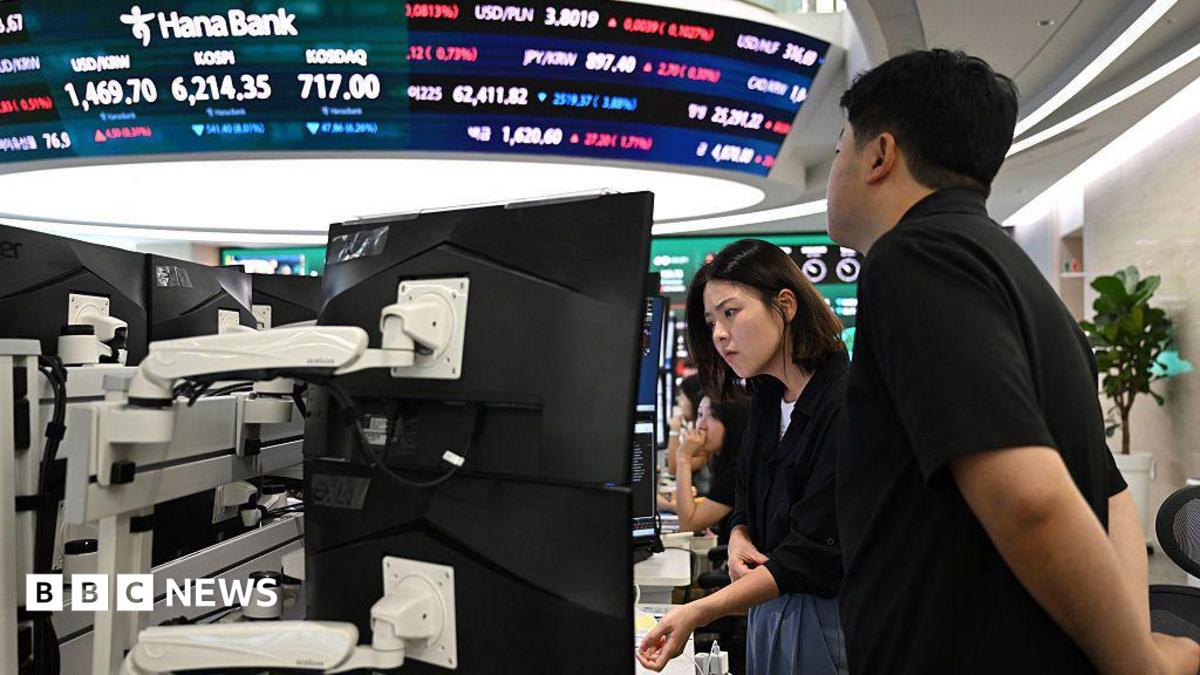
Oil prices slide on hopes of US-Iran peace deal
Oil prices fell sharply and Asian shares rose after hopes grew for a US-Iran peace deal. Brent dropped 5.5% as traders looked for a reopening of the Strait of Hormuz.
Intelligence analysis by GPT-5.4 Mini
Markets moved on hopes that talks between the US and Iran could ease conflict risk and reopen the Strait of Hormuz, a vital route for oil and gas. The story centers on the immediate drop in crude prices and the wider relief it could bring to energy importers.
Oil is like fuel for much of the world, so when traders think there may be less fighting, they think fuel could move more easily again. That makes the price of oil drop, like when more toys show up in a store and the price calms down.
The story says one important sea path could reopen. That path is like a busy hallway where a lot of ships squeeze through. If the hallway unblocks, countries that need oil can breathe a little easier.
Stock markets in Asia went up because cheaper oil can be good for many businesses. But the article also says the problem is not fully fixed yet, so the road back to normal could still be long.
Analysis
Market reaction
Oil prices fell sharply after Donald Trump said an agreement with Iran had been largely negotiated, then later urged negotiators not to rush. In Asian trading, Brent fell 5.5% to $97.90 a barrel and US crude dropped 5.9% to $90.93. At the same time, Asian equity markets moved higher, with Japan’s Nikkei 225 rising more than 3% and moving above 65,000 for the first time.
The article links the market reaction to hopes that the Strait of Hormuz could reopen. That waterway is one of the world’s most important energy chokepoints, and the BBC says roughly a fifth of global oil and liquefied natural gas normally passes through it. It has been effectively closed since the conflict began on 28 February, and energy markets have been volatile since then.
The piece says Japan and South Korea have been especially exposed because they rely heavily on Gulf energy supplies. UK and US energy and financial markets were closed for public holidays on Monday, so the immediate price action came through Asian trading. Even so, the article stresses that oil remains well above the level seen before the war, when Brent was around $70 a barrel.
Saul Kavonic of MST Financial says the near-term effect could be some relief for oil prices, but he warns the market would stay tight through 2027 even in an optimistic scenario. His view is that flows through the strait would take time to normalize, damaged facilities would need repairs, and global stockpiles would need rebuilding after record depletion.
Key points
- Brent crude fell 5.5% to $97.90 after hopes of a US-Iran deal grew.
- US crude also dropped, falling 5.9% to $90.93.
- The market focus was the Strait of Hormuz, a key route for global oil and LNG.
- Asian stocks rose, with Japan’s Nikkei 225 crossing 65,000 for the first time.
- An analyst said oil could get some near-term relief, but the market may stay tight through 2027.