Oldest known photographs reveal how Persepolis has changed over time
The oldest known photographs of Persepolis, the ceremonial capital of the Achaemenid Empire, provide a rare visual record of the monument before modern archaeological excavations reshaped its appearance.
Intelligence analysis by Llama
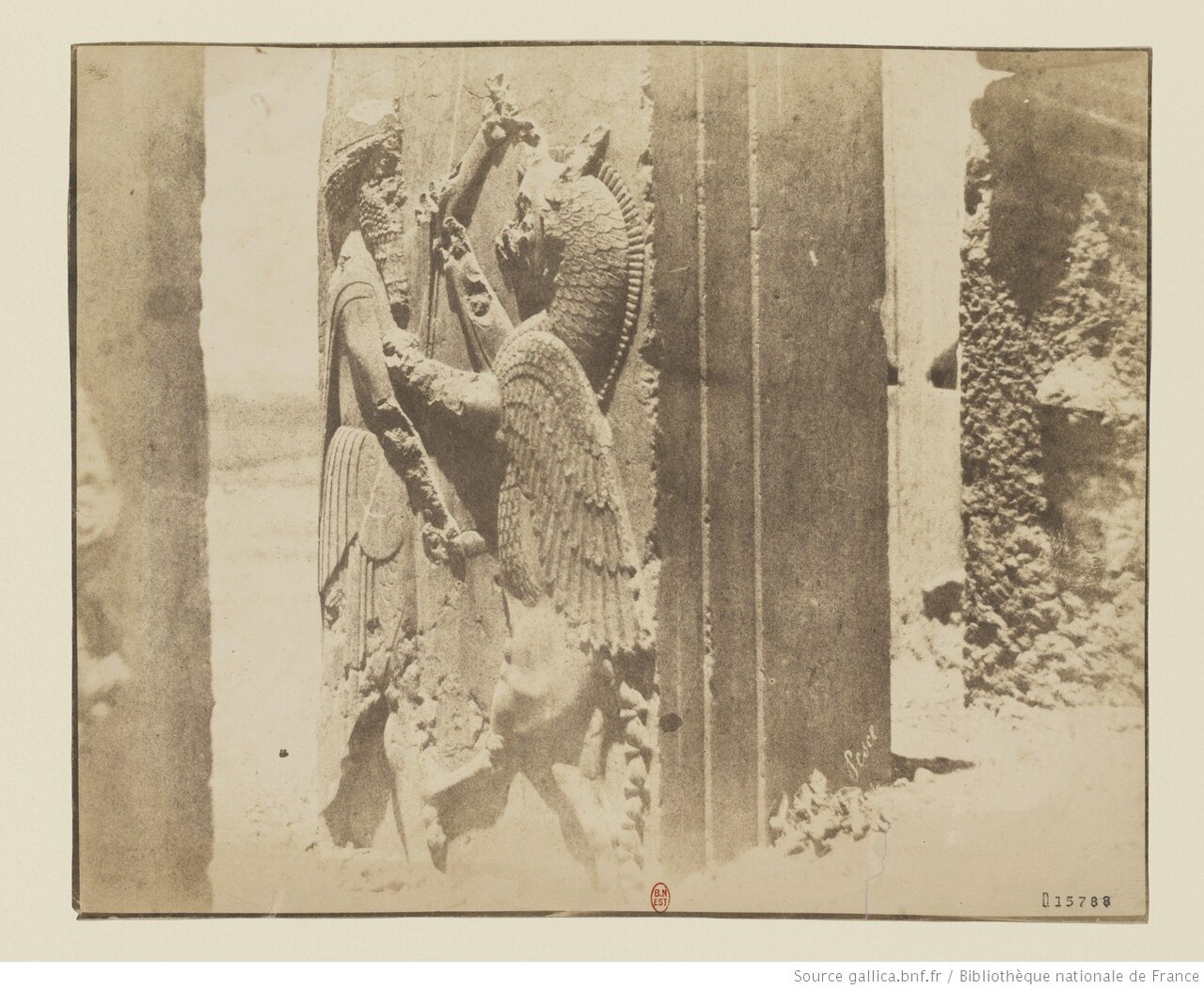
The earliest known photographs of Persepolis were taken in 1857 by Luigi Pesce, an Italian military officer and photographer. The photographs reveal a markedly different landscape from the one familiar to modern visitors, with much of the ancient complex remaining buried beneath centuries of accumulated soil and debris.
Imagine taking pictures of a really old building, but the building is buried under a lot of dirt and rocks. That's what happened with the ancient city of Persepolis. The first pictures were taken in the 1800s, and they show how the city looked before people started digging it up. These pictures are important because they help us understand how the city changed over time.
Analysis
A Visual Record of Persepolis' Evolution
The oldest known photographs of Persepolis, taken by Luigi Pesce in 1857, offer a unique glimpse into the site's condition before modern archaeological excavations reshaped its appearance. These photographs, created using the wet collodion process, were a technically demanding method that required photographers to prepare, expose, and develop glass negatives while still wet, often under difficult field conditions.
Pesce's photographs reveal a markedly different landscape from the one familiar to modern visitors. Much of the ancient complex remained buried beneath centuries of accumulated soil and debris. Among the most notable differences, the eastern staircase of the Apadana Palace, today one of Persepolis' defining architectural features, had not yet been excavated and was therefore absent from Pesce's images.
The Evolution of Archaeological Research in Iran
The photographs of Persepolis taken by Pesce and later complemented by archaeological documentation and aerial photography chronicle both the site's condition and the evolution of archaeological research in Iran. The work of Pesce, Antoin Sevruguin, Ernst Herzfeld, and Erich F. Schmidt provides an unparalleled visual chronology of Persepolis spanning more than eighty years.
The Importance of these Photographs
From the first cumbersome wet-plate photographs of a largely buried monument to systematic archaeological documentation and pioneering aerial surveys, these images remain indispensable historical records. They illustrate how one of the world's greatest archaeological sites has been gradually revealed through exploration, excavation, and photography.
Key points
- The oldest known photographs of Persepolis were taken by Luigi Pesce in 1857.
- The photographs reveal a markedly different landscape from the one familiar to modern visitors.
- The eastern staircase of the Apadana Palace had not yet been excavated and was therefore absent from Pesce's images.
- The work of Pesce, Antoin Sevruguin, Ernst Herzfeld, and Erich F. Schmidt provides an unparalleled visual chronology of Persepolis spanning more than eighty years.
The preservation and restoration of Persepolis will continue to be a priority for Iranian authorities, ensuring the site remains a valuable cultural and historical treasure for future generations.
The ongoing excavation and restoration of Persepolis may lead to the loss of some of the site's original features, potentially altering its historical integrity.