On the Road in Babelsberg Park: We Ask, the Robinia Answers
An article reflects on Babelsberg Park, critiquing the historical human impulse to shape nature and advocating for a new approach that embraces 'letting be' in the face of climate change.
Intelligence analysis by Gemini 2.5 Flash
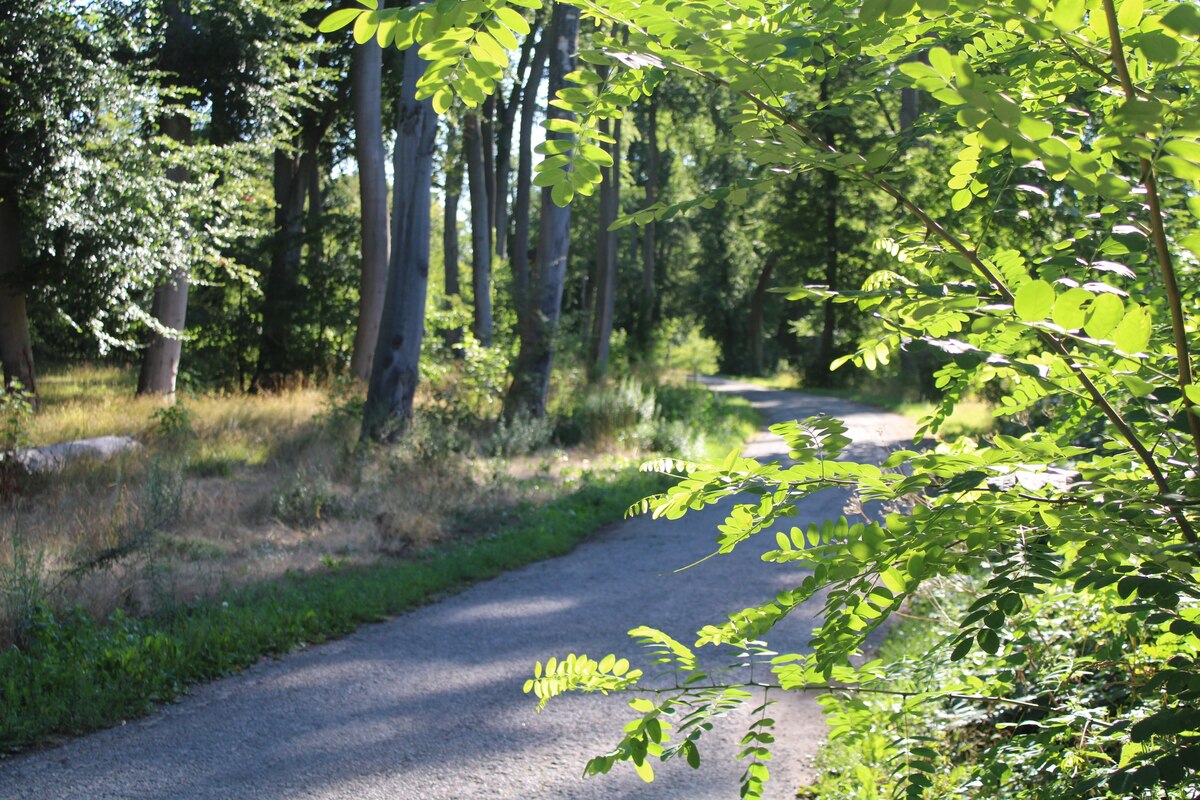
The author uses Babelsberg Park as a case study to argue that humanity, much like its historical landscape designers, struggles to simply observe and allow nature to unfold. She suggests that instead of fighting invasive species like robinia, park management should learn from them, especially as native trees succumb to climate change.
Imagine a big, beautiful park where people carefully planned every tree and path to make it perfect. But now, some of the old trees are getting sick because the weather is changing. New, tougher trees are growing, and the article says maybe we should let them be, instead of always trying to make the park look exactly how it used to. It's like letting nature decide a little bit, instead of always telling it what to do.
Analysis
Pückler's Vision and the Shaping of Nature
Fürst Hermann von Pückler-Muskau, a prominent Prussian landscape architect, envisioned Babelsberg Park not merely as a natural space but as an idealized, intensified form of nature, meticulously crafted to embody beauty and harmony. His designs, dating back to the early 19th century, aimed to elevate nature through art, creating a monument to the Hohenzollern dynasty and human ingenuity. Every path, tree, and open space was strategically placed to evoke dynastic connections, reflect regional landscapes, or commemorate military victories, demonstrating a profound belief in humanity's power to shape and perfect its environment.
The Missing Element: 'Letting Be'
The author, Heike Holdinghausen, critically examines Pückler's philosophy, noting a crucial omission in his otherwise insightful observations about human destructive power versus fragile constructive efforts. Pückler, she argues, overlooked the vital concept of 'letting be' – the act of accepting, observing, and refraining from intervention. This 'gap' in understanding, according to Holdinghausen, underpins many contemporary environmental challenges. She contends that the relentless human drive to control and reshape nature, rather than allowing it to evolve organically, remains a fundamental flaw in our interaction with the natural world.
Adapting to Climate Change with New Perspectives
In the context of Babelsberg Park, this critique becomes particularly relevant as climate change impacts the landscape. While traditional trees like oaks and beeches struggle, species like robinia and bird cherries thrive, resiliently enduring heat and drought. Holdinghausen proposes that instead of stubbornly eradicating these 'newcomers,' the park's custodians, the Prussian Palaces and Gardens Foundation, should engage in a dialogue with them. This involves asking what habitat these plants provide for local wildlife, what shade they offer, and how their foliage contributes to the park's winter aesthetic. Such an approach challenges conventional notions of park beauty and management, suggesting a shift towards embracing ecological adaptation and a less interventionist stewardship.
Key points
- Fürst Pückler designed Babelsberg Park as an idealized, artfully crafted natural landscape.
- The author criticizes Pückler's philosophy for lacking the concept of 'letting nature be,' a flaw still present in modern environmental management.
- Native trees in Babelsberg Park are struggling with climate change, while 'newcomer' species like robinia are thriving.
- The article advocates for a new approach where park managers learn from and embrace these resilient species rather than fighting them.
- This shift could lead to a more sustainable and climate-adapted park management strategy.
If park management embraces a more adaptive and less interventionist approach, Babelsberg Park could become a model for climate-resilient urban green spaces. By allowing resilient species to thrive and observing their ecological contributions, the park could maintain its beauty and biodiversity while adapting naturally to changing environmental conditions.
If the traditional, highly controlled approach to park management persists, it risks a continuous struggle against natural adaptation. This could lead to increased costs for maintaining struggling native species, a loss of ecological diversity, and a park that is less resilient to the inevitable impacts of climate change.