#OsunDecides2026: Person with disability excited over special treatment at polling unit
Aminat Akinsola, a person with disability, expressed happiness over the special treatment she received while casting her vote in the Osun State governorship election, including being the first to be accredited.
Intelligence analysis by Gemini 2.5 Flash
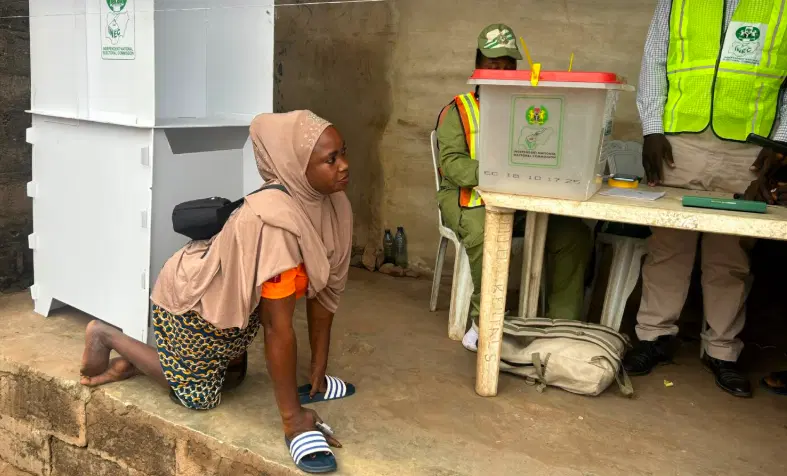
During the Osun State governorship election, Aminat Akinsola, a voter with a disability, lauded the special attention and respectful treatment she received at her polling unit in Ejigbo Ward 4, Unit 6, highlighting an inclusive voting experience and expressing hope for a fair outcome.
Imagine a big election where everyone gets to pick their leaders. A lady named Aminat, who uses a wheelchair, was super happy because the people at her voting place made it really easy and respectful for her to vote, even letting her go first! It shows that when everyone helps, voting can be fair and fun for everyone.
Analysis
The recent governorship election in Osun State, Nigeria, provided a notable instance of electoral inclusivity, as highlighted by the experience of Aminat Akinsola. Her public expression of excitement over the special treatment received at her polling unit underscores the critical importance of accessible voting processes for persons with disabilities (PWDs). This incident, while seemingly minor, reflects a broader aspiration within Nigerian civil society and electoral bodies to ensure that all citizens, regardless of physical condition, can exercise their democratic rights without undue hindrance. The Independent National Electoral Commission (INEC) has often faced criticism regarding the accessibility of polling units, making Akinsola's positive experience a significant, albeit isolated, indicator of progress.
Aminat Akinsola
Aminat Akinsola's account offers a powerful human perspective on the impact of inclusive electoral practices. Her joy stemmed not just from casting her vote, but from the respect and special attention she received, including being the first to be accredited at her unit.
This personal narrative serves as a testament to the dignity afforded when systems are designed with accessibility in mind. Her commendation of the peaceful process further reinforces the idea that a well-managed election can be a source of civic pride and participation for all segments of society.
Ejigbo Ward 4, Unit 6
The specific location, Ejigbo Ward 4, Unit 6, becomes a focal point for this positive development. The successful implementation of special treatment for PWDs at this particular polling unit suggests that localized efforts can yield significant results.
It implies that with proper training of electoral officers and adequate provision of facilities, similar positive experiences can be replicated across other wards and units. This localized success could serve as a model for broader implementation, demonstrating practical steps towards making elections truly universal.
OsunDecides2026
The context of #OsunDecides2026 frames this event within a larger democratic exercise. While the election's overall outcome is important, Akinsola's experience highlights a crucial aspect of democratic health: the ability of marginalized groups to participate.
Her hope that the election's outcome would reflect the general will of the state's people is intrinsically linked to the fairness and accessibility of the process itself. This incident contributes to the narrative of improving electoral integrity and inclusivity in Nigeria, offering a glimpse into a more equitable future for the nation's democratic landscape.
Key points
- Aminat Akinsola, a person with disability, expressed excitement over special treatment at her polling unit.
- She was the first person to be accredited at Ejigbo Ward 4, Unit 6, during the Osun State governorship election.
- Akinsola commended the peaceful voting process.
- She hopes the election outcome will reflect the general will of the state's people.
This positive experience could encourage more persons with disabilities to participate in future elections, fostering greater civic engagement. It also sets a precedent for electoral bodies to prioritize and expand accessible voting facilities and respectful treatment across all polling units, enhancing the overall inclusivity of Nigeria's democratic process.