'Our new champion': Philippines swept up in tennis fever after Alex Eala's historic win
Filipino tennis player Alex Eala, 21, became the first player from the Philippines to win a WTA Tour-level singles title, defeating world No. 1 Jessica Pegula in Washington DC.
Intelligence analysis by Llama
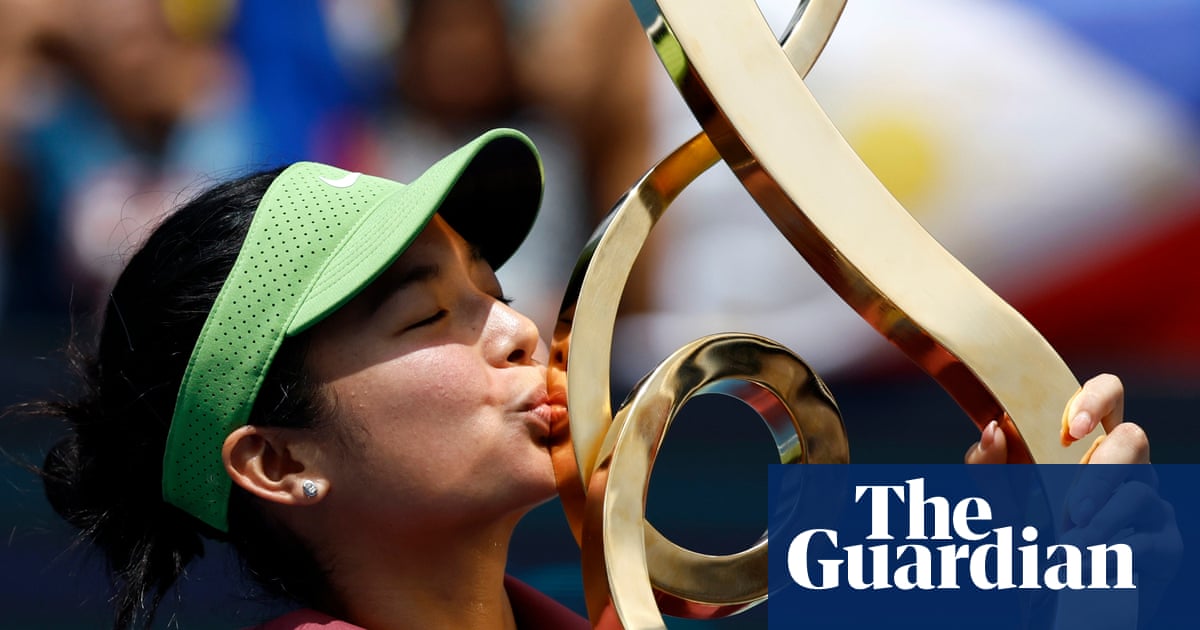
Alex Eala's Washington DC Open win made her the first Filipino to capture a WTA Tour singles title, triggering nationwide tennis fever, a presidential reception, and a surge in court bookings back home.
A 21-year-old girl from the Philippines, Alex Eala, beat the best tennis player in the world to win her first big title. The whole country is celebrating like when a sports team wins a championship, and now lots of Filipino kids want to try tennis too — kind of like when one kid on the school team scores a big goal and suddenly everyone wants to play.
Analysis
A Breakthrough on the World Stage
Alex Eala's victory at the Washington DC Open was historic on multiple levels. She became the first Filipino to win a WTA Tour-level singles title, and she did it by defeating the world's top-ranked player, Jessica Pegula, in a final that had to be completed across two days because of rain. Eala also had to come from behind, a script that resonated with fans already familiar with her gutsy Wimbledon run in July, where she became the first Filipino woman to reach the latter stages of a grand slam and upset defending champion Iga Swiatek in straight sets on Centre Court. Together, the two results have vaulted Eala from rising prospect to household name in a country of more than 110 million people.
The cultural spillover was immediate. President Ferdinand Marcos Jr. congratulated her on social media and hosted a reception at Malacanang Palace, a treatment typically reserved for returning national icons. Boxing legend Manny Pacquiao — the closest thing the Philippines has had to a global sports superstar in recent memory — publicly hailed Eala as "our new champion" and praised her comeback as a display of the "Filipino heart." Pegula herself thanked the Filipino fans in the stands, saying their presence was helping "grow tennis around the world." For a sport that has long been a footnote in a sporting culture dominated by basketball, billiards, and boxing — the so-called "three Bs" — the volume of that fan presence is the headline.
Tennis Without an Infrastructure
Eala's story is as much about what she overcame as what she won. Tennis is one of the most expensive sports in the world to develop at the elite level, with the United States, Britain, and France spending tens of millions of dollars annually to groom young talent. The Philippines has no comparable pipeline. Courts are concentrated in wealthy enclaves, and the sport has historically been the preserve of the upper class. Eala herself grew up playing on painted-over basketball courts in Quezon City before earning a scholarship to the Rafa Nadal Academy in Spain at 13 — a path that depends more on family resources and individual luck than on a functioning national system.
The demand she has now created is colliding with that deficit. Classes, camps, and courts are reportedly fully booked, clubs are rushing to resurface old courts, and the national tennis federation is drawing fresh attention. Eala has used her platform to push the conversation toward access, calling out the shortage of public courts and the poor condition of the ones that exist. Whether the surge in interest translates into a permanent expansion of grassroots infrastructure — coaching programs, school-level programs, public courts outside Manila's wealthiest districts — will determine whether Eala's run is a one-off cultural moment or the start of a structural shift.
A Successor to Manny Pacquiao?
The Philippines has not had a prominent global sporting superstar to rally around since Pacquiao's prime, and the comparison is doing real political and social work. Watch parties packed venues and public spaces in the small hours of the morning, with fans staying up to follow matches live in a half-world-away time zone. The Washington tournament director Mark Ein said that more than 80% of ticketing inquiries in the final stretch were about when Eala was playing — an unusual demand spike for an early-career WTA event. That level of fan mobilization transforms an individual sporting achievement into a shared national narrative.
Eala's modest family background and her emphasis on collective success — "tagumpay nating lahat," or "this is our victory," as she told the palace reception — have made her accessible in a way that fits the country's self-image. The risk, as with any rapidly inflated sports boom, is overexpectation. The Philippines will not produce another Eala simply because one emerged; the underlying funding gap, coaching shortage, and court scarcity remain. For now, though, the country has a new rallying point, and tennis, however briefly, has displaced at least one of the "three Bs."
Key points
- Alex Eala became the first Filipino to win a WTA Tour-level singles title, defeating top-ranked Jessica Pegula in Washington DC.
- President Marcos hosted a reception at Malacanang Palace, and Manny Pacquiao publicly called her 'our new champion'.
- Tennis interest in the Philippines has surged, with courts, camps, and classes fully booked and clubs upgrading facilities.
- Eala developed outside the country's elite tennis system, learning on painted-over basketball courts before attending the Rafa Nadal Academy on scholarship at 13.
- The Philippines' sports culture has long been defined by basketball, billiards, and boxing; Eala is the first major global sporting star the country has rallied around since Pacquiao.
Eala's breakthrough could catalyze a long-term expansion of tennis infrastructure in the Philippines, with rising demand prompting investment in public courts, coaching programs, and federation funding. Her success also creates a visible pathway for non-elite Filipino athletes in a sport that had previously been gated by wealth.
The boom risks fading as quickly as it began if courts, coaching, and federation support fail to keep pace with surging interest, leaving aspiring young players with nowhere to train. There is also the danger of overhyping a 21-year-old still early in her career, which could turn public patience into pressure if results dip.