Over 100 more refill stations for detergent, household products to open across S'pore
Over 100 new refill stations for detergent and household products will open across Singapore in the next year, following a S$1 million investment by Lam Soon into startup Ecoworks.
Intelligence analysis by Gemini 2.5 Flash
Singaporean manufacturing company Lam Soon has invested S$1 million in Ecoworks to significantly expand the network of refill stations for household products like laundry detergent and dishwashing liquid. This initiative aims to provide more convenient and affordable options for consumers, while also addressing Singapore's stagnant domestic recycling rates by promoting upstream waste …
Imagine you have a favorite bottle for your soap or detergent. Instead of buying a new plastic bottle every time it runs out, you can now go to special machines, like big vending machines, and fill up your old bottle with fresh soap! This helps stop so many plastic bottles from being thrown away, which is good for our planet, and it can even save your parents some money too.
Analysis
Expanding Sustainable Options
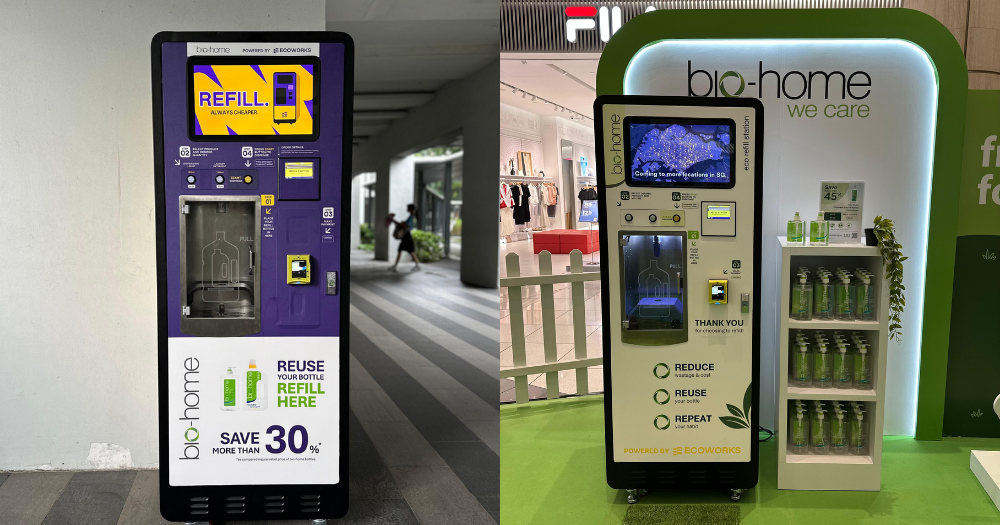
Singapore is set to see a significant expansion of its refill infrastructure for household products, with over 100 new stations planned to open within the next 12 months. This initiative is spearheaded by a S$1 million investment from local manufacturing giant Lam Soon into the startup Ecoworks. Lam Soon, known for its eco-friendly bio-home brand, aims to make sustainable consumption more accessible by integrating these refill stations into high-traffic residential and shopping areas. The first such station is already operational at Pinnacle@Duxton, offering bio-home laundry detergent and dishwashing liquid at prices over 30 percent lower than retail, starting from S$4.20 for 800ml.
Addressing Recycling Challenges
The push for more refill stations comes at a critical time for Singapore's environmental goals. According to Lam Soon, the national domestic recycling rate has remained stubbornly around 11 percent, falling far short of the government's ambitious target of 70 percent by 2030. This stagnation highlights the urgent need for more 'upstream' solutions that focus on reducing and reusing packaging before it becomes waste. The investment in Ecoworks is a direct response to this challenge, aiming to shift consumer habits away from single-use plastics and towards a more circular economy model.
The Future of Reuse Infrastructure
Ecoworks has already established a presence with refill stations at various locations, including the National University of Singapore and community clubs, offering its own brand of biodegradable, plant-based products. The partnership with Lam Soon and the substantial investment are expected to scale this infrastructure significantly, making reuse a more convenient and standardized option for everyday Singaporeans. By providing accessible and affordable refill points, the initiative seeks to embed sustainable practices into daily routines, contributing to a broader cultural shift towards waste reduction and environmental responsibility across the island.
Key points
- Over 100 new refill stations for detergent and household products will open in Singapore over the next year.
- Lam Soon invested S$1 million in Ecoworks to build this refill infrastructure.
- The initiative aims to address Singapore's plateauing domestic recycling rate, which is around 11 percent.
- Refilled bio-home products will be over 30 percent cheaper than retail prices, starting from S$4.20 for 800ml.
- The expansion focuses on providing convenient, standardized reuse solutions in neighborhoods and frequented locations.
This expansion could significantly boost Singapore's efforts to reduce plastic waste and improve its domestic recycling rates, moving closer to the 2030 target. Consumers stand to benefit from more affordable household products and greater convenience in adopting sustainable practices, fostering a greener lifestyle across the island.
Despite the investment, widespread consumer adoption might be slow if the stations are not perceived as sufficiently convenient or if the cost savings are not compelling enough for all households. There's also a risk that the initiative's impact on the overall recycling rate could remain limited if other waste management challenges are not simultaneously addressed.