Over 2,300 children enrolled in Islamabad as ‘No Child Left Behind’ drive advances
Islamabad’s out-of-school children drive has enrolled 2,328 children so far, with surveys identifying 22,057 children in total.
Intelligence analysis by GPT-5.4 Mini
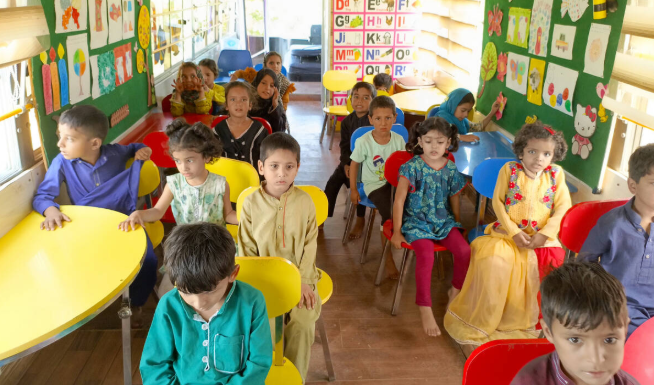
Islamabad’s education drive is showing early progress: a door-to-door survey has found more than 22,000 out-of-school children, and 2,328 have already been enrolled. The campaign is targeting rural union councils first and is using schools, non-formal centres and community schools to bring children back into education.
Islamabad is trying to bring children back to school, like finding missing pieces in a puzzle. A team went door to door, found many children not studying, and has already enrolled more than 2,300 of them.
Analysis
What the campaign is doing
Islamabad’s “No Child Left Behind” initiative has started with early gains: official documents cited in the report say 2,328 out-of-school children have been enrolled so far. The broader goal is to identify, admit and keep children in both formal and non-formal education settings across the federal capital.
The scale of the problem
A door-to-door survey under the campaign identified 22,057 out-of-school children. The first phase is focused on 36 rural union councils in Islamabad Capital Territory, with survey work finished in 31 and still ongoing in five more. The target for the first phase is to bring 25,000 out-of-school children into education.
How the program is being run
The report says the campaign uses a union council-wise coverage plan, household surveys, community mobilisation and real-time monitoring. Admissions are being prioritised in Federal Directorate of Education schools, while non-formal education centres and community schools are also being used in underserved areas. Some children are being referred to private schools through the Private Educational Institutions Regulatory Authority.
Support and follow-through
To help children stay enrolled, authorities are providing school supplies, uniforms, learning materials and teaching kits. More than 1,100 qualified people have been engaged as teachers and trained for the effort. Data from the campaign is being fed into the Non-Formal Education Management Information System, which is meant to track progress and identified children.
What comes next
The next phase will focus on faster enrollment, finishing surveys in remaining union councils, improving coordination among partners and building retention systems so children do not drop out again.
Key points
- 2,328 out-of-school children have been enrolled in Islamabad so far.
- A survey identified 22,057 out-of-school children across the capital territory.
- The first phase targets 36 rural union councils and aims to enroll 25,000 children.
- Authorities are using schools, non-formal centres and community schools to place children.
- More than 1,100 teachers have been hired and trained for the drive.
If the campaign keeps moving at this pace, more children in Islamabad could enter school and stay there with support like uniforms, books and trained teachers. The use of surveys and tracking systems could also make the program more organized and easier to monitor.
The remaining children may be harder to reach, especially in areas where surveys are still incomplete or families face deeper barriers to enrollment. Even if children are enrolled, the effort could fall short if retention mechanisms do not keep them in school over time.