P1 priority for parent volunteers, 28 years on: Is it relevant – or fair?
The parent volunteer scheme for Primary 1 registration has been criticized for its transactional nature and for privileging parents with more means and time to spare. At least four primary schools have scrapped the scheme in the last two years.
Intelligence analysis by Llama
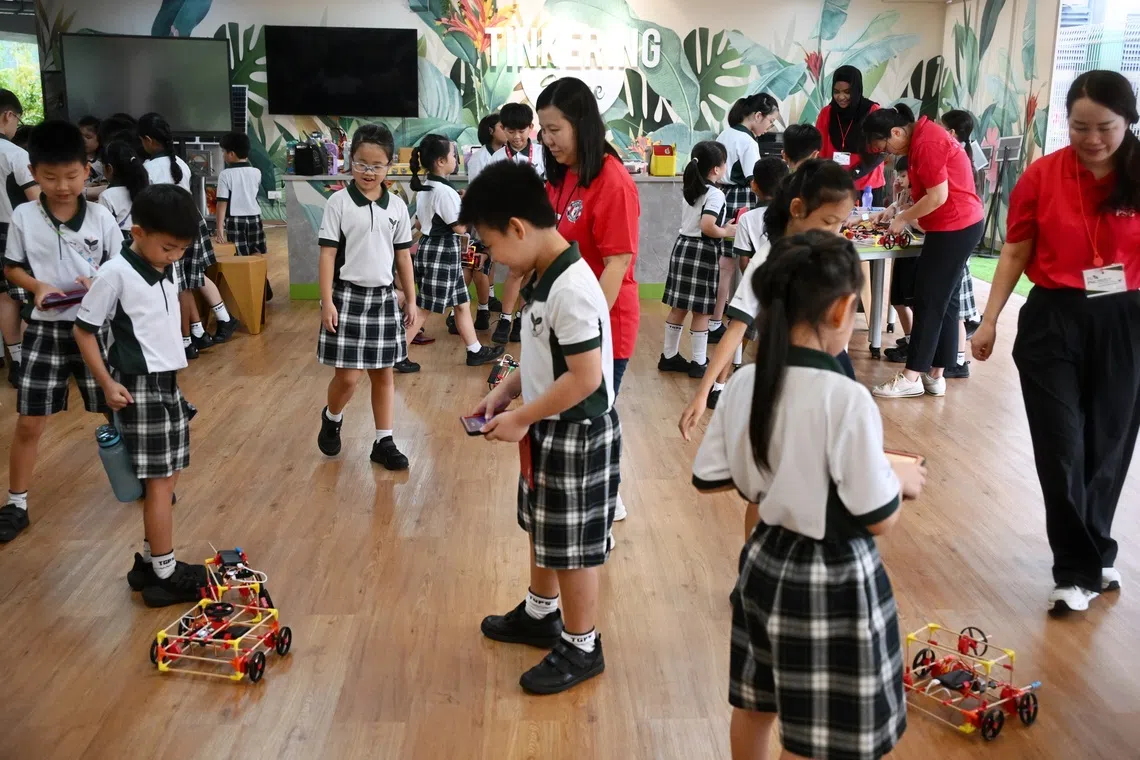
The parent volunteer scheme for Primary 1 registration has been criticized for its transactional nature and for privileging parents with more means and time to spare. At least four primary schools have scrapped the scheme in the last two years.
Imagine you want to get into a good school for your child. You have to volunteer for 40 hours to get a better chance of getting in. But some people think this is not fair because it only helps people who have more time and money. It's like a game where only the people with the most advantages can win.
Analysis
History of the Scheme
The parent volunteer scheme was introduced in 1998 as a way for parents to get to know more about the school they are interested in. Under the scheme, parents clock at least 40 hours of volunteer work by completing tasks like helping out at school events or serving as traffic wardens. They get to register in Phase 2B of the yearly P1 registration exercise. However, this does not guarantee the child a place in the school – parents still have to ballot if the number of applicants exceeds the spots available in Phase 2B.
Criticisms of the Scheme
The scheme has drawn criticism for its transactional nature that goes against the spirit of volunteerism, as well as for privileging parents with more means and time to spare. Jacqueline Ho, a sociology professor at Singapore Management University, said that the scheme is not universally accessible and goes against the society's meritocratic principles. Economics professor Kelvin Seah from the National University of Singapore said that while the scheme provides mutual benefits, complications arise when it is tied to priority in the P1 registration exercise.
Shift in Motivations
Experts say that some schools could have eliminated the scheme for administrative reasons, including the complexity of managing the scheme. However, others argue that the scheme has shifted from its original purpose of building ties with schools to a means of improving one's child's chances of admission into a preferred school. This has led to a tension between the scheme's community-building objective and its role in P1 admissions.
Alternatives to the Scheme
Some experts suggest that parents who want to learn more about a school can do so at its open house, or reach out to other parents in the school's parent support group. This way, parents can still build ties with the school without having to commit to the volunteer scheme.
Key points
- The parent volunteer scheme has been criticized for its transactional nature and for privileging parents with more means and time to spare.
- At least four primary schools have scrapped the scheme in the last two years.
- Experts say that the scheme has shifted from its original purpose of building ties with schools to a means of improving one's child's chances of admission into a preferred school.
- Some experts suggest that parents who want to learn more about a school can do so at its open house, or reach out to other parents in the school's parent support group.
If the parent volunteer scheme is reformed to focus on building ties with schools rather than improving one's child's chances of admission, it could lead to a more inclusive and equitable education system. This could also lead to more parents being involved in their children's education and building stronger relationships with their schools.
If the parent volunteer scheme continues to prioritize parents with more means and time to spare, it could lead to a widening of the gap between the haves and have-nots in Singapore's education system. This could also lead to more parents feeling disillusioned with the system and less likely to be involved in their children's education.