Pain or gain? US moves to decouple its defence industry from China’s rare earths
The US has issued an executive order requiring major arms manufacturers to phase out Chinese rare earths, aiming to end years of reliance on cheap minerals from China. Industry observers view the directive as a long-overdue enforcement crackdown designed to inflict short-…
Intelligence analysis by Llama
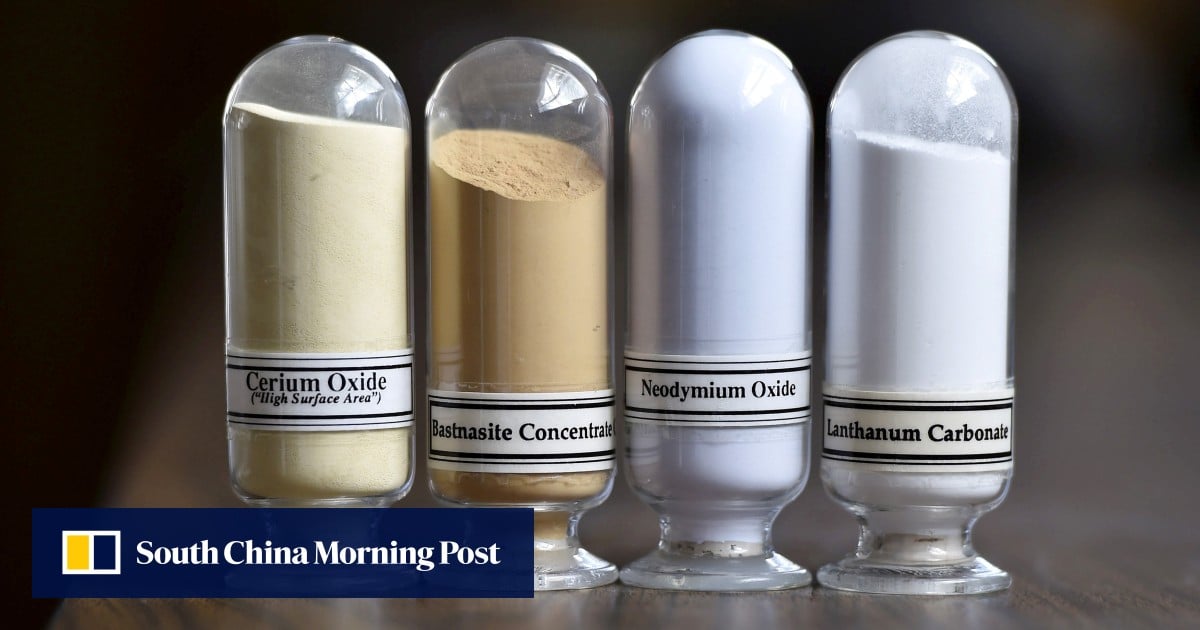
The US has issued an executive order requiring major arms manufacturers to phase out Chinese rare earths, aiming to end years of reliance on cheap minerals from China. Industry observers view the directive as a long-overdue enforcement crackdown designed to inflict short-term contractor pain for long-term national security gain.
Imagine you're building a big Lego castle, and you need a special kind of Lego brick that only comes from one place. But that place is far away, and it's hard to get the bricks from there. The US is trying to find a new place to get those special bricks from, so it doesn't have to rely on the faraway place. This will help the US build its castle faster and stronger, and it will also help the US be more independent and not have to rely on others for its needs.
Analysis
A Long-Overdue Enforcement Crackdown
The recent US executive order requiring major arms manufacturers to phase out Chinese rare earths is a long-overdue enforcement crackdown designed to inflict short-term contractor pain for long-term national security gain. Industry observers view the directive as a necessary step to reduce the US's dependence on Chinese rare earths and to promote the development of a more diversified and resilient supply chain.
The Challenges of Decoupling
While contractors face immediate hurdles to requalify suppliers and find non-Chinese alternatives, US analysts said the market adjustments were manageable, though delivery timetables for future military hardware could slightly stretch. They also warned that true strategic independence needed sustained, long-term capital investment in non-Chinese midstream processing.
The Road Ahead
The US move to decouple its defence industry from China's rare earths has significant implications for national security and the global economy. It highlights the growing tensions between the US and China, and the need for the US to diversify its supply chains and reduce its dependence on Chinese rare earths. As the US continues to implement this policy, it will be essential to monitor the impact on the defence industry and to ensure that the necessary investments are made to support the development of a more resilient and diversified supply chain.
Key points
- The US has issued an executive order requiring major arms manufacturers to phase out Chinese rare earths.
- The directive aims to end years of reliance on cheap minerals from China.
- Industry observers view the directive as a long-overdue enforcement crackdown designed to inflict short-term contractor pain for long-term national security gain.
- Contractors face immediate hurdles to requalify suppliers and find non-Chinese alternatives.
- Delivery timetables for future military hardware could slightly stretch.
If the US is successful in decoupling its defence industry from China's rare earths, it could lead to a more diversified and resilient supply chain, reducing the US's dependence on Chinese rare earths and promoting national security. Additionally, the US could attract new investments in the defence industry, creating new jobs and stimulating economic growth.
However, the process of decoupling the US defence industry from China's rare earths could be challenging and time-consuming, leading to delays in the delivery of military hardware and increased costs for contractors. Additionally, the US may face difficulties in finding reliable and affordable non-Chinese suppliers, which could undermine the effectiveness of the policy.