Pakistan-US ties entering new phase of cooperation in multiple sectors: PM
Shehbaz Sharif said Pakistan-US ties are expanding beyond security into trade, education, investment and people-to-people links.
Intelligence analysis by GPT-5.4 Mini
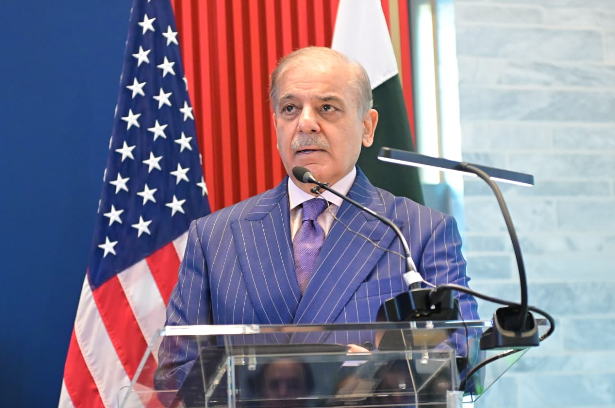
At a U.S. Independence Day event in Islamabad, Shehbaz Sharif framed Pakistan-US relations as entering a broader phase centered on economic cooperation, education and shared opportunity. He also pointed to American support in Pakistan’s development, rising business ties and recent diplomatic engagement.
Pakistan and the United States are trying to be like two neighbors who used to only talk about safety, but now also want to work together on school, jobs and business. The article says they may build a bigger friendship basket, not just one tool.
Analysis
A broader frame for the relationship
Prime Minister Shehbaz Sharif used the U.S. 250th Independence Anniversary ceremony to argue that Pakistan and the United States are moving into a new phase of ties. In his telling, the relationship is no longer defined mainly by security and counterterrorism. It now also includes trade, investment, education, science, health, energy and direct contact between people in both countries.
What the government highlighted
He recalled that the U.S. was among the first countries to recognize Pakistan after independence and said American support contributed to major development projects, including the Green Revolution, Tarbela Dam, educational institutions and other infrastructure. He also praised Pakistani graduates of American universities and professionals trained in the U.S., saying they help Pakistan through business, academia, public service and entrepreneurship.
Economic and diplomatic takeaways
Sharif said nearly one million Pakistani-Americans act as a bridge between the two countries, and he noted that about 80 leading American companies have invested in Pakistan. He singled out information technology as an area where Pakistan can expand exports, with the U.S. as a key market. On diplomacy, he referenced cooperation on Afghanistan, the fight against terrorism, and Pakistan’s role in facilitating dialogue between Washington and Tehran.
U.S. response and current context
Chargé d’Affaires Natalie A. Baker echoed the theme of a stronger partnership, describing the relationship as more strategic over the past two years and praising U.S. engagement with Pakistani leadership. She also said Pakistan was well placed to help bring the U.S. and Iran into dialogue because it keeps working ties with both sides. The article suggests both governments want to present the relationship as more durable, more economic and more politically relevant than in the past.
Key points
- Shehbaz Sharif said Pakistan-US ties are moving beyond security toward trade, education, investment and people-to-people links.
- He said American support helped Pakistan in projects such as the Green Revolution, Tarbela Dam and educational institutions.
- The prime minister cited nearly one million Pakistani-Americans and about 80 U.S. companies investing in Pakistan.
- He said Pakistan wants to expand IT exports and counts the U.S. as an important market.
- The article also highlighted recent high-level diplomatic engagement and Pakistan’s role in U.S.-Iran dialogue.
If the shift described by the prime minister turns into concrete action, Pakistan could see more investment, stronger IT exports and deeper education links with the U.S. The large Pakistani-American community could also make the relationship easier to sustain over time.
The message is still mostly diplomatic rhetoric, so the risk is that it stays at the level of speeches and ceremonial praise. Regional tensions or a change in U.S. priorities could also slow the broader partnership the article describes.