Pakistan Wins Silver Medal at 37th International Biology Olympiad
Pakistan has achieved a proud moment in science as Hassan Atif Cheema won a silver medal at the 37th International Biology Olympiad (IBO) 2026 held in Vilnius, Lithuania. The competition brought together more than 300 students from around 78 countries.
Intelligence analysis by Llama
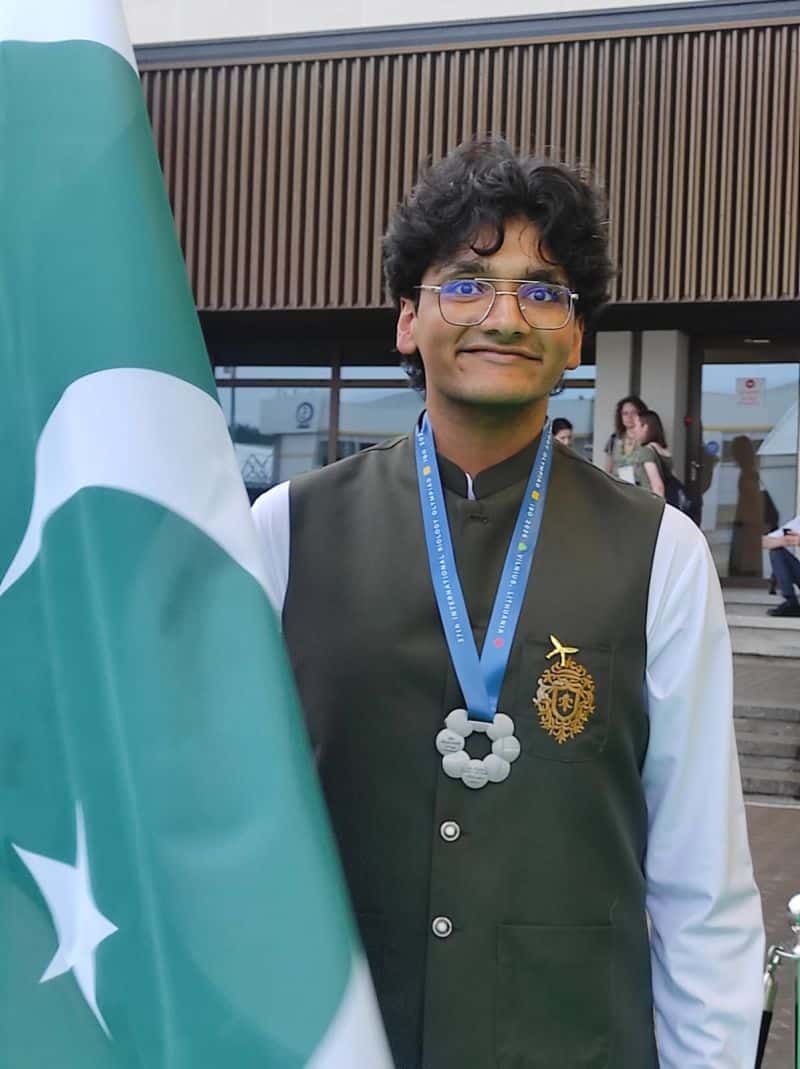
Pakistan's young talent has made a significant achievement in the 37th International Biology Olympiad as Hassan Atif Cheema won a silver medal. This shows the growing strength of Pakistan's young talent in science.
Pakistan's young talent has made a significant achievement in the 37th International Biology Olympiad. A silver medal was won by Hassan Atif Cheema, which shows the growing strength of Pakistan's young talent in science. The competition brought together more than 300 students from around 78 countries, making it a challenging and competitive event.
Analysis
A Silver Medal for Pakistan's Young Talent
Pakistan has made a significant achievement in the 37th International Biology Olympiad as Hassan Atif Cheema won a silver medal. This shows the growing strength of Pakistan's young talent in science. The competition brought together more than 300 students from around 78 countries, making it a challenging and competitive event.
The students were chosen through the STEM Careers Program, a joint effort by the Higher Education Commission (HEC) and Pakistan Institute of Engineering and Applied Sciences (PIEAS). They received special training at places like the National Institute of Biotechnology and Genetic Engineering (NIBGE). Pakistan started joining the IBO regularly from 2006, and this silver medal adds to the country's progress in international science contests.
This achievement highlights the hard work of students, teachers, and the support from national programs. It inspires more young Pakistanis to pursue careers in biology and other sciences. The students who participated in the IBO were from various schools and universities across Pakistan, and their participation shows the growing interest in science and technology among the youth.
The IBO is an annual event that brings together students from around the world to compete in biology, chemistry, and physics. The competition is designed to test the students' knowledge, skills, and problem-solving abilities in these subjects. The students who participate in the IBO are among the best in their respective countries, and their participation is a testament to the growing strength of Pakistan's young talent in science.
The achievement of Hassan Atif Cheema and Muhammad Mutahir is a proud moment for Pakistan, and it highlights the country's progress in international science contests. It also shows the growing interest in science and technology among the youth, and it inspires more young Pakistanis to pursue careers in biology and other sciences.
Key points
- Pakistan has achieved a proud moment in science as Hassan Atif Cheema won a silver medal at the 37th International Biology Olympiad (IBO) 2026.
- The competition brought together more than 300 students from around 78 countries, making it a challenging and competitive event.
- The students were chosen through the STEM Careers Program, a joint effort by the Higher Education Commission (HEC) and Pakistan Institute of Engineering and Applied Sciences (PIEAS).
- They received special training at places like the National Institute of Biotechnology and Genetic Engineering (NIBGE).
- Pakistan started joining the IBO regularly from 2006, and this silver medal adds to the country's progress in international science contests.
This achievement inspires more young Pakistanis to pursue careers in biology and other sciences. It also highlights the growing interest in science and technology among the youth, which can lead to more innovative solutions and discoveries in the future.
However, the achievement of Hassan Atif Cheema and Muhammad Mutahir also highlights the need for more support and resources for students who want to pursue careers in science and technology. The country needs to invest more in education and research to produce more talented scientists and engineers.