Parent volunteer scheme for Primary 1 registration: How does it work?
Parents can volunteer at their chosen primary school to qualify for priority admission in Phase 2B. However, completing the required hours does not guarantee a place, and parents still face balloting if schools are oversubscribed.
Intelligence analysis by Llama
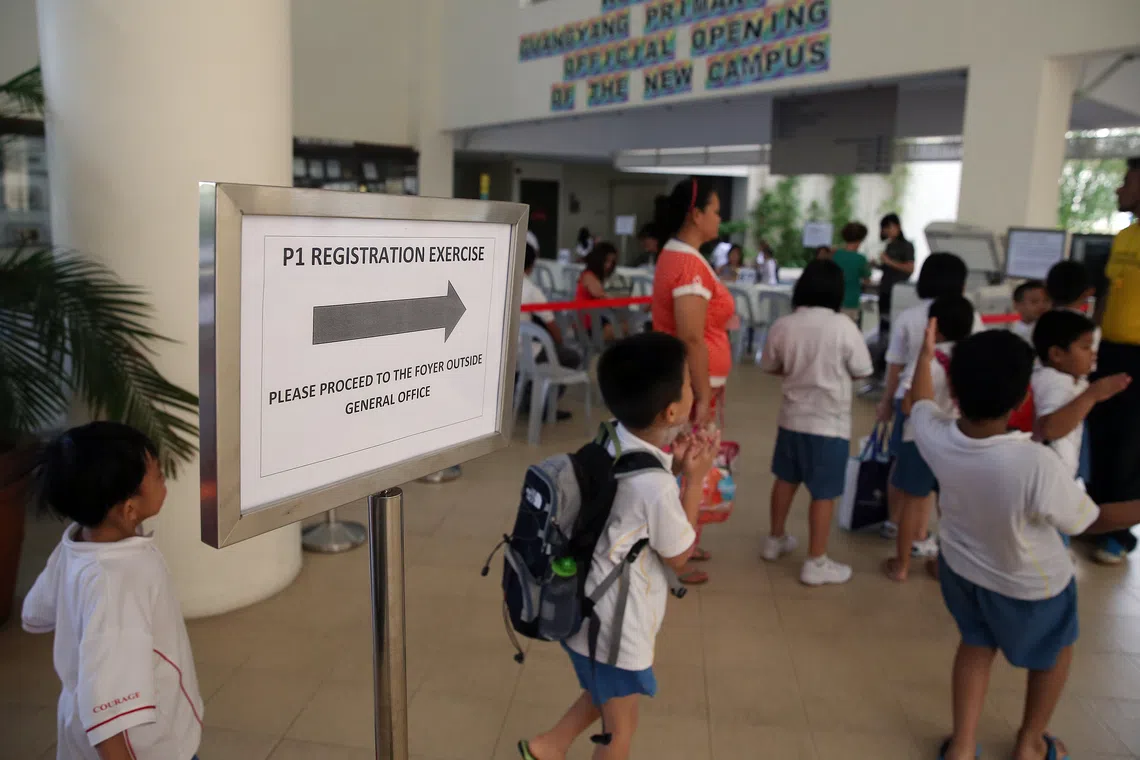
The parent volunteer scheme offers priority admission in Phase 2B for parents who complete at least 40 volunteer hours at their chosen primary school. However, it does not guarantee admission, and parents still face balloting if schools are oversubscribed.
Imagine you want to get into a good school for your child. One way to do this is by volunteering at the school. You help out with things like traffic duty or events, and this can give you a better chance of getting into the school. But, it's not a guarantee, and there are still other kids who might get in too.
Analysis
History of the Parent Volunteer Scheme
The parent volunteer scheme was introduced in 1998 as a way for parents to get to know more about the school they are interested in. The aim was to encourage greater parental involvement in education and build closer ties between families and schools. Today, around one-third of primary schools offer the scheme, with schools setting their own volunteer tasks and hours.
Requirements for the Parent Volunteer Scheme
To qualify for priority admission in Phase 2B, parents must complete at least 40 hours of volunteer work at their chosen primary school. However, this does not guarantee admission, and parents still face balloting if schools are oversubscribed. Some schools select parent volunteers, while others require applicants to complete a certain number of hours of service.
Criticisms of the Parent Volunteer Scheme
The parent volunteer scheme has been criticized for giving an unfair advantage to parents who can afford the time and resources to volunteer. Critics argue that it creates an unequal playing field, where parents who can afford to volunteer have a higher chance of securing a spot in a school. This raises questions about the fairness of the primary school admission process and whether it is truly merit-based.
Conclusion
The parent volunteer scheme is a complex issue that raises questions about the fairness of the primary school admission process. While it was introduced with the aim of encouraging greater parental involvement in education, it has been criticized for creating an unequal playing field. As the primary school admission process continues to evolve, it is essential to consider the implications of the parent volunteer scheme and whether it is truly fair and merit-based.
Key points
- The parent volunteer scheme offers priority admission in Phase 2B for parents who complete at least 40 volunteer hours at their chosen primary school.
- Completing the required hours does not guarantee admission, and parents still face balloting if schools are oversubscribed.
- The scheme has been criticized for giving an unfair advantage to parents who can afford the time and resources to volunteer.
- The scheme was introduced in 1998 to encourage greater parental involvement in education and build closer ties between families and schools.
If the parent volunteer scheme is implemented fairly and without bias, it could lead to a more engaged and involved community of parents who are invested in their child's education. This could ultimately benefit the children and the school as a whole.
If the parent volunteer scheme is not implemented fairly, it could lead to an unequal playing field where only certain parents have access to priority admission. This could create resentment and frustration among parents who are not able to volunteer and could ultimately harm the school's reputation.