Pezeshkian calls for rebuilding trust in ties with Germany
Iranian President Masoud Pezeshkian met with the new German Ambassador, Axel Dittmann, calling for a renewal of bilateral relations based on mutual respect and constructive dialogue, despite recent deterioration.
Intelligence analysis by Gemini 2.5 Flash
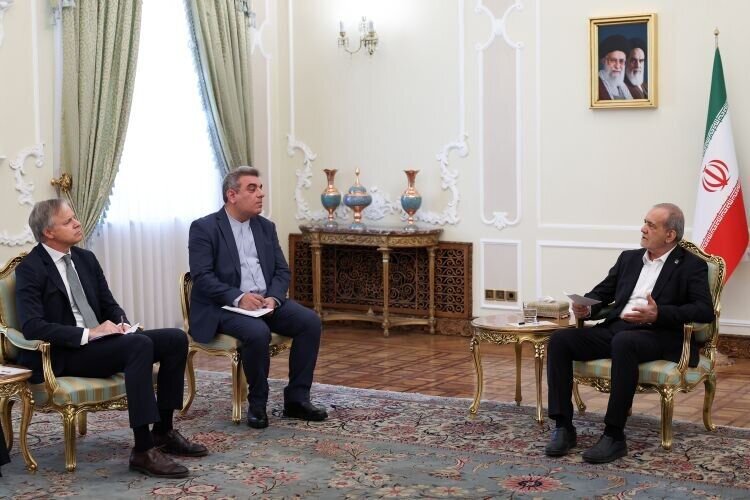
President Pezeshkian emphasized the need for Germany to adjust its approach and strengthen mutual trust, citing specific actions like the closure of the Islamic Center of Hamburg, consular restrictions, and sanctions. Ambassador Dittmann affirmed his mission to facilitate honest communication and a gradual, confidence-building approach to resolve issues.
Imagine two friends, Iran and Germany, who used to play together a lot. Lately, they haven't been getting along, and one friend, Iran's leader, says the other friend, Germany, has done some things that hurt their friendship, like closing a club or being mean during a fight. Now, a new messenger from Germany has arrived, and both friends say they want to be friends again, but it will take time and effort to trust each other.
Analysis
A Century of Strained Ties
Iran and Germany share a diplomatic and economic history spanning over a century, a relationship that has historically been significant for both nations. However, as highlighted by Iranian President Masoud Pezeshkian during his meeting with the new German Ambassador Axel Dittmann, these ties have experienced a notable deterioration in recent years. This decline is not merely a minor diplomatic hiccup but reflects deeper geopolitical tensions and differing perspectives on international law and regional conflicts. The call for rebuilding trust signals a recognition from Tehran that the current state of affairs is unsustainable and that a fundamental shift is required to restore a constructive relationship.
Pezeshkian's Grievances
President Pezeshkian did not shy away from outlining specific actions by Berlin that have contributed to the strained relations. He pointed to the closure of the Islamic Center of Hamburg, restrictions imposed on Iranian consular representations, and the implementation of sanctions against Iranian banks as direct impediments to progress. Furthermore, Pezeshkian strongly criticized Germany's stance regarding recent military aggressions against Iran, framing these actions as clear violations of international law and humanitarian principles. His questioning of the international community's silence on strikes against civilian infrastructure underscores Iran's perception of a double standard and a misuse of technology for political pressure, rather than for humanitarian advancement.
Path to Rebuilding Trust
Despite these significant challenges and criticisms, President Pezeshkian reaffirmed Iran's commitment to diplomacy and constructive dialogue within international regulations, indicating Tehran's openness to resolving disputes through political channels. Ambassador Dittmann, in turn, acknowledged the historical importance of the bilateral relationship and expressed his primary mission to facilitate honest and responsible communication. His intention to prioritize a gradual, confidence-building approach, aiming for practical solutions and future cooperation, suggests a willingness from the German side to engage. The success of this diplomatic overture will depend on both parties' ability to address the deep-seated grievances and find common ground amidst complex geopolitical realities.
Key points
- Iranian President Pezeshkian called for rebuilding trust with Germany during a meeting with the new German Ambassador Axel Dittmann.
- Pezeshkian criticized Germany's actions, including the closure of the Islamic Center of Hamburg, consular restrictions, and sanctions against Iranian banks.
- He also condemned Berlin's stance on military aggressions against Iran, citing violations of international law and humanitarian principles.
- Despite challenges, Pezeshkian reaffirmed Iran's commitment to diplomacy and resolving disputes through political channels.
- Ambassador Dittmann pledged to facilitate honest communication and pursue a gradual, confidence-building approach to foster cooperation.
The commitment from both President Pezeshkian and Ambassador Dittmann to engage in dialogue and find practical solutions offers a hopeful path forward. A gradual, confidence-building approach could lead to the resolution of existing problems and foster renewed bilateral cooperation, potentially easing regional tensions and opening new avenues for economic and diplomatic engagement.
The deep-seated issues, including sanctions, restrictions, and differing views on military actions, pose significant hurdles to rebuilding trust. If Germany does not fundamentally adjust its approach as called for by Iran, or if diplomatic efforts fail to yield concrete solutions, relations could further deteriorate, leading to continued isolation for Iran and increased instability in the region.


