PI Industries unveils India’s first indigenously discovered insecticide molecule
PI Industries is set to launch Pioxaniliprole, India's first indigenously discovered insecticide molecule, under the brand 'Pioxazon' for the upcoming rabi crop season.
Intelligence analysis by Gemini 2.5 Flash
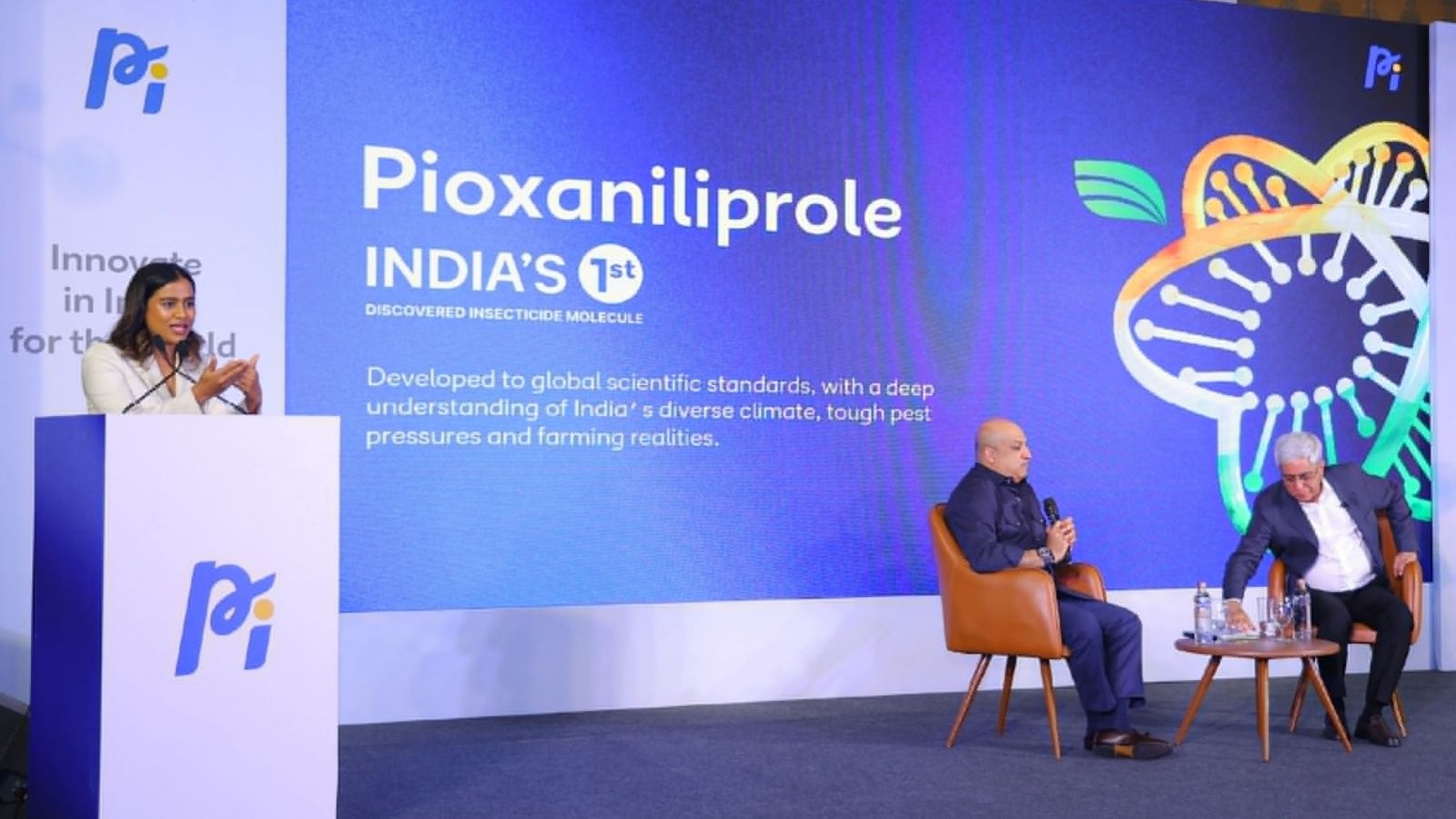
After over a decade of research and a significant investment of Rs 2,000 crore, PI Industries has developed and secured approval for Pioxaniliprole. This groundbreaking insecticide, India's first domestically discovered molecule, is poised for commercial launch to help farmers protect rice, chilli, tomato, and chickpea crops from various destructive pests.
Imagine a superhero shield for plants! Indian scientists at PI Industries have made a special bug-zapping spray called Pioxazon. It took them over ten years and lots of money, but now farmers can use it on their rice, tomatoes, and chillies to stop pesky worms from eating their crops, helping them grow more food.
Analysis
PI Industries' announcement of Pioxaniliprole, branded as 'Pioxazon,' represents a pivotal moment for India's agricultural innovation landscape. This molecule, belonging to the anthranilic diamide class of insecticides, has undergone rigorous evaluation and received approval from the Central Insecticides Board and Registration Board. Its formulation as a 20% weight-by-volume suspension concentrate is specifically designed for application on key crops such as rice, chilli, tomato, and chana (chickpea), addressing a wide spectrum of common and damaging insect pests.
Pioxaniliprole
Pioxaniliprole functions by targeting the ryanodine receptors, or calcium release channels, found in caterpillar insects. When the insecticide binds to and activates these receptors, it triggers an uncontrolled release of calcium within the insect's system. This physiological disruption leads to feeding cessation, muscle paralysis, and ultimately, the death of the pest. The insecticide is effective against a range of problematic pests, including the yellow stem borer, leaf folder, fall armyworm, tobacco cutworm, fruit borer, and pod borer, which collectively cause substantial crop damage and yield losses for farmers.
Rs 2,000 crore
The development of Pioxaniliprole involved a substantial investment of approximately Rs 2,000 crore, equivalent to about $300 million globally for a new crop protection active ingredient. This significant financial commitment was coupled with a decade-long research and development effort, highlighting the complexity and extensive resources required to bring such an innovation to fruition. The successful indigenous discovery of this molecule underscores India's increasing capacity for advanced scientific research and its commitment to developing homegrown solutions for critical sectors like agriculture, reducing reliance on foreign technologies and products.
Mayank Singhal
Mayank Singhal, the managing director of PI Industries Ltd, emphasized the extensive process behind Pioxaniliprole's approval. He stated that the molecule underwent thorough regulatory studies and multi-location field trials to ensure its efficacy and safety before receiving the green light. With the necessary approvals in place, PI Industries is now prepared to commercially launch 'Pioxazon' for farmers in the upcoming rabi (winter-spring) crop season, signaling the culmination of years of dedicated work and the beginning of its practical application in agricultural fields across India.
Key points
- PI Industries will launch Pioxaniliprole, branded 'Pioxazon', in the upcoming rabi crop season.
- It is India's first indigenously discovered insecticide molecule, developed over a decade with a Rs 2,000 crore investment.
- The Central Insecticides Board and Registration Board has approved its use on rice, chilli, tomato, and chickpea crops.
- Pioxaniliprole targets ryanodine receptors in caterpillar insects, causing paralysis and death.
- It is effective against pests like yellow stem borer, leaf folder, fall armyworm, and fruit borer.
The indigenous development of Pioxaniliprole could significantly reduce India's reliance on imported crop protection solutions, fostering greater agricultural self-sufficiency. Its targeted action against various pests may lead to improved crop yields and better economic outcomes for farmers, strengthening the domestic agrochemical industry.
While promising, the success of Pioxaniliprole depends on widespread farmer adoption and its efficacy in diverse field conditions, which could be challenging. Potential resistance development in pests over time, a common issue with insecticides, might also limit its long-term effectiveness if not managed properly.
Market signals
- PIIND The launch of India's first indigenously discovered insecticide molecule is a significant milestone expected to boost the company's market position and revenue.
AI-generated analysis of potential market relevance. Not financial advice.