PM launches National Olive Value Chain Policy to cut import bill
Pakistan's Prime Minister Muhammad Shehbaz Sharif has launched the National Olive Value Chain Policy, aiming to reduce the country's edible oil import bill. The policy aims to expand olive production, processing, and marketing, positioning Pakistan as a regional hub for o…
Intelligence analysis by Llama
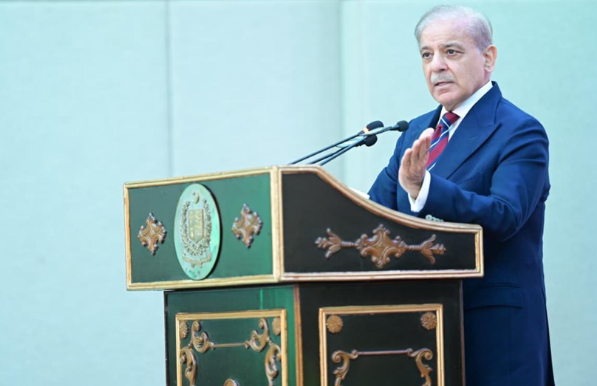
Pakistan's Prime Minister Muhammad Shehbaz Sharif has launched the National Olive Value Chain Policy to reduce the country's edible oil import bill. The policy aims to expand olive production, processing, and marketing, positioning Pakistan as a regional hub for olive oil.
Imagine Pakistan is trying to grow its own food instead of buying it from other countries. The government has a new plan to help farmers grow olives, which will help reduce the country's food bill and make it more self-sufficient.
Analysis
A Rare Success Story in Pakistan's Agriculture Sector
Pakistan's growing olive sector is a rare success story in the country's agriculture sector. The sector has the potential to transform national agriculture and ease the pressure of a multi-billion-dollar edible oil import bill. Prime Minister Muhammad Shehbaz Sharif has formally launched Pakistan's National Olive Value Chain Policy, describing the country's growing olive sector as a rare success story capable of transforming national agriculture and easing the pressure of a multi-billion-dollar edible oil import bill.
Expanding Domestic Olive Cultivation
Pakistan currently spends around four billion dollars annually importing crude edible oil, a burden that the country could significantly reduce by expanding domestic olive cultivation. The prime minister said that with sustained effort, Pakistan could become self-sufficient in edible oil within a few years. He paid tribute to farmers who pioneered olive cultivation despite early scepticism from their own families and communities, singling out growers from Balochistan and Khyber Pakhtunkhwa whose orchards have since won international awards in New York, London, and Dubai.
A Partnership with Italy
The prime minister also thanked Italy for decades of cooperation with Pakistan, recalling the two countries' seven-decade partnership spanning archaeology, agriculture, trade, and industry. He announced that Pakistan would fund the training of 100 young agriculture graduates in Italy, covering olive cultivation, processing, and marketing, so they can return to strengthen the local value chain. He said his government remained committed to expanding edible oil crops more broadly, including palm and sunflower cultivation, alongside the olive initiative, calling on farmers and officials to keep working together in the field rather than 'only on paper'.
Key points
- Pakistan's National Olive Value Chain Policy aims to reduce the country's edible oil import bill.
- The policy aims to expand olive production, processing, and marketing, positioning Pakistan as a regional hub for olive oil.
- Pakistan has secured a permanent seat at the International Olive Council this year.
- The country's first Olive Sensory Evaluation Lab has been established in Islamabad.
If the National Olive Value Chain Policy is successful, Pakistan could become self-sufficient in edible oil within a few years, reducing its reliance on imports and easing the pressure on its economy.
However, the success of the policy depends on various factors, including the willingness of farmers to adopt new practices, the availability of resources, and the government's commitment to supporting the sector.