PM Modi Questions Industries Over Real Wage Stagnation Amid Corporate Tax Cuts
Prime Minister Narendra Modi has questioned Indian industries about stagnant employee wages despite government-provided tax cuts and a business-friendly environment. Data indicates that real wages for factory workers and other sectors have barely increased, or even decrea…
Intelligence analysis by Gemini 2.5 Flash
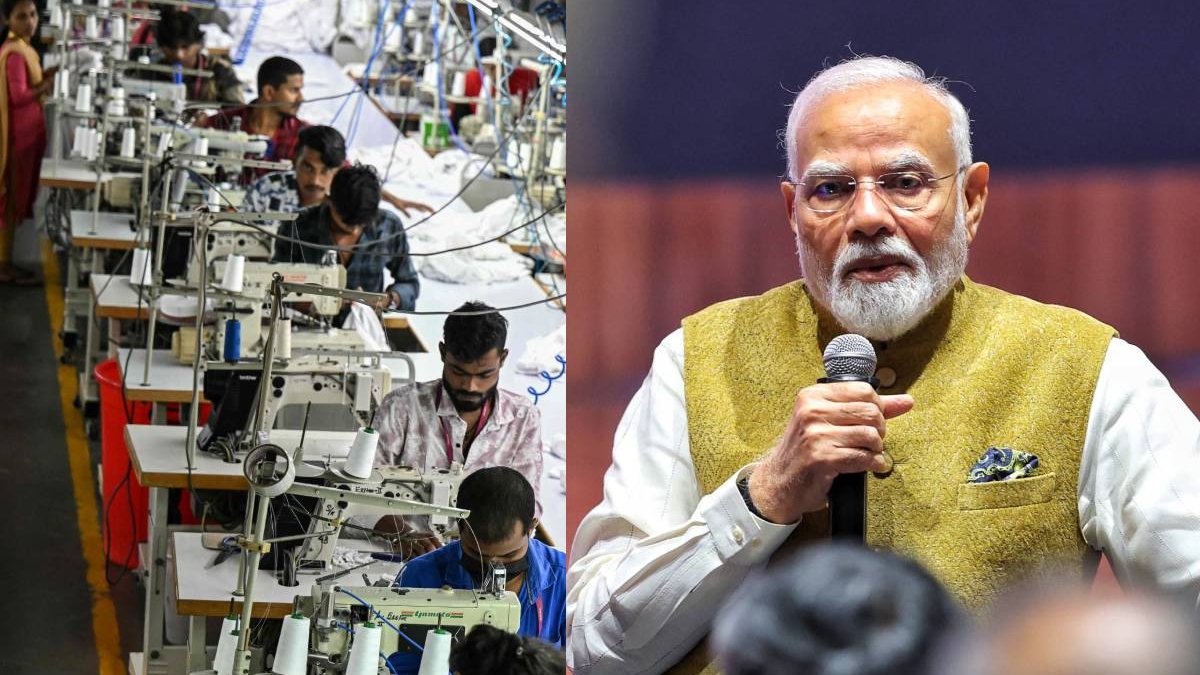
Prime Minister Narendra Modi criticized Indian businesses for failing to pass on the benefits of corporate tax reductions and income tax exemptions to their employees through higher salaries. Statistical data from various surveys supports this, showing minimal real wage growth for workers across sectors, while corporate profits have surged to record levels, highlighting a growing disp…
Imagine your parents get a bonus at work, but everything at the store also gets more expensive. Even though their pay stub shows more money, they can't buy much more than before. That's what's happening to many workers in India: companies are making lots of money, and the government cut their taxes, but the workers' actual buying power isn't growing much because prices keep going up.
Analysis
PM Modi's Question
The article opens with Prime Minister Narendra Modi's direct challenge to industry leaders at the Federation of Indian Chambers of Commerce and Industry (FICCI) annual general meeting. He questioned whether companies had increased employee salaries despite the government reducing income tax for those earning up to ₹12 lakh and cutting corporate tax from 30% to 22% (or 15% for new companies) in September 2019. This criticism implies that the benefits intended to stimulate investment and growth were not trickling down to the workforce, prompting a call for greater corporate responsibility towards employees.
Real Wage Stagnation
Data from the Annual Survey of Industries (ASI) for 2024-25 reveals that the average annual salary for a factory worker is ₹2.28 lakh (approximately ₹19,000 per month), a 5.3% increase from the previous year. However, after accounting for a 4.6% inflation rate during the same period, the real wage increase is a mere 0.7%. This figure, while the best in three years, highlights a persistent issue, with 2023-24 seeing only a 0.1% real wage hike and 2022-23 experiencing a 1.1% decrease. Over the last six years, real wage growth has been below 1% in five of them, with the exception of 2021-22 (4.5%), which was largely a recovery from a 5.3% drop due to COVID-19. This stagnation is not limited to factory workers; studies by the Centre for Social and Economic Progress and India Ratings and Research indicate similar trends across most employment sectors, with real wages barely keeping pace with inflation nationally. For instance, self-employed men saw their real monthly income drop by 9.1% from ₹9,454 in 2017-18 to ₹8,591 in 2023-24, according to the 2025 Economic Survey.
Corporate Profits and Disparity
In stark contrast to stagnant wages, corporate profits have seen unprecedented growth. Bank of Baroda data shows that 2,600 listed companies recorded a net profit of approximately ₹4.5 lakh crore in the July-September quarter, a 26% year-on-year increase and a new record. Motilal Oswal Financial Services noted in June that the profits of Nifty 500 companies reached an all-time high of 5.2% of India's GDP in 2025-26. The article highlights that a significant portion of these profits (₹1.12 lakh crore) came from just five companies: Reliance, SBI, Indian Oil, HDFC Bank, and ONGC, three of which are public sector undertakings. This widening gap between corporate profitability and employee compensation, coupled with a growing salary disparity between managers and workers (managers earned 5.87 times more than workers in 2008-09, now 6.36 times), raises concerns about income inequality, a point also flagged in the 2024-25 Economic Survey. The primary reason for this disconnect, according to the article, is that the tax cuts were aimed at new investments and 'Make in India' initiatives, not directly at wage increases, and the expected investment influx did not fully materialize.
Key points
- PM Modi questioned industries on stagnant wages despite tax cuts and income tax exemptions.
- Corporate tax was reduced from 30% to 22% in 2019, with new companies paying 15%.
- Income tax exemption was provided for annual incomes up to ₹12 lakh.
- Average real wage increase for factory workers was only 0.7% in 2024-25, barely outpacing inflation.
- Corporate net profits for 2,600 listed companies surged by 26% to ₹4.5 lakh crore in the July-September quarter, marking a record.
- The salary gap between managers and workers has widened, indicating growing income disparity.
If the government's questioning prompts industries to re-evaluate their wage policies, it could lead to more equitable distribution of wealth, boosting consumer spending and overall economic demand. Increased real wages could improve the living standards of millions of Indian workers, fostering a more inclusive growth model.
If industries continue to prioritize profit maximization over wage growth, the existing income inequality could worsen, potentially leading to social unrest and reduced consumer purchasing power. This could hinder long-term economic stability and make it harder for India to achieve sustainable and equitable development goals.