Port of Shanghai targets Singapore, London in maritime push from busiest to best
Shanghai, already the world's busiest container port, has launched a five-year plan to become a leading international maritime hub by expanding high-value shipping services like financing, insurance, and legal arbitration, challenging rivals like Singapore and London.
Intelligence analysis by Gemini 2.5 Flash
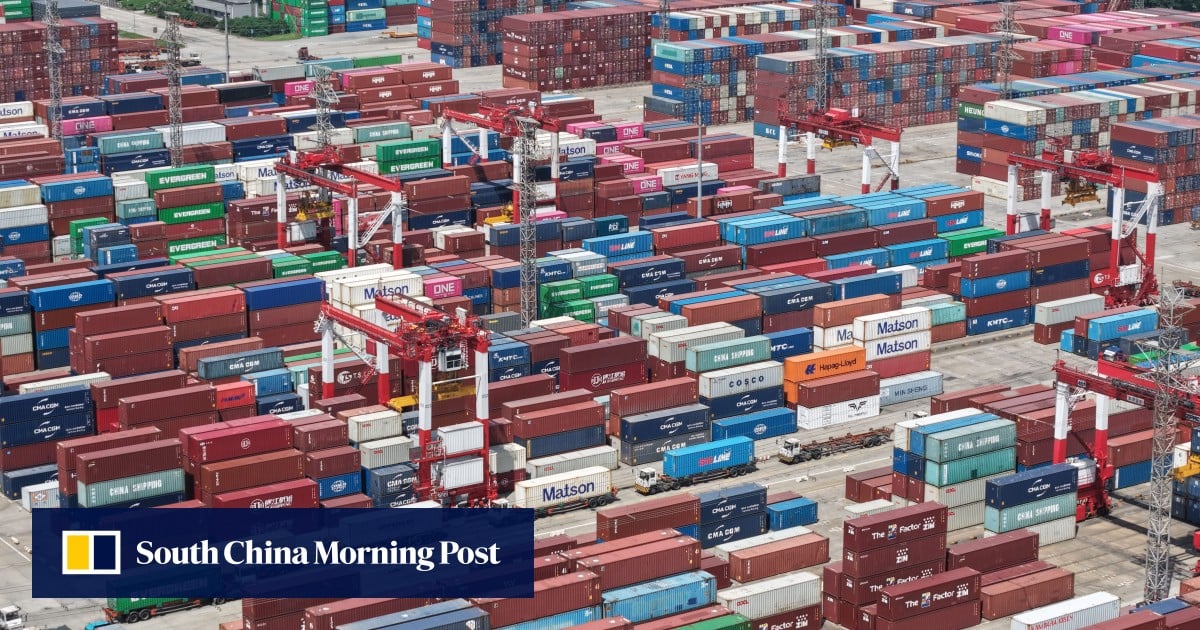
Shanghai aims to transform its status from merely the busiest container port to a comprehensive global maritime hub. Its new strategic roadmap focuses on leveraging technology, including AI and automation, to enhance efficiency and develop advanced shipping services, intensifying competition with established hubs.
Imagine a really big playground with the most swings and slides. The city of Shanghai, which runs it, now wants it to be the best at everything, not just having the most toys. They plan to be great at lending money for new toys, insuring them, and solving toy disputes, using smart robots. They hope to be better than other famous playgrounds like Singapore and London.
Analysis
Shanghai's Strategic Maritime Evolution
Shanghai, already recognized as the world's busiest container port, is embarking on an ambitious transformation. Its new five-year plan signals a strategic pivot from merely handling the largest volume of cargo to becoming a comprehensive global maritime hub. This shift acknowledges that true leadership in the international shipping sector extends beyond sheer container throughput, encompassing a broader ecosystem of high-value services and technological innovation. The city's sustained dominance in cargo volume, holding the "busiest port" title since 2010 and projecting further growth to 58 million TEU by 2030, provides a strong foundation for this elevated ambition. This evolution is crucial for China's broader goal of becoming a maritime powerhouse, integrating its economic might with advanced service capabilities. It represents a maturation of its role in global trade, moving up the value chain from a manufacturing and logistics giant to a sophisticated service provider.
Cultivating High-Value Maritime Services
The core of Shanghai's strategy lies in developing a robust suite of high-value maritime services. Vice-mayor He Qing outlined plans to build a comprehensive shipping-insurance ecosystem, introducing specialized products for multimodal transport. Furthermore, the city aims to promote ship financing and leasing, expanding its financial footprint within the global shipping industry. Legal services are also a key focus, with intentions to enhance arbitration capabilities to handle a greater number of foreign cases. Beyond these, Shanghai seeks to bolster its brand influence by enhancing the Shanghai Shipping Index and establishing a world-class shipping exchange, positioning itself as a benchmark and trading center for maritime activities. Technology, particularly artificial intelligence and automation, is earmarked as a critical enabler for boosting efficiency across these expanded service offerings.
Intensifying Global Competition
Shanghai's strategic push is a direct challenge to established global maritime hubs, notably Singapore, London, and Hong Kong. These cities have long dominated the high-value segments of the shipping industry, from financial services and insurance to legal and arbitration expertise. By explicitly targeting these areas, Shanghai is signaling its intent to compete head-on, putting significant pressure on these rivals to innovate and maintain their competitive edge. This intensified competition reflects a broader geopolitical and economic dynamic, where China seeks to assert greater influence over global trade infrastructure and service provision. The success of Shanghai's plan could reshape the hierarchy of international maritime centers, potentially drawing business and talent away from traditional hubs and solidifying China's position at the apex of global commerce. The ambition is clear: to transition from being merely the busiest to unequivocally the best.
Key points
- Shanghai, the world's busiest container port since 2010, handled over 55 million TEU in 2025.
- A new five-year plan aims to transform Shanghai into a leading international maritime hub by 2030.
- The strategy focuses on expanding high-value shipping services like financing, insurance, and legal arbitration.
- Shanghai plans to leverage AI and automation to boost efficiency and develop a world-class shipping exchange and index.
- This move directly challenges established global maritime hubs such as Singapore, London, and Hong Kong.
Shanghai's plan could solidify its position as a global economic powerhouse, attracting more international business and talent, and fostering innovation in maritime technology and services. This could lead to increased trade efficiency and economic growth for China.
The ambitious targets might face significant hurdles, including intense competition from established hubs, potential regulatory challenges, and the complexity of building a sophisticated service ecosystem, which could dilute resources without achieving desired global leadership.