Poultry sector growth plan risks UK national security, campaigners warn
Campaigners warn that the UK government's plan to boost the poultry sector for food security risks national security due to heavy reliance on imported animal feed. They argue intensive farming is inefficient and vulnerable to supply chain shocks.
Intelligence analysis by Gemini 2.5 Flash
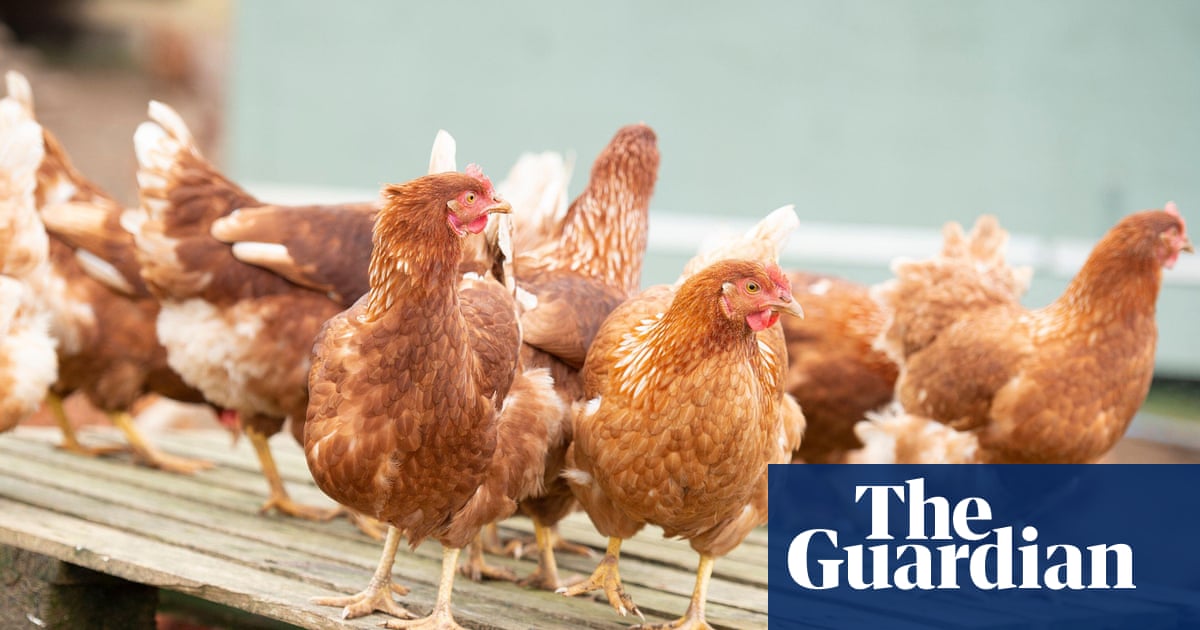
The UK government aims to enhance food security by increasing homegrown produce, specifically through expanding the poultry sector and easing planning constraints for intensive farms. However, environmental and food security groups contend this approach is flawed, highlighting the sector's dependence on imported soy for animal feed, which they argue creates vulnerability and environme…
Imagine if your lunchbox only had one type of sandwich, and the bread for that sandwich came from a very, very far away shop. If that shop closed or the delivery truck broke down, you'd have no lunch! Some grown-ups are worried that the UK government's plan to make more chicken for food is like that, because the chickens eat food that comes from far away. They say it's better to grow lots of different foods here, like beans and nuts, so we always have enough to eat, no matter what happens far away.
Analysis
The UK's Poultry-Centric Food Security Push
The UK government, through Environment Secretary Emma Reynolds, has articulated a clear strategy to bolster national food security by significantly increasing homegrown produce. A key component of this strategy involves boosting the poultry sector, with Reynolds identifying planning constraints as a major barrier to growth. The government has reportedly been working on rewriting planning rules to facilitate the construction of more intensive livestock farms, aiming to use "different levers of the state" and the Farming and Food Partnership Board to achieve this expansion.
This initiative stems from a broader recognition of the UK's food security vulnerabilities, as outlined in the government's farming roadmap. This roadmap, which sets a 25-year vision, warns of increasing risks from geopolitical instability, the climate crisis, environmental degradation, and supply chain disruptions. The goal is to mitigate the potential for "severe food price shocks" and, in extreme situations, reduced food availability, by enhancing domestic production capabilities.
Campaigners Warn of Import Dependency and Environmental Costs
Despite the government's stated intentions, its focus on intensive poultry growth has drawn sharp criticism from campaign groups like Sustain and Communities Against Factory Farming (CAFF). Ruth Westcott of Sustain argues that intensive poultry farming is "highly resource-intensive, polluting and inefficient," making it a risk rather than a solution to food security. Maya Pardo of CAFF points to the government's own national security assessment, which highlights that "animal farming at current levels is unsustainable without imports – soy from South America makes up 18% of produced animal feed."
This reliance on imported animal feed, particularly soy linked to Amazon deforestation, is central to the campaigners' concerns. They assert that it not only contributes to environmental destruction abroad but also leaves the UK vulnerable to global supply chain shocks and ecosystem collapse, thereby posing a direct national security threat. These groups advocate for a shift away from the poultry growth plan, urging the government to instead focus on homegrown protein sources such as pulses, legumes, nuts, and beans, which are less resource-intensive and more resilient.
Rethinking Resilience: Beyond Intensive Farming
The debate extends beyond just poultry to the fundamental approach to food production. Harriet Bell of Riverford, an organic veg box company, supports planning reform for sustainable investments like reservoirs and renewable energy but cautions against reforms that undermine "healthy water systems, biodiversity or animal welfare." She emphasizes that long-term food production hinges on healthy soils, water systems, and biodiversity, not just increased output.
This perspective aligns with the government's farming roadmap, which acknowledges that nature-friendly farming systems can enhance food production while strengthening resilience and reducing fertiliser dependency. Tim Benton, a professor of population ecology, suggests that food security will become the "organising principle" for agricultural policy in an increasingly volatile world. He advocates for a shift from pinpointing specific risks to recognizing a continuous state of global events, implying a need for more adaptive and diverse food systems rather than relying on a single, potentially vulnerable, sector for growth.
Key points
- The UK government plans to boost the poultry sector to enhance national food security, easing planning constraints for intensive farms.
- Campaigners argue this plan is a national security risk due to the poultry sector's heavy reliance on imported animal feed, particularly soy from South America.
- Intensive poultry farming is criticized as resource-intensive, polluting, and inefficient, making the UK vulnerable to supply chain shocks and ecosystem collapse.
- Groups like Sustain and CAFF advocate for a focus on homegrown protein sources such as pulses, legumes, nuts, and beans for greater resilience.
- The debate highlights the tension between increasing domestic production and ensuring environmental sustainability and supply chain diversity in food policy.
If the UK government successfully implements policies that genuinely boost domestic food production while simultaneously fostering sustainable, diverse farming practices, it could significantly enhance national food security. A shift towards homegrown proteins and nature-friendly farming, as advocated by campaigners, could lead to a more resilient, environmentally sound, and less import-dependent food system.
The current poultry growth plan risks deepening the UK's reliance on vulnerable global supply chains for animal feed, potentially leading to increased food price volatility and reduced availability during international crises. This approach could also exacerbate environmental degradation through intensive farming practices, undermining long-term food security and national resilience.