Power banks for satellites: Bengaluru company builds tech to keep ageing spacecraft alive
A Bengaluru startup, Aule Space, is developing a technology to extend the life of ageing satellites by sending a smaller 'jetpack' spacecraft that docks with an existing satellite and assumes responsibility for station-keeping using its own propulsion system.
Intelligence analysis by Llama
Aule Space is building a technology to extend the life of ageing satellites by sending a smaller 'jetpack' spacecraft that docks with an existing satellite and assumes responsibility for station-keeping using its own propulsion system. This could help operators extract years of additional service from satellites that would otherwise become orbital relics.
Imagine a power bank that you can send to a satellite in space to give it a new lease on life. That's what Aule Space is working on. They're building a small spacecraft that can dock with an existing satellite and take over its propulsion duties, keeping it working for years longer.
Analysis
Aule Space's Innovative Solution
Aule Space, a Bengaluru-based startup, is working on a groundbreaking technology to extend the life of ageing satellites. The company's approach involves sending a smaller 'jetpack' spacecraft that docks with an existing satellite and assumes responsibility for station-keeping using its own propulsion system. This innovative solution has the potential to revolutionize the satellite industry by reducing the need for expensive replacements and generating additional revenue for satellite operators.
The Challenge of Ageing Satellites
Ageing satellites pose a significant challenge for satellite operators. Once a satellite runs out of fuel, it can no longer maintain its assigned orbital position, leading to a significant loss of revenue. In many cases, expensive communication satellites remain fully functional but can no longer be used due to a lack of propellant. Aule Space's technology aims to address this issue by extending the life of ageing satellites.
The 'Jetpack' Spacecraft
Aule Space's 'jetpack' spacecraft is designed to dock with an existing satellite and assume responsibility for station-keeping using its own propulsion system. The company plans to target geostationary communication satellites, many of which cost over $300 million to build and generate significant annual revenues. The 'jetpack' spacecraft will use a single optical camera powered by onboard AI to perform the critical final approach, making it a more efficient and cost-effective solution compared to traditional docking systems.
Validation and Testing
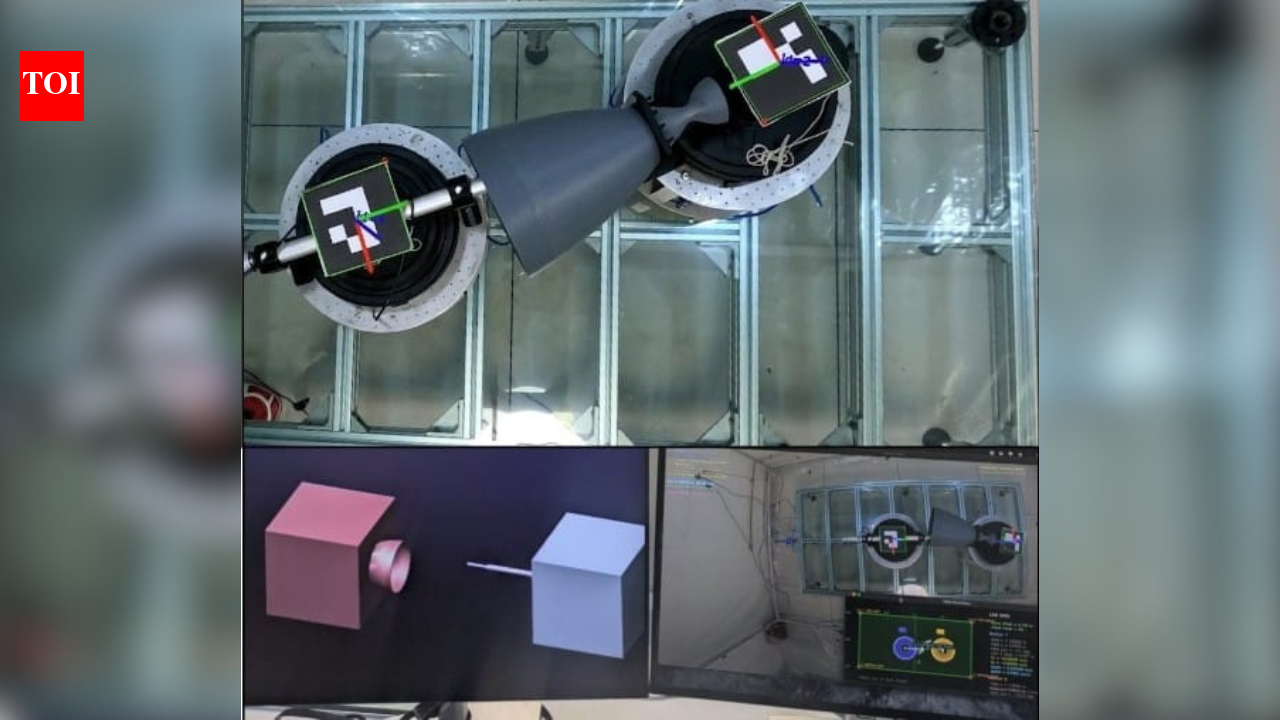
Aule Space recently completed a major milestone by testing its camera-based guidance, navigation, and control system at the Rendezvous Simulation Laboratory (RSL) at Isro's ISITE. The company was the first non-government entity to access RSL, and this on-ground testing has validated the capabilities of its technology. Aule Space is now preparing for an in-orbit demonstration next year, which will validate the technologies that the company intends to deploy around geostationary communication satellites.
Key points
- Aule Space is developing a technology to extend the life of ageing satellites by sending a smaller 'jetpack' spacecraft that docks with an existing satellite and assumes responsibility for station-keeping using its own propulsion system.
- The company plans to target geostationary communication satellites, many of which cost over $300 million to build and generate significant annual revenues.
- Aule Space's 'jetpack' spacecraft will use a single optical camera powered by onboard AI to perform the critical final approach, making it a more efficient and cost-effective solution compared to traditional docking systems.
- The company has recently completed a major milestone by testing its camera-based guidance, navigation, and control system at the Rendezvous Simulation Laboratory (RSL) at Isro's ISITE.
If successful, Aule Space's technology could help satellite operators extend the life of ageing satellites, reducing the need for expensive replacements and generating additional revenue. This could lead to a significant increase in the number of satellites in orbit, providing more opportunities for space-based services and applications.
However, there are also risks associated with this technology. For example, the 'jetpack' spacecraft could potentially cause damage to the existing satellite during the docking process, or it could fail to assume responsibility for station-keeping, leading to a loss of orbital position and revenue.