President Pezeshkian Urges Stronger Legal Deterrence in Iran
Iran's President Masoud Pezeshkian called for strengthening the country's legal deterrence by pursuing war-related cases in domestic and international courts. He emphasized the importance of transparent documentation and rigorous legal research to support future litigation.
Intelligence analysis by Llama
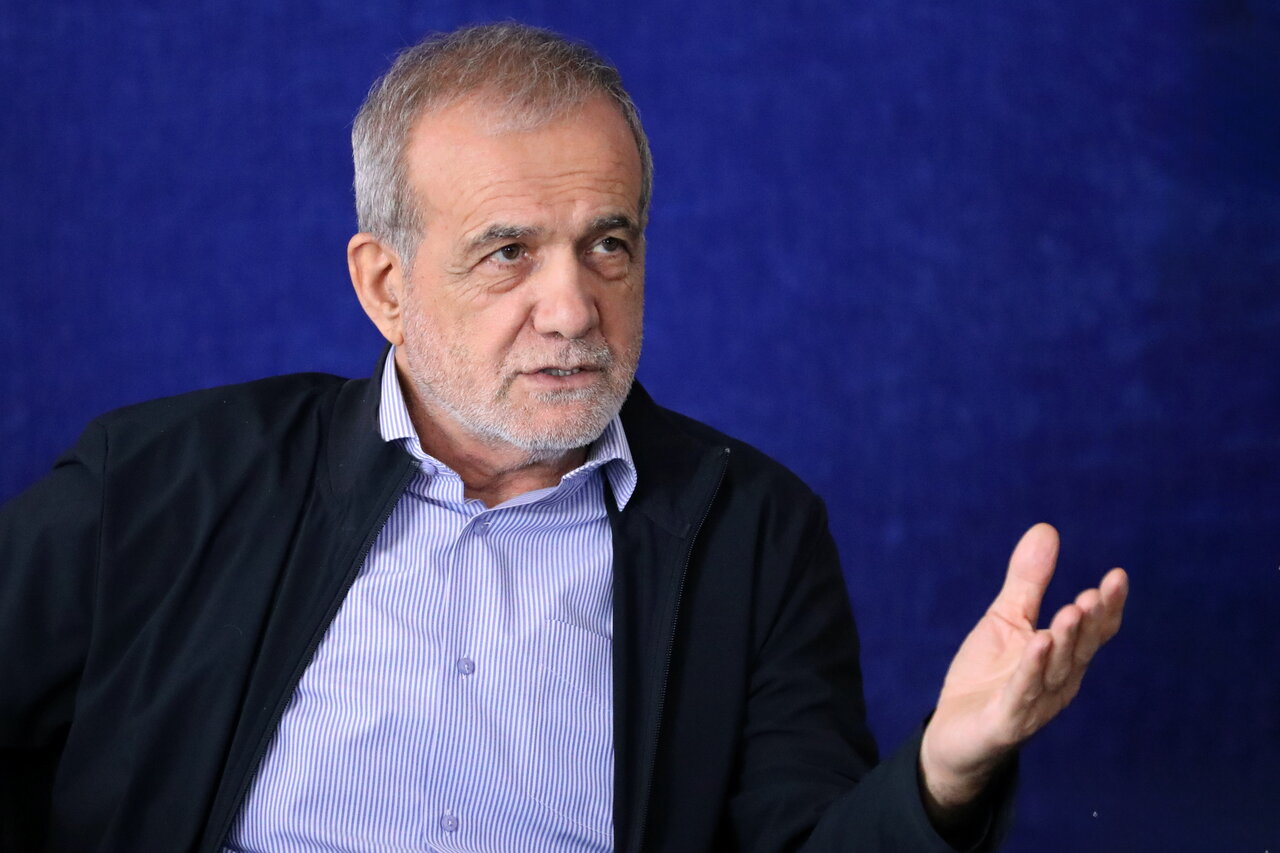
Iran's President Pezeshkian urged the country's legal system to take a stronger stance against war crimes committed by the US and the Israeli regime. He emphasized the need for thorough documentation and expert analysis to support future litigation.
Iran's President wants to make sure that people who hurt Iran are held accountable for their actions. He wants to create a system where Iran can prove that it was hurt by these actions and get justice. This is like a big puzzle where Iran needs to gather all the pieces of evidence to show that it was wronged.
Analysis
A Comprehensive Legal Framework for War Crimes Prosecution
President Pezeshkian's remarks at the high-level meeting on the legal dimensions of the wars imposed on Iran by the US and the Zionist regime since 2025, underscored the importance of a comprehensive legal framework to document violations and strengthen Iran's ability to present evidence before domestic, regional, and international judicial bodies. He emphasized that all legal action must be supported by thorough documentation, expert analysis, and internationally recognized legal standards.
Establishing Specialized Legal Working Groups
The President also called for the establishment of specialized legal working groups to support the preparation of legal cases over war crimes committed by the US and the Israeli regime. He stated that he would personally oversee their progress, highlighting the importance of transparent documentation and rigorous legal research to support future litigation.
A Legal Atlas for War-Related Damage
During the meeting, Ayatollah Mohaqeq Damad was appointed to head a comprehensive legal research program aimed at coordinating domestic and international litigation efforts. The initiative includes the preparation of a legal atlas covering more than 700 research topics related to acts of aggression and wartime damage resulting from the two wars. This atlas will serve as a crucial tool for legal experts and researchers to document and analyze war-related damage.
Unity Around the Leader
President Pezeshkian praised cooperation among Iran's three branches of government in defending the country's legal rights, highlighting the support of Judiciary Chief Gholamhossein Mohseni Ejei and Speaker of the Parliament Mohammad Baqer Qalibaf. He emphasized that unity around the Leader is key to victory against enemies, and that the country's legal system must work together to achieve this goal.
Key points
- President Pezeshkian called for strengthening Iran's legal deterrence by pursuing war-related cases in domestic and international courts.
- He emphasized the importance of transparent documentation and rigorous legal research to support future litigation.
- The President called for the establishment of specialized legal working groups to support the preparation of legal cases over war crimes committed by the US and the Israeli regime.
- Ayatollah Mohaqeq Damad was appointed to head a comprehensive legal research program aimed at coordinating domestic and international litigation efforts.
- The initiative includes the preparation of a legal atlas covering more than 700 research topics related to acts of aggression and wartime damage resulting from the two wars.
If Iran's legal system is able to effectively prosecute war crimes committed by the US and the Israeli regime, it could lead to a significant shift in the balance of power in the region. This could also set a precedent for other countries to follow, leading to a more just and accountable international community.
However, the process of prosecuting war crimes is complex and time-consuming. There is also a risk that the US and the Israeli regime may try to interfere with Iran's legal efforts, or that the international community may not take Iran's claims seriously. Additionally, the legal system in Iran may face challenges in gathering evidence and building a strong case against the perpetrators.