Previewing the Model Hardware Standard Research Preview
Anthropic has launched a research preview of its Model Hardware Standard (MHS), a shared specification enabling AI agents to safely operate diverse physical devices in labs and manufacturing.
Intelligence analysis by Gemini 2.5 Flash
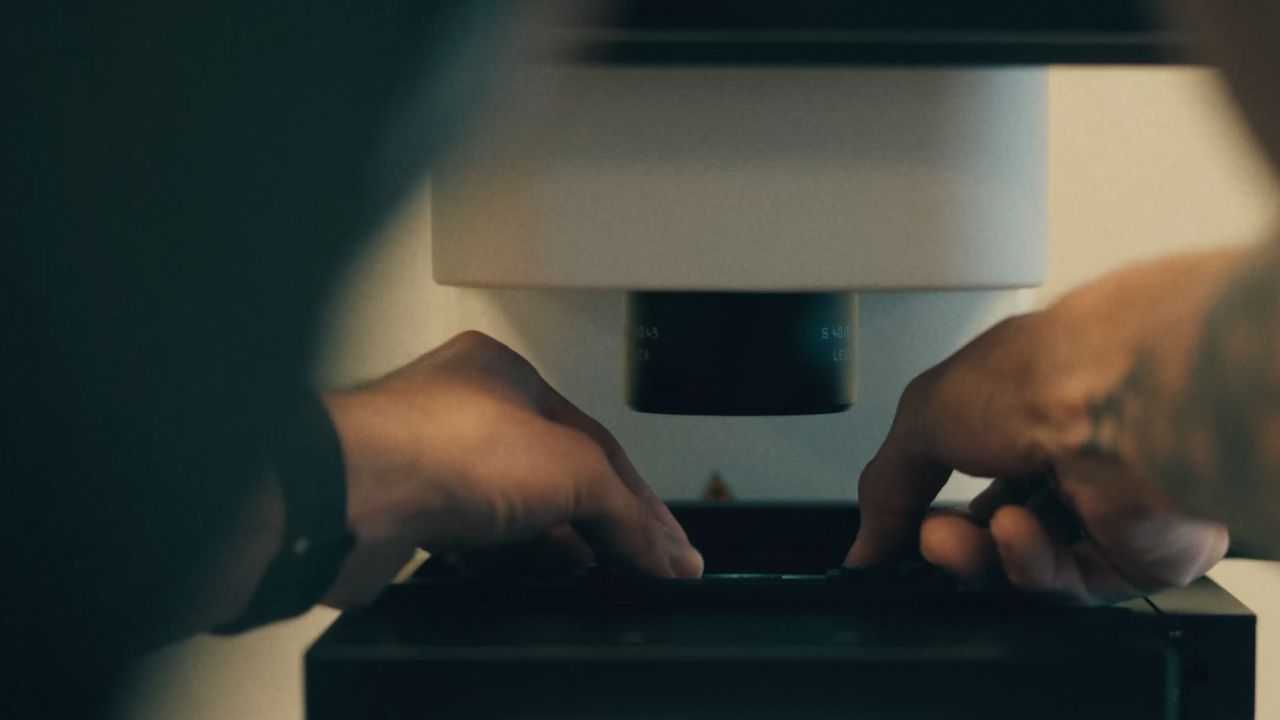
The Model Hardware Standard (MHS) aims to revolutionize scientific research and manufacturing by standardizing how AI agents interact with physical equipment. Developed in collaboration with HHMI Janelia Research Campus, MHS significantly reduces the time and effort required to integrate disparate hardware, allowing AI to orchestrate complex, autonomous experiments and workflows.
Imagine you have lots of different toys, like a robot arm, a microscope, and a liquid squirter, but they all speak different languages. The Model Hardware Standard is like a special translator that teaches all your toys to speak one language, and also tells a super-smart robot brain (an AI) how to use each toy safely, even if it's never seen it before. This lets the robot brain make all your toys work together to do cool science experiments or build things much faster than before!
Analysis
The introduction of the Model Hardware Standard (MHS) by Anthropic marks a significant step towards bridging the gap between advanced AI models and the physical world. Historically, integrating various lab and manufacturing instruments has been a time-consuming, bespoke process, often taking weeks or months due to a lack of standardized communication protocols. MHS addresses this by providing a universal driver that translates between operating systems and hardware devices, drastically cutting integration time to minutes or hours. This standardization is not merely about connectivity; it's about enabling AI agents to understand, operate, and even recover from errors in physical equipment autonomously, fostering round-the-clock experimentation and workflow optimization.
HHMI Janelia Research Campus
The genesis of the Model Hardware Standard is rooted in a collaborative effort between Anthropic and the HHMI Janelia Research Campus. This partnership highlights the interdisciplinary nature of developing such a foundational standard, combining Anthropic's expertise in AI with Janelia's deep understanding of scientific research environments and their hardware complexities. The collaboration was essential in identifying the core challenges faced by researchers and manufacturers in integrating diverse instruments, from microscopes to robotic arms, and in designing a solution that could genuinely streamline these operations. By working together, they aimed to create a specification that not only connects devices but also empowers AI agents to perform intricate tasks, such as drug discovery experiments or quantum computer calibration, with unprecedented efficiency and safety.
Claude
A compelling demonstration of MHS's capabilities comes from observations of Anthropic's AI agent, Claude, interacting with experimental setups. The article describes Claude's exploratory approach, akin to a human scientist, in tasks like laser adjustment. Claude would make an adjustment, observe the results via a camera, and iteratively refine its actions to understand the sequence of events. Crucially, Claude then translated this learned process into deterministic code files, creating a script that allowed the laser alignment to run as a single, automated command without needing real-time reasoning at every step. This example underscores MHS's potential to enable AI agents not just to follow instructions but to learn, adapt, and automate complex physical tasks, significantly enhancing efficiency and reproducibility in experimental settings.
Model Context Protocol
Central to the functionality of MHS is its interoperability, facilitated by standard protocols like the Model Context Protocol (MCP). MHS is designed to be model-agnostic, meaning it can work with any AI agent harness that can access it using these established communication methods. The MCP, along with command-line interfaces and code files (APIs), provides the mechanisms through which an AI agent can control hardware once devices are connected and understood. These mechanisms enable agents to orchestrate steps across multiple instruments, monitor results, and adjust parameters in real time. For long-running or high-speed tasks, agents can chain together driver commands in code files, allowing devices to execute operations independently, thereby optimizing performance and reducing the need for continuous online reasoning by the AI.
Key points
- Anthropic has launched a research preview of the Model Hardware Standard (MHS) for AI agents to operate physical devices.
- MHS aims to standardize communication between AI agents and diverse lab/manufacturing instruments, reducing integration time from weeks to minutes.
- It uses a standardized driver with simple 'read' and 'write' primitives, making devices discoverable and providing AI agents with crucial operational information.
- AI agents can control hardware via mechanisms like the Model Context Protocol (MCP), command line, and code files, enabling complex task orchestration.
- Early tests show AI agents like Claude can interact exploratorily with hardware, learn tasks, and automate them into deterministic scripts.
The MHS could dramatically accelerate scientific discovery and industrial innovation by enabling AI agents to conduct complex experiments and manufacturing processes autonomously and around the clock. This standardization promises to reduce integration bottlenecks, foster faster iteration cycles, and enhance the safety and efficiency of AI operating physical equipment.
Despite its promise, widespread adoption of MHS could face challenges due to the vast diversity of existing hardware and the need for robust safety evaluations to prevent unintended consequences when AI controls physical systems. Potential security vulnerabilities in the standardized interfaces could also pose risks if not meticulously addressed.