Private jets pollute up to 14 times as much as commercial planes and are undertaxed in US, report says
A new report reveals private jets pollute significantly more than commercial flights and their wealthy owners pay a disproportionately low share of aviation taxes in the US, despite a surge in private air travel.
Intelligence analysis by Gemini 2.5 Flash
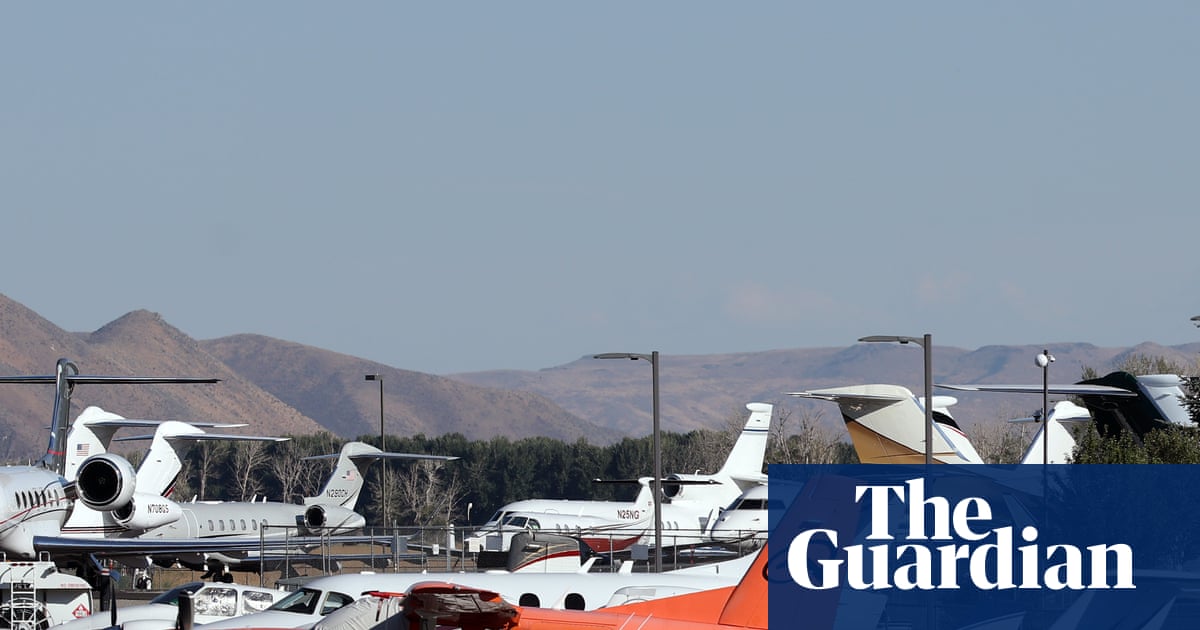
The Institute for Policy Studies' 'High Flyers 2026' report highlights the rapid growth of private jet use in the US, noting that these aircraft, which are up to 14 times more polluting per passenger, contribute less than 0.6% to the Airport and Airway Trust Fund, despite accounting for 16% of FAA operations. This disparity benefits ultra-wealthy owners at public and environmental exp…
Imagine a few very rich people flying around in their own special planes, which use a lot more fuel and make more pollution than big passenger planes. Even though they use a lot of the airport's services, they pay very little in taxes compared to what everyone else pays. So, regular people end up helping to pay for the airports and the pollution caused by these fancy private flights, even though they don't use them.
Analysis
The recent 'High Flyers 2026' report by the Institute for Policy Studies casts a critical light on the burgeoning private aviation sector in the United States, revealing significant economic and environmental disparities. The report underscores that while private jet flights have surged, contributing to a 50% rise in associated climate-heating emissions, the sector's financial contributions to public aviation infrastructure are remarkably low. This imbalance suggests a system where the environmental and infrastructural costs of luxury travel are largely externalized onto the broader public and the planet.
High Flyers 2026
The 'High Flyers 2026' report is a comprehensive analysis that leverages data from over 20,000 open-source trackers to monitor private jet activity. This extensive data collection, facilitated by the Private Jet Emissions Tracker (PJET), allows for detailed insights into flight patterns around major events like the Super Bowl and World Cup. The report's findings are stark: private jets, used by a minuscule fraction of the global population (0.003%), produce direct carbon emissions 10 to 14 times greater per passenger than commercial aviation. This environmental burden is compounded by the fact that private jets and charter services now constitute approximately 16% of flight operations managed by the Federal Aviation Administration (FAA).
Despite their significant operational footprint, private jets contribute less than 0.6% of the taxes to the Airport and Airway Trust Fund, which is vital for financing FAA operations. This stark contrast between usage and contribution highlights a substantial subsidy from public funds to a sector primarily serving the ultra-wealthy. The report argues that this undertaxation effectively forces ordinary taxpayers to subsidize the luxury travel habits of billionaires, exacerbating both economic inequality and the climate crisis.
190m
The median wealth of a private jet owner, according to the report, stands at an astonishing $190 million, with fractional owners possessing a median wealth of $140 million. This figure underscores the exclusive nature of private jet travel and the immense financial capacity of its users. Report co-author Chuck Collins explicitly states that the general public should not be burdened with the costs associated with the 'luxury excess of the private jet billionaire class.' The report frames this as a moral and economic issue, where the 'hard-earned tax dollars' of ordinary citizens are used to subsidize 'reckless air travel habits' that further harm the environment. This wealth disparity is a central theme, linking the environmental impact directly to the economic privileges of a select few.
National Business Aviation Association
The report also sheds light on the powerful lobbying efforts that help maintain these favorable tax policies for private aircraft owners. The National Business Aviation Association (NBAA) is identified as a key player, having spent approximately $2 million lobbying in 2025 alone. These lobbying efforts were specifically aimed at supporting legislation that provides significant tax breaks to private jet owners. This political influence ensures that the current tax structure, which benefits the ultra-rich, remains largely unchallenged, despite the growing public and environmental costs. The report suggests that these lobbying activities are a direct attempt by 'greedy corporations' and the ultra-rich to 'dodge accountability for fueling the climate crisis,' while most ordinary people struggle with basic living expenses.
Key points
- Private jets pollute 10 to 14 times more per passenger than commercial flights.
- Private jet operations account for 16% of FAA activity but contribute less than 0.6% of aviation taxes.
- The median wealth of a private jet owner is $190 million, highlighting significant wealth disparity.
- Lobbying efforts, such as $2 million spent by the National Business Aviation Association in 2025, secure tax breaks for private jet owners.
- The boom in private aviation is driving demand for additional infrastructure like hangars and runway capacity.
If current trends persist, the environmental impact of private jet travel will continue to escalate, contributing disproportionately to climate change. The existing tax structure will further entrench wealth inequality, as public funds effectively subsidize the luxury consumption of the ultra-rich, while the burden of infrastructure costs and climate damage falls on the broader population.