PUB trial aims to halve energy used to pre-treat seawater for desalination
Singapore is testing a new way of preparing seawater for desalination that could halve the energy used in the pre-treatment process. A trial at Tuas is assessing whether ceramic membrane technology developed by Japanese firm Meiden can replace the three-stage pre-treatmen…
Intelligence analysis by Llama
PUB is testing a new ceramic membrane technology that could halve the energy used in seawater pre-treatment. The trial at Tuas is assessing whether the technology can replace the current three-stage pre-treatment process. If successful, the technology could be deployed at desalination plants across Singapore.
Imagine a special kind of filter that can catch dirt and other yucky things in seawater, making it clean and safe to drink. This filter is called a ceramic membrane, and it's being tested in a trial at Tuas to see if it can replace the current way of cleaning seawater. If it works, it could save a lot of energy and make our water treatment process more reliable.
Analysis
Ceramic Membrane Technology: A Game-Changer for Seawater Pre-Treatment?
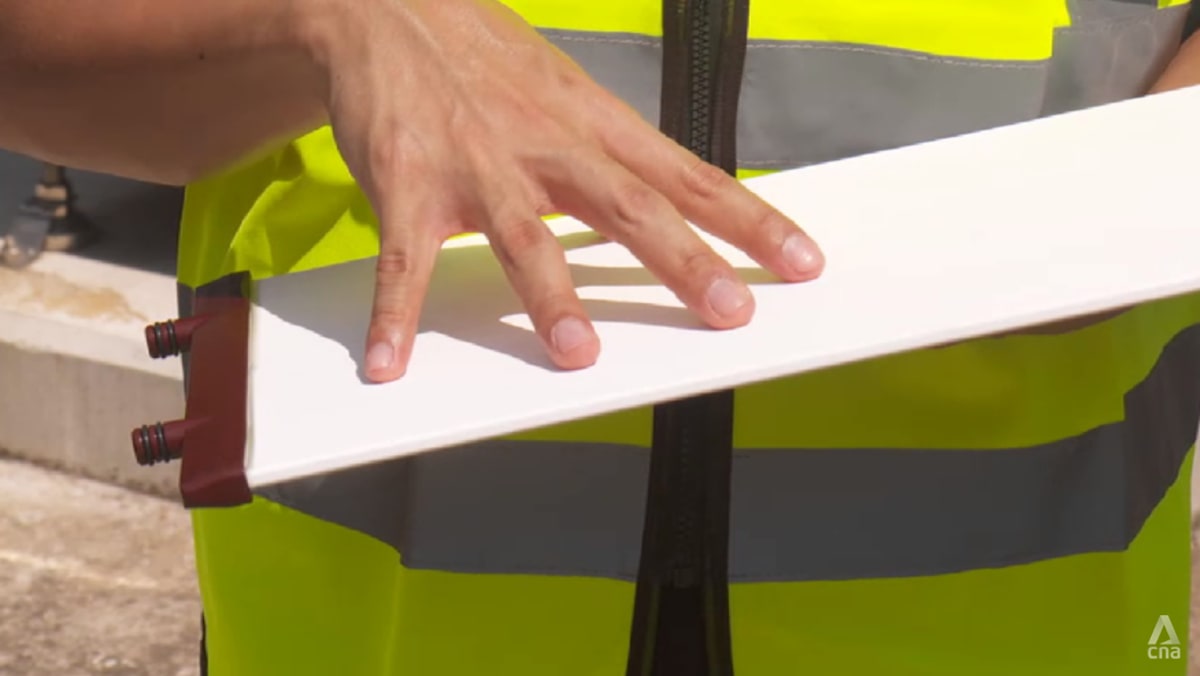
The trial at Tuas is assessing whether ceramic membrane technology developed by Japanese firm Meiden can replace the current three-stage pre-treatment process used to remove contaminants from seawater. The new system being tested seeks to combine the three stages into a single, more compact step using ceramic membranes. This technology has the potential to save 50% of the energy needed for seawater pre-treatment, allowing PUB to produce water at the same high quality while using less energy and having a smaller footprint.
The ceramic membranes being tested are more robust than conventional polymeric membranes and can continue operating under challenging seawater conditions. They are also more resistant to algae blooms and oil spills, which can disrupt the treatment process. The durability of ceramic membranes could help make Singapore's water treatment processes more resilient to disruptions.
The trial is a collaboration between PUB, Meiden Singapore, and the National Research Foundation Singapore. The large-scale demonstration plant at Tuas began trials in June and will operate for about six months to assess its stability and energy-saving potential. It has 24,000 sheets of the ceramic membrane in total and can produce up to 6 million gallons of filtrate water per day for the downstream treatment processes.
Implications for Singapore's Water Treatment Processes
The successful deployment of ceramic membrane technology at desalination plants across Singapore could have significant implications for the country's water treatment processes. By reducing energy consumption and increasing the resilience of the treatment process, PUB could improve the overall efficiency and reliability of the water supply. This could also help to reduce the environmental impact of the treatment process, as less energy would be required to operate the plants.
Challenges and Opportunities
While the ceramic membrane technology being tested has the potential to revolutionize seawater pre-treatment, there are still several challenges and opportunities that need to be addressed. One of the main challenges is the high cost of the ceramic membranes, which could make them less competitive with traditional polymeric membranes. However, the durability and resistance of the ceramic membranes could help to offset these costs in the long run.
Another opportunity is the potential for ceramic membrane technology to be used in other industries, such as wastewater treatment and industrial processes. By developing and refining this technology, PUB and its partners could create new opportunities for innovation and growth in the water treatment sector.
Key points
- PUB is testing a new ceramic membrane technology that could halve the energy used in seawater pre-treatment.
- The trial at Tuas is assessing whether the technology can replace the current three-stage pre-treatment process.
- The ceramic membranes are more robust than conventional polymeric membranes and can continue operating under challenging seawater conditions.
- The trial is a collaboration between PUB, Meiden Singapore, and the National Research Foundation Singapore.
- The large-scale demonstration plant at Tuas began trials in June and will operate for about six months to assess its stability and energy-saving potential.
If the ceramic membrane technology proves successful, it could lead to significant energy savings and improved water treatment efficiency. This could also create new opportunities for innovation and growth in the water treatment sector.
However, the high cost of the ceramic membranes could make them less competitive with traditional polymeric membranes, which could limit their adoption. Additionally, the durability and resistance of the ceramic membranes may not be sufficient to withstand the challenges of seawater treatment.